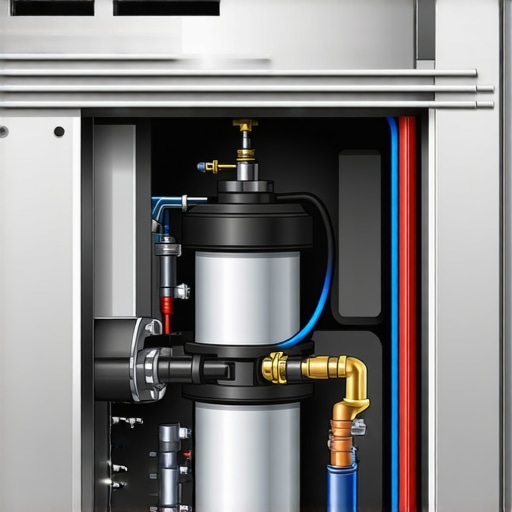
I recently followed a ‘Comfort Advisor’—which is just a fancy title for a salesman who can’t tell a manifold gauge from a torque wrench—who told a young family their four-year-old heat pump was a ‘total loss’ due to a ‘chemical imbalance.’ He handed them a quote for $14,500 for a full AC installation. When I pulled up and actually looked at the unit, I saw the problem in five minutes. The original installer was a ‘trunk slammer’ who didn’t bother installing a field liquid line filter drier. The POE oil had turned into a sludge that looked like bad mayonnaise because of moisture contamination. A $50 part and a proper afternoon of labor saved those folks a fortune. That’s the reality of the trade today: the difference between a ‘Sales Tech’ and a real mechanic is knowing that the smallest component often does the heaviest lifting.
The 2026 Regulatory Cliff: Why Your New ‘Juice’ is Pickier
As we move into the 2026 mandate, the industry is pivoting away from R-410A toward A2L refrigerants like R-454B. These aren’t your grandfather’s gases. We are dealing with ‘mildly flammable’ refrigerants that operate under different pressure-temperature relationships. But the real kicker isn’t the gas; it’s the oil. Most 2026 AC installation projects utilize Polyolester (POE) oil. Unlike the old mineral oils we used with R-22, POE oil is highly hygroscopic. That means it sucks up moisture from the air faster than a sponge in a bucket. If a tin knocker or a technician opens that system and doesn’t use a fresh liquid line filter drier, you are inviting a chemical reaction that will eat your compressor from the inside out.
“The most expensive equipment in the world cannot overcome a bad duct system or a contaminated refrigerant circuit.” – Industry Axiom
Thermodynamic Zooming: How Moisture Kills Latent Heat Removal
In humid climates, your AC isn’t just a cooling machine; it’s a dehumidifier. When the evaporator coil drops below the dew point, it pulls latent heat (water vapor) out of the air. But inside the copper lines, if moisture is present, it reacts with the refrigerant and POE oil to create hydrofluoric acid. This acid pits the copper and creates ‘copper plating’ on the internal valves. Why does the filter drier matter? It contains a desiccant—think of it as a high-tech version of those ‘do not eat’ silica packets in your shoe boxes—that traps moisture and acid before it reaches the expansion valve (TXV). Without it, your TXV will freeze up or clog, and you’ll be calling for a heating service or AC repair before the first season is even over.
Mini-Splits and the Filter Drier Myth
I hear it every day: “My mini-split doesn’t have a filter drier, so why does my central air need one?” Here is the truth. Mini-splits are factory-sealed and usually have internal strainers, but on a split-system AC installation, we are brazing copper in the field. Every time we hit that copper with a torch, we create carbon scale inside the pipe unless we are flowing nitrogen. A high-quality filter drier catches that scale. If you’re getting a furnace repair and decide to upgrade your coil, don’t let the tech skip this. It’s the difference between a system that lasts 20 years and one that dies at age seven.
“Standard 608 of the EPA mandates the recovery of refrigerants, but it is the technician’s adherence to ASHRAE standards that ensures the longevity of the lubricant’s chemical stability.” – ASHRAE Technical Guide
The Physics of Airflow: Don’t Choke the System
You can have the cleanest refrigerant in the world, but if your static pressure is too high, the system will hunt and surge. I’ve seen Sparkies wire up a new air handler perfectly, only to have the unit fail because the return air drop was too small. When we talk about 2026 installs, we are talking about precision. We use Pookie (mastic) to seal every joint because even a small leak in the return can pull unconditioned, humid air from a crawlspace into the system, overloading the filter drier’s capacity. Suction line temperature should be ‘beer can cold,’ but the liquid line needs to be clear of bubbles, which we verify through the sight glass often located right after that drier.
Final Verdict: The $50 Insurance Policy
If your tech tells you that the filter drier ‘inside the outdoor unit’ is enough, they are likely cutting corners. For 2026 systems, a bi-directional drier (for heat pumps) or a high-capacity liquid line drier is non-negotiable. It’s the only thing standing between your expensive new compressor and the corrosive reality of moisture-laden POE oil. Don’t be the homeowner who pays $15,000 for a system only to have it ruined by a lack of a $50 part. Physics doesn’t care about your warranty; it only cares about the chemistry inside the copper.