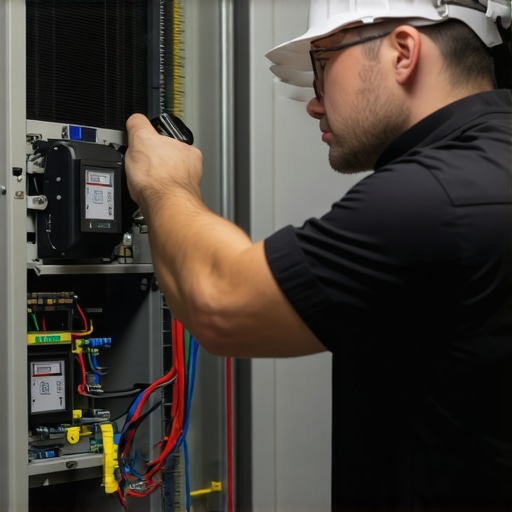
The Death of R-410A and the 500-Micron Mandate
I followed a ‘Sales Tech’ last November who quoted a family $18,000 for a furnace repair and new AC install because their inducer motor was humming. The guy didn’t even pull the door off the cabinet; he just saw the age of the unit and smelled a commission. He told them the system was ‘outdated’ and ‘dangerous.’ When I got there, I found a loose wire and a bird’s nest in the intake. But the real horror story isn’t just the fake quotes; it is the absolute butcher job some guys do when they actually install these new 2026-compliant units. We are entering the era of A2L refrigerants—think R-454B and R-32—and if your technician thinks he can just ‘purge with a little juice’ instead of pulling a real vacuum, your expensive new investment is going to be a boat anchor in three years.
Thermodynamic Zooming: Why Moisture is the Silent Killer
In the old days of R-22 and mineral oil, you could get away with being a hack. Not anymore. Modern AC installation uses POE (polyolester) oil, which is hygroscopic. That is a fancy way of saying it sucks up moisture like a sponge in a swamp. When moisture stays in your lines because a tech didn’t pull a 500-micron vacuum, it reacts with the refrigerant and heat to create hydrofluoric acid. This acid eats the varnish off the compressor windings. You won’t notice it on day one. You’ll notice it on a 95-degree Tuesday three years from now when the compressor shorts to ground and reeks of that sour, acidic burnout smell. Pulling a vacuum isn’t just about ‘cleaning’ the lines; it’s about physics. At sea level, water boils at 212°F. When we use a vacuum pump to drop the pressure in those copper lines to 500 microns, we drop the boiling point of water to -12°F. This allows the moisture to boil off into a vapor so the pump can suck it out. If your tech doesn’t own a digital micron gauge, kick him off your property.
“Standard practice requires evacuation to at least 500 microns to ensure the removal of all moisture and non-condensables.” – EPA Section 608 Regulations
The 2026 Regulatory Cliff: A2L Refrigerants
By 2026, the transition to ‘mildly flammable’ refrigerants will be in full swing. These systems are higher pressure and much more sensitive to non-condensables. A ‘non-condensable’ is just air that shouldn’t be there. If air is trapped in the system, your head pressure skyrockets. This makes the compressor work harder, drawing more amps and killing your efficiency. You might buy a 16 SEER2 unit, but if the air is still in the ‘gas,’ it performs like a 10 SEER relic from the 90s. This is especially critical for a mini-split, where the tiny capillary tubes can be clogged by even a microscopic amount of wax or sludge formed by acid. I’ve seen heating service calls in the dead of winter where a heat pump failed simply because the tin knocker who did the ducts didn’t tell the lead tech the line set was kinked and holding moisture.
Airflow and Static Pressure: The Skeleton of Comfort
You can have the best ‘juice’ and a perfect vacuum, but if your ductwork is sized for a hamster, you are wasting money. Most AC installation failures are actually airflow failures. The ‘Sparky’ might get the high voltage right, but if your return air drop is too small, that evaporator coil is going to freeze solid. I always tell my apprentices: ‘You can’t cool what you can’t touch.’ If the air isn’t moving across that coil, the latent heat (humidity) isn’t being removed. In our cold northern climate, a cracked heat exchanger during a furnace repair is often the result of low airflow causing the metal to overheat and stress. We use ‘Pookie’ (mastic) on every joint because tape fails, but physics is forever.
“The most expensive equipment in the world cannot overcome a bad duct system.” – ACCA Manual J Standards
The Verdict on 2026 Systems
When you are looking at a 2026 install, don’t just look at the brand name. Whether it’s Trane, Carrier, or Goodman, the box matters less than the man with the vacuum pump. If they aren’t talking about microns, static pressure, and nitrogen purging while brazing, they are just ‘Sales Techs’ in a clean uniform. Real HVAC work is dirty, technical, and requires a deep respect for the laws of thermodynamics. Don’t let a hack turn your new system into an acid-filled paperweight because he was too lazy to wait for a 500-micron pull.