The Sound of a Dying Industry (And Your Sleep)
I have spent three decades crawling through fiberglass-filled attics in 120-degree heat and balancing on slick, icy rooftops in the dead of January. After thirty years, you don’t just see HVAC; you hear it, you smell it, and you feel the harmonics through the soles of your work boots. I can tell a compressor is about to lunch its internal valves just by the rhythmic ‘thwack’ it makes against the cabinet. But these days, I’m seeing something that ticks me off more than a Sparky double-tapping a breaker. I’m seeing ‘Sales Techs’—those guys in crisp white shirts who couldn’t find a TXV bulb if their life depended on it—selling $18,000 systems while skipping a $30 vibration isolation pad. In 2026, as we transition to the new A2L refrigerants like R-454B, this isn’t just about noise; it’s about the structural integrity of your high-pressure juice lines.
The $15,000 Lie: A Narrative from the Trenches
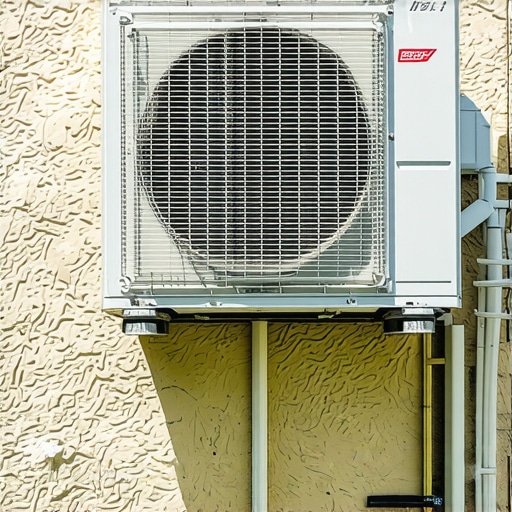
I followed a ‘Sales Tech’ last week who had just visited a retired schoolteacher in a drafty Cape Cod. The poor woman was told her entire furnace and AC installation was ‘compromised’ because the outdoor unit was screaming like a banshee and the indoor coil was ‘leaking radiation’ (I kid you not, that’s what he told her). He quoted her fifteen grand for a full replacement. When I got there, I didn’t see a dead system. I saw a unit bolted directly to a plastic pad that had settled into the mud, creating a resonant frequency that was shaking the liquid line so hard it was vibrating the drywall in her bedroom. All she needed was a $20 capacitor, a level base, and four heavy-duty rubber-in-shear vibration pads. I fixed her ‘unfixable’ noise for the cost of a nice lunch. This is the state of our trade: if it rattles, they want to replace it. But as my old mentor used to scream, ‘You can’t cool what you can’t touch!’ And if your equipment is vibrating itself to death, it’s not touching the air—it’s just beating itself into the scrap yard.
“Proper isolation of mechanical equipment is essential to prevent the transmission of noise and vibration to the building structure, which can lead to premature component failure and occupant discomfort.” – ASHRAE Handbook—HVAC Applications
Thermodynamic Zooming: Why Vibration Kills Efficiency
Let’s talk physics, not sales pitches. When we do a heating service or an AC installation, we are managing a massive energy exchange. Your evaporator coil needs to drop below the dew point to pull latent heat—that’s the sticky humidity—out of the air. If your unit is vibrating because it’s missing isolation pads, those micro-vibrations travel through the copper lines. Copper ‘work-hardens.’ It becomes brittle. Every time that compressor kicks on, it sends a shockwave through the system. In the 2026 era of A2L refrigerants, which operate at higher pressures, those micro-cracks lead to leaks. You lose your gas, your suction line stops being ‘beer can cold,’ and suddenly your 18-SEER investment is performing like a 1990s window unit. This is especially critical for a mini-split. Those units are high-precision instruments; if the wall bracket isn’t isolated, the entire house becomes a sounding board for the inverter’s high-frequency hum.
The 2026 Regulatory Cliff: A2L and the New Stakes
We are currently facing the death of R-410A. The new R-454B and R-32 systems are here, and they are ‘mildly flammable.’ That means the ‘Tin Knockers’ and installers can’t be sloppy anymore. A vibration-induced leak in 2024 was a nuisance; in 2026, it’s a safety hazard that triggers mandatory sensors and system lockouts. If your installer doesn’t mention vibration isolation or proper furnace repair mounting, they aren’t prepared for the new standards. They are just trying to move boxes. A proper installation involves more than just ‘pumping and dumping’ the refrigerant. It requires checking static pressure and ensuring the cabinet isn’t twisting, which creates ‘cabinet oil-canning’—that annoying popping sound when the blower starts.
“The most expensive equipment in the world cannot overcome a bad duct system or a poor physical installation.” – Industry Axiom
The Northern Climate Crisis: Why Heating Matters
In the North, where we deal with the ‘Polar Vortex’ effect, vibration pads are even more critical. During heating service season, your heat pump’s defrost cycle is a violent event. The reversing valve shifts, the pressures equalize instantly, and the whole unit shudders. Without those pads, that shudder is transferred into your home’s framing. I’ve seen cracked heat exchangers in furnace repair calls that were caused by years of mechanical resonance from an un-isolated blower motor. We use Pookie (mastic) to seal the ducts, but if the unit is shaking, that seal will eventually fail, leaking your expensive conditioned air into the crawlspace.
Conclusion: Demand the Details
Don’t be fooled by a fancy iPad presentation. When you’re getting an AC installation quote, ask about the isolation pads. Ask about the static pressure. If they look at you like you’re speaking Greek, show them the door. Comfort is a matter of physics and precision, not a monthly payment plan. A $30 pad today prevents a $10,000 compressor failure tomorrow. Stay cool, stay dry, and for heaven’s sake, keep your coils clean.