The copper is swept, the nitrogen pressure test held at a beautiful 400 PSI, the vacuum pump just finished boiling out the moisture down to 350 microns, and your brand-new system is finally wired up. You are looking at a modern marvel of climate control: a variable-speed inverter compressor, a modulating blower motor, and a control board with more processing power than the Apollo lunar module. The total investment? Thousands of dollars of hard-earned cash. Now, imagine a split-second electrical hiccup—not even a direct lightning strike, just a standard utility grid fluctuation—cooking those sensitive microprocessors instantly. Suddenly, your expensive investment is nothing but a silent, dead metal box.
The Independence Day Meltdown
I will never forget July 4th back in 2018. It was 3:30 PM, the ambient outdoor temperature was pushing 108°F, and my phone was ringing off the hook. I was standing on a blistering commercial rooftop when a call came in from a homeowner who had just paid for a premium AC installation three weeks prior. The system was completely dead. When I arrived, the outdoor air was thick and humid, but the house was rapidly turning into an oven. I pulled the service panel on the outdoor condenser, and the smell hit me immediately: that sharp, metallic, acrid odor of fried silicon. A minor utility surge had traveled down the line when everyone on the block cranked up their air conditioners at the same exact moment. The surge blew past the standard disconnect, completely vaporizing the main microprocessor on the inverter drive. It was a $1,200 control board ruined by a fraction of a second of dirty power. Ever since that day, I refuse to sign off on a new installation without a heavy-duty, dedicated surge protective device (SPD) wired directly into the outdoor disconnect. If you do not protect those boards, you are playing Russian roulette with your comfort.
“The increasing complexity and sensitivity of modern solid-state HVAC control systems require robust electrical transient protection to prevent premature component failure.” – ASHRAE HVAC Applications Handbook
The Blueprint: Forensic Anatomy of an Electrical Kill Shot
To understand why modern systems like an advanced mini-split, high-efficiency heat pump, or variable-speed furnace repair require robust surge protection, we have to look at the mechanical and electrical anatomy of modern units. Older, single-stage units from twenty years ago were tank-like machines. They relied on simple, heavy-duty contactors, robust capacitors, and basic single-speed motors. If they took an electrical hit, they might lose a cheap capacitor, but the compressor usually survived.
Today’s systems are completely different. To meet high SEER2 efficiency standards, manufacturers have replaced old mechanical controls with highly sensitive electronic control boards. Inside your outdoor condenser and indoor air handler, you will find:
- Inverter Drives: These convert AC power to DC power to run the compressor at infinite variable speeds. They are packed with delicate diodes, transistors, and capacitors that cannot handle voltage spikes.
- ECM Motors: Electronically Commutated Motors are incredibly efficient, but their speed control is managed by an onboard computer module. A voltage spike will fry this module, turning your expensive blower motor into a useless paperweight.
- Communicating Thermostats: These do not just turn the system on and off with 24 volts; they send digital data packets back and forth. A transient surge can travel up the low-voltage wiring and destroy the main controller.
The Micro-Surge Trap
Most homeowners assume a surge protector is only needed for massive events like a lightning strike. That is a dangerous misconception. Lightning is rare, but micro-surges happen dozens of times a day. Every time a heavy appliance like a refrigerator, a vacuum cleaner, or even your neighbor’s well pump kicks on, it sends a minor transient voltage spike back through your home’s electrical panel. These micro-surges act like tiny hammer blows to the delicate gate oxide layers of your HVAC system’s microchips. Over time, this cumulative stress degrades the semiconductor material. One day, on a mild afternoon, the system simply refuses to start. You call for heating service or AC installation repair, and the tech finds a dead board with no obvious signs of external damage. It died from chronic electrical wear and tear.
The Math: Protection ($150) vs. Replacement ($1,500+)
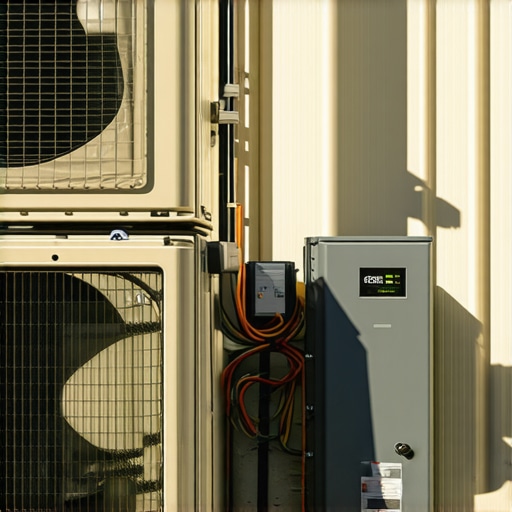
Let’s talk cold, hard numbers. A high-quality, compressor-rated surge protective device costs between $150 and $250 installed. It is a simple device that mounts directly to your outdoor disconnect box. Inside, metal oxide varistors (MOVs) act as pressure-relief valves for electricity. When voltage spikes above a safe threshold, the MOVs instantaneously shunt the excess current safely to the ground before it can enter the delicate electronics of your condenser.
Now, compare that to the cost of a non-warranty repair. If a surge kills your inverter board or your ECM motor, you are looking at:
- Inverter Control Board: $800 to $1,800 depending on the brand and capacity.
- ECM Blower Motor: $600 to $1,400.
- Diagnostic and Labor Fees: $150 to $400 for emergency hot-weather dispatch.
To make matters worse, manufacturer warranties specifically exclude damage caused by “acts of God” or “unstable incoming power.” If the manufacturer’s laboratory inspects the failed board and sees burned-out trace paths from an electrical spike, they will reject the warranty claim. You will be stuck paying the entire bill out of pocket.
“Voltage transients are one of the leading causes of premature electronic system failure in residential air conditioning systems.” – NEMA Standard for Surge Protective Devices
Why Every HVAC System Needs Tailored Protection
Different systems require different approaches to protection. For a standard split system consisting of an outdoor AC and an indoor furnace, we install a dual-layered defense. We put an SPD at the main breaker panel to catch incoming utility surges, and a secondary, fast-acting SPD right at the outdoor condenser disconnect. This is especially true for ductless mini-split systems, which are essentially giant computers that happen to move refrigerant. Their inverter boards are incredibly complex and must be shielded from both high-voltage spikes and low-voltage noise.
When our tin knockers install the ductwork and our lead installation crews set the physical equipment, we make sure the sparky grounds the system perfectly. Without a solid ground path, even the best surge protector in the world cannot save your equipment. We check the ground rod, verify the electrical connections are tight, and ensure the suction line is insulated correctly so that no moisture can migrate toward the electrical controls. It is about protecting the entire system from the inside out.
Comfort is Physics, Not Luck
At the end of the day, a new AC installation is an investment in your home’s microclimate. Do not let a split-second power hiccup turn your system into junk. Adding a dedicated surge protector is the single easiest way to ensure your system survives the volatile summer grid demands and the unpredictable winter storms. Talk to your installation technician about adding a compressor-rated surge protector today—it is cheap insurance for your long-term comfort.