The Sound of a Dying Scroll: Why Cold Weather is a Compressor Killer
I followed a ‘Sales Tech’ last November into a drafty mechanical room in a suburb of Chicago. The customer, a retired schoolteacher, was trembling as she showed me a quote for $12,000. The previous tech—a kid in a shiny polo who had likely never touched a manifold gauge in his life—told her the compressor was ‘mechanically seized’ and the whole system was junk. I didn’t even pull my tools out yet. I just reached down and felt the bottom of the compressor. It was as cold as a tombstone. I checked the leads to the crankcase heater; the Sparky who wired the disconnect had never even landed the heater wires. For the cost of a $40 heater and twenty minutes of labor, that system was huming again. The ‘seizure’ was just liquid slugging. That kid tried to sell her a new AC installation because he didn’t understand basic physics. This is why I hate the modern industry; it’s full of salesmen, not technicians.
The Physics of Refrigerant Migration: Thermodynamic Zooming
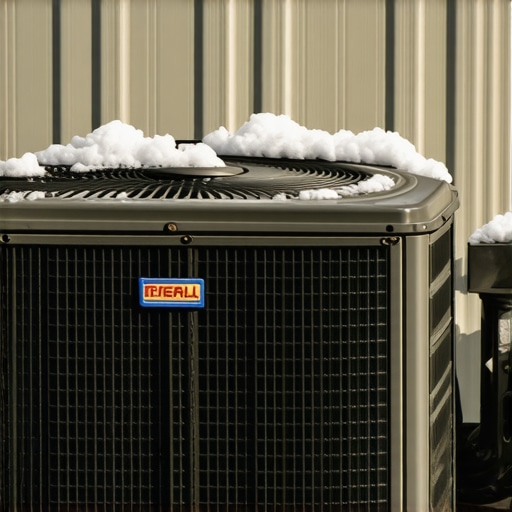
To understand why your heating service or AC needs a crankcase heater, you have to understand ‘refrigerant migration.’ Refrigerant is a nomad; it always wants to move to the coldest part of the system. During a cold snap, that coldest part is the outdoor compressor. Inside that compressor is your oil—the lifeblood of the scroll or reciprocating plates. Refrigerant has a natural affinity for oil. It will literally crawl through the suction line and condense into a liquid inside the crankcase. This creates a lethal mixture. When the system tries to kick on for a furnace repair cycle or a defrost mode, that liquid refrigerant flashes into a foam. Liquid cannot be compressed. You try to compress a liquid, and you’ll snap a connecting rod or shatter a scroll plate faster than you can yell for the tin knocker to hide his mistakes.
“Equipment shall be installed in accordance with the manufacturer’s instructions. The compressor crankcase heater shall be energized for a minimum of 24 hours prior to startup to ensure the removal of liquid refrigerant from the oil.” – ACCA Manual S (Residential Equipment Selection)
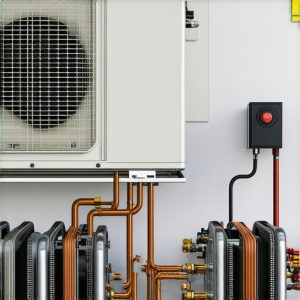
In a mini-split system, this is even more critical. These units use inverter-driven compressors that are high-performance but have incredibly tight tolerances. If you don’t have a functioning heater to keep that ‘juice’ (refrigerant) warm, the oil loses its lubricity. You aren’t just ‘cooling’ or ‘heating’; you are managing the phase change of a chemical that is actively trying to destroy your hardware. A crankcase heater acts like a slow cooker, keeping the oil temperature about 20 to 30 degrees above the rest of the system, ensuring the refrigerant stays as a vapor where it belongs.
The Regulatory Cliff: R-410A vs. The New A2L Refrigerants
We are currently standing at a massive shift in the industry. As of 2025, the R-410A we’ve used for decades is being phased out for A2L refrigerants like R-454B. These new gases are ‘mildly flammable.’ If you think your old system was finicky, these new units are loaded with sensors and requirements for proper thermal management. Buying the cheapest unit today without a factory-installed crankcase heater is a recipe for a catastrophic failure in three years. Most ‘Sales Techs’ won’t tell you that because they want the replacement commission, not the repair longevity. They see a furnace repair call as an opportunity to push a 15-SEER2 box that they won’t even level properly on the pad.
“The migration of liquid refrigerant to the compressor during off-cycles can lead to oil dilution and bearing failure upon startup, particularly in ambient temperatures below 50°F.” – ASHRAE Standard 15-2022
The Airflow Manifesto: Why Heaters Won’t Save Bad Ductwork
You can have the best crankcase heater in the world, but if your tin knocker didn’t size your return air properly, you’re still doomed. Low airflow causes the evaporator coil to drop below the dew point too aggressively, leading to liquid floodback. That liquid travels down the suction line (which should be ‘beer can cold’ in the summer, but never ‘iced over’ in the winter) and hits the compressor. The heater tries to fight it, but it’s like throwing a glass of water at a forest fire. This is why we use ‘Pookie’ (mastic) on every joint. We need to ensure the static pressure is within the manufacturer’s spec so the refrigerant boils off completely before it ever reaches the compressor. If you ignore the ductwork and just swap the box, you are just putting a clean shirt on a guy who hasn’t showered in a month.
The Verdict: Maintenance vs. The Scam
Don’t let a tech tell you that ‘topping off the Freon’ is a standard part of a tune-up. It’s a sealed system. If you need gas, you have a leak. If they aren’t checking the resistance on your crankcase heater with a multimeter during your annual heating service, they aren’t doing their job. They are just looking for a way to get to the ‘Replace’ page of their iPad. Real HVAC work is about physics, pressure, and temperature. It’s about making sure that when the mercury drops, your compressor is warm, dry, and ready to move heat, not liquid. Anything less isn’t service; it’s a shakedown.