The Mentor’s Hard Lesson: Why Airflow Dictates Tonnage
My old mentor used to scream, ‘You can’t cool what you can’t touch!’ This is why airflow matters more than horsepower. I remember him standing over a brand-new 5-ton unit that was slugging liquid back to the compressor because the tin knocker who installed it didn’t resize the return air drop. The guy thought he could just ‘oversize’ the unit to overcome poor ductwork. He was wrong, and the homeowner paid the price when that compressor hit the sour smell of an acidic burnout two years later. You see, an AC installation isn’t about the box on the pad; it’s about the physics of heat exchange across the evaporator coil. If the suction line isn’t ‘beer can cold’ and the static pressure is too high, you’re just burning money.
The 2025 Regulatory Cliff: R-454B and the Death of R-410A
We are currently standing on a regulatory precipice. The transition from R-410A to A2L refrigerants like R-454B is shifting the entire landscape of AC installation. These new gases are ‘mildly flammable,’ which means the new units coming out in 2025 require leak sensors and specific mitigation boards. Why does this matter for your tonnage? Because the days of ‘guessing’ are over. If you install an oversized unit with these new refrigerants, the temperature glide and pressure differences will punish the system’s longevity. Getting your tonnage wrong now is a ten-thousand-dollar mistake. You need to understand Thermodynamic Zooming: the way your evaporator coil drops below the dew point to strip latent heat (humidity) from the air is a delicate dance. If the unit is too big, it hits the setpoint too fast, leaving your house feeling like a cold, damp basement.
“Load calculations shall be performed to determine the heating and cooling loads of each installation.” – ACCA Manual J, 8th Edition
The North/Cold Climate Context: Heating Service and Cracked Heat Exchangers
In our climate zone, we aren’t just worried about the heat. We deal with the ‘Polar Vortex’ effect. This is where furnace repair becomes a critical part of the tonnage conversation. If your blower is sized for a 4-ton AC but your ductwork can only handle 1,200 CFM (3 tons), your furnace’s heat exchanger is going to overheat every single winter. That constant expansion and contraction leads to flame rollout and cracked heat exchangers—a death sentence for any heating service call. When we calculate tonnage, we aren’t just looking at the summer; we are looking at the Total Equivalent Length (TEL) of your duct system to ensure the air moves fast enough to keep that heat exchanger from glowing cherry red.
The Physics of the Manual J: More Than Just Square Footage
Forget the ‘400 square feet per ton’ rule of thumb. That’s a scam used by sales techs who want to get in and out in an hour. Real AC installation starts with a clipboard and a tape measure. We look at the ‘U-value’ of your windows, the ‘R-value’ of your attic insulation, and the ‘SHGC’ (Solar Heat Gain Coefficient) of your glazing.
Step 1: The Envelope. We measure every wall and determine if it’s a ‘partition’ (against another room) or ‘ambient’ (against the outside).
Step 2: Orientation. A house with west-facing floor-to-ceiling windows needs a massive amount of sensible heat removal compared to a shaded north-facing home.
Step 3: Internal Gains. Do you have a home office with three monitors and a server? That’s 3,000 BTUs of heat right there.
Once we have the total BTU load, we divide by 12,000 to get our tonnage. But wait—we have to adjust for the Sensible Heat Ratio (SHR). If your unit is a 3-ton but only 70% of that is ‘sensible’ cooling, you might actually need a 3.5-ton to keep up on a 95°F day.
“The most expensive equipment in the world cannot overcome a bad duct system.” – Industry Axiom
The Mini-Split Revolution and Inverter Technology
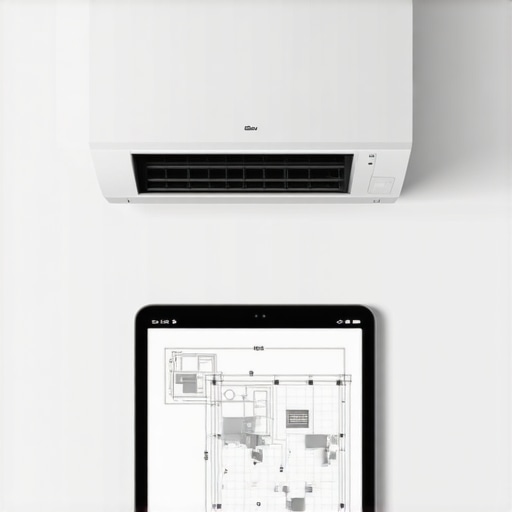
If your traditional ductwork is a mess of pookie (mastic) and old tape, a mini-split might be the answer. These systems use inverter-driven compressors that don’t just stay ‘on’ or ‘off.’ They ramp up and down based on the load. This effectively solves the ‘tonnage’ problem because a 2-ton mini-split can behave like a 0.5-ton unit on a mild day. This prevents the short-cycling that kills standard compressors. It’s the ultimate heating service hack for older homes where furnace repair is no longer viable due to ancient, undersized ducts.
The Final Verdict: Don’t Let a ‘Sparky’ or a Sales Tech Guess
When the juice (refrigerant) starts flowing in your new system, you want to know it was engineered for your specific home. Demand a printed Manual J report. If they can’t show you the math, they don’t know the physics. Comfort isn’t a guess; it’s a calculation of static pressure, CFM, and BTU displacement. Anything less is just blowing smoke.