The Phantom Load: Why Your Rooftop Unit Is Killing Your Bottom Line
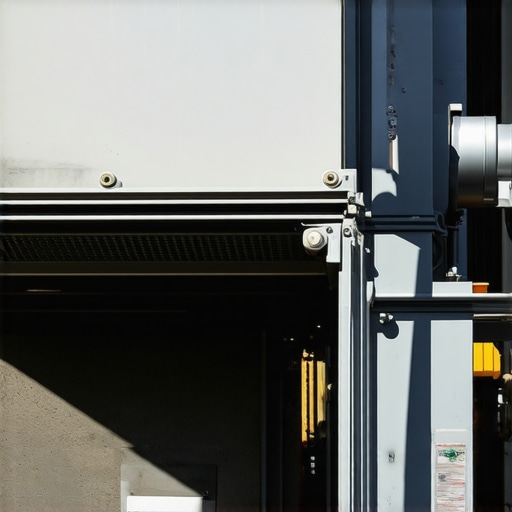
I was standing on a white TPO roof in the dead of August, the kind of heat that vibrates off the metal cabinets and makes your safety glasses fog up the second you step off the ladder. The facility manager for a mid-sized medical office was trailing me, complaining about a $6,000 electric bill and a building that felt like a Turkish bath. He’d already had three ‘Sales Techs’ out there who tried to sell him a full 20-ton AC installation. One guy even told him his compressors were ‘tired’ and needed replacement. I popped the side panel on the #4 Rooftop Unit (RTU) and didn’t even need my gauges to see the problem. The economizer damper was jammed wide open, gulping down 96°F air with 80% humidity like a marathon runner in a desert. The unit was essentially trying to cool the entire outdoor atmosphere before it even thought about the lobby. That’s not a compressor failure; that’s a mechanical lobotomy.
The Anatomy of Free Cooling (And Why It Breaks)
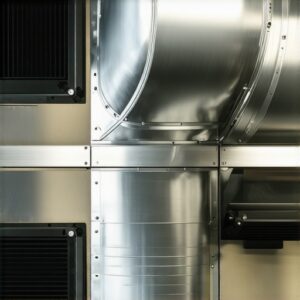
An economizer is supposed to be the smartest part of your commercial HVAC system. Its job is simple: when the air outside is cooler and drier than the air inside, it opens the dampers to bring in ‘free cooling’ instead of running the compressors. It’s all about enthalpy—the total heat content of the air. But when these things fail, they usually fail in the worst possible position. Whether it’s a seized gear in the actuator, a rusted linkage, or a ‘Sparky’ who wired the outdoor air sensor backwards, a stuck economizer turns your high-efficiency unit into a glorified space heater in the summer and a freezer in the winter.
“The most expensive equipment in the world cannot overcome a bad duct system or a failed control strategy.” – Industry Axiom
In our trade, we see this constantly. You have a damper motor—often a Belimo or a Honeywell—that relies on a 2-10V signal. Over time, the environment eats these components. If you’re in a corridor with high particulate matter or salt air, those galvanized blades start to pit and bind. Once they jam, the actuator keeps trying to push until the plastic gears strip. Now, you’re stuck. If it’s stuck at 100% outside air during a heatwave, your latent heat load (the moisture) skyrockets. Your evaporator coil, which is supposed to be dropping the air temperature below the dew point to wring out the water, gets overwhelmed. The air coming out of the vents feels ‘clammy.’ That’s because the air is moving too fast and carrying too much moisture for the thermodynamic exchange to happen. You aren’t just paying for cooling; you’re paying to dehumidify the neighborhood.
The Thermodynamic Reality: Sensible vs. Latent Heat
To understand why this matters, we have to talk about the physics of the air. Most people think about temperature (sensible heat), but in commercial HVAC, the real enemy is latent heat. When that economizer is stuck open, you are forcing the system to deal with a massive moisture load. In a humid climate, the coil gets so saturated with condensate that it can actually start ‘slugging’ the compressor. That’s when liquid refrigerant makes it back to the compressor crankcase. Since you can’t compress a liquid, the internal valves of that expensive scroll compressor will shatter. This is how a simple $400 actuator repair turns into a $12,000 catastrophe. It’s also why proper heating service and regular inspections are non-negotiable. You need a tech who actually checks the ‘mixed air’ temperature, not just someone who looks for a green light on the thermostat.
The ‘Sales Tech’ Trap and The Forensic Fix
I remember following a guy who had quoted a furnace repair and a full rooftop swap because the unit ‘couldn’t keep up.’ I found a toothpick jammed into the outdoor enthalpy sensor by a previous ‘Tin Knocker’ who didn’t understand how to calibrate the changeover setpoint. By bypassing the sensor, he’d forced the unit into 100% outside air mode permanently. I pulled the toothpick, lubed the linkages with high-temp silicone, and the building temp dropped 5 degrees in twenty minutes. No new AC installation required. That’s the difference between a mechanic and a parts changer.
“Designers shall provide means to shut off or bypass the economizer when it increases the energy use of the cooling system.” – ASHRAE Standard 90.1
If you have a mini-split in your server room, you might think you’re safe, but those units often struggle when the main building air is out of whack. High static pressure caused by stuck dampers can mess with the pressure differentials across the entire floor. If your RTU is fighting a stuck economizer, it creates a vacuum or a positive pressure spike that can make doors hard to open or whistle like a tea kettle. We call this ‘the building scream.’ It’s the sound of physics trying to find a path of least resistance.
The 2025 Regulatory Cliff: R-454B and Beyond
We are moving into a new era of refrigerants. The R-410A we’ve used for years is being phased out for A2L refrigerants like R-454B. These are ‘mildly flammable,’ which means the sensors in your units are about to get a lot more complicated. If your economizer isn’t working correctly, it can trigger leak detectors or ventilation alarms that weren’t even a factor five years ago. Buying the cheapest unit on the market right now is a trap because many of them lack the robust economizer logic needed to handle these new gas pressures and safety protocols.
The Diagnostic Checklist: What to Look For
- The Suction Line Test: Feel the large copper pipe at the unit. It should be ‘beer can cold’ and sweating, but not icing over. If it’s warm while the compressor is screaming, you’re likely pulling in too much hot outside air.
- Visual Damper Check: Look at the intake hood. Are the blades moving when the unit starts? If they are frozen in one spot, you have a mechanical failure.
- The ‘Pookie’ Factor: Check the seals around the economizer cabinet. If the mastic (Pookie) is cracked or the tape is peeling, you’re leaking unconditioned air into the supply stream, bypassing the coil entirely.
Conclusion: Comfort is Physics, Not Magic
At the end of the day, your HVAC system is just a giant heat pump. It moves energy from where you don’t want it to where you don’t care about it. When an economizer sticks wide open, you’ve broken the circuit. You are trying to cool the sun. Don’t let a ‘Sales Tech’ convince you that you need a brand new system when the one you have is just ‘breathing’ too much. Get a veteran who knows how to read a psychrometric chart and isn’t afraid of a little rooftop grease. Real maintenance isn’t a clipboard and a smile; it’s a multimeter, a can of lubricant, and an obsession with airflow.