The 3 AM Phone Call: A Case of Frozen Assets
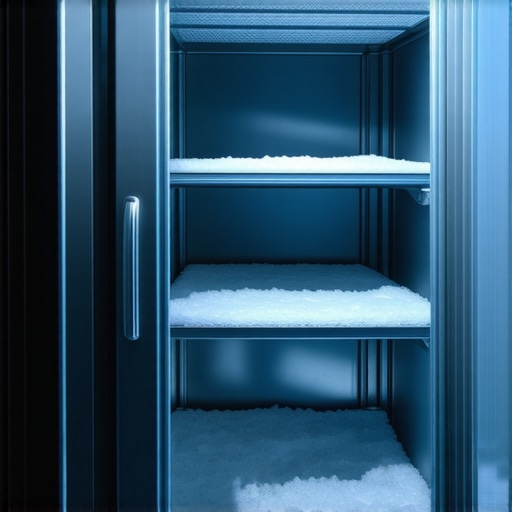
I was on a job site at 3 AM on a Tuesday, the kind of hour where the only things awake are stray cats and HVAC techs who hate their life choices. A local butcher shop owner was frantic; twenty thousand dollars worth of prime cuts were at risk because his walk-in freezer had turned into an Arctic cave. I walked in and didn’t even need my gauges to know what was wrong. The sound was the first giveaway—that high-pitched, metallic whine of an evaporator fan motor trying to push air through a solid block of ice. It’s a sound that haunts your dreams after thirty years in this trade. The owner wanted me to just ‘add some juice,’ but I had to break it to him: it’s a sealed system, and ‘topping it off’ is a fairy tale told by sales techs looking to buy a new boat. If you’re losing refrigerant, you have a leak, but more importantly, ice isn’t always a refrigerant problem. Most of the time, it’s a physics problem.
“The removal of latent heat is as critical as the reduction of sensible temperature in any refrigeration cycle, yet it is the most frequently misunderstood variable in field diagnostics.” – ASHRAE Fundamentals Handbook
The Forensic Anatomy of the Freeze-Up
To understand why your commercial freezer is icing up, we have to perform Thermodynamic Zooming. Your evaporator coil isn’t just a radiator; it’s a heat exchanger that must stay below the dew point to pull moisture out of the air. In a freezer, that coil is sitting well below 32°F. When the moist air from the kitchen or the warehouse hits that freezing aluminum, the water vapor undergoes sublimation or direct deposition, turning from a gas straight into a solid. This is normal. What isn’t normal is when the ice doesn’t go away. Your system is designed with a defrost cycle—usually controlled by a clock that tells the compressor to take a nap while electric heaters or hot gas melt the frost. If that clock is stuck, or if a heater rod has snapped, the ice grows. It starts as a thin glaze and turns into a glacier. Once the ice blocks the fins, airflow stops. And as my old mentor used to scream, ‘You can’t cool what you can’t touch!’ If the air can’t touch the fins, the heat stays in the box, and your compressor starts screaming.
The Enemy: Latent Heat and the Humid Kitchen
In a commercial setting, especially in humid regions, the kitchen is a battlefield. Every time a ‘Sparky’ or a prep cook leaves that heavy freezer door cracked, you aren’t just letting cold air out; you are letting a massive ‘latent heat’ load in. That humidity is the fuel for the ice. This is why AC installation and commercial refrigeration setup require precise calculations of door-opening frequencies. If your unit was undersized or if the ‘Tin Knocker’ didn’t seal the penetrations with enough Pookie (mastic), you’re fighting a losing battle. The moisture migrates through every gap. I once found a freezer icing up because a plumber had drilled a hole for a pipe and didn’t seal it. That tiny hole was sucking in humid air like a vacuum, causing the evaporator to choke every six hours.
“Standard practice dictates that all penetrations in a thermal envelope must be hermetically sealed to prevent moisture migration and subsequent coil fouling.” – ACCA Manual J Standards
The Mechanical Breakdown: The Usual Suspects
When I’m doing a heating service or a commercial repair, I look for the ‘Four Horsemen of the Freeze-Up’. First, the Defrost Termination Switch. This little bimetal disc tells the system when the coil is warm enough to stop the heaters. If it fails open, the heaters never kick in. Second, the Evaporator Fan Motors. If those fans aren’t spinning at full RPM, the heat exchange slows down, the coil temperature drops too low, and the suction line starts showing ‘beer can cold’ frost all the way back to the compressor. Third, the TXV (Thermal Expansion Valve). If this valve is hunting or stuck, it floods the coil with too much gas, causing an immediate freeze. Finally, there’s the Drain Line. If the heater tape in your drain line dies, the melted water from a defrost cycle freezes before it can exit. The next cycle’s water piles on top, and soon you have an ice skating rink on the floor of your freezer.
The 2025 Regulatory Cliff: R-410A and the A2L Transition
If you’re thinking about a new AC installation or replacing a commercial rack, you need to be aware of the R-454B transition. The old R-404A and R-410A are being phased out due to high Global Warming Potential. The new refrigerants are ‘mildly flammable’ (A2L), which means your new system will have leak sensors and spark-proof components. Don’t let a ‘Sales Tech’ talk you into a ‘cheap’ 2024 model without explaining that the parts for it will be 300% more expensive in five years. You need a tech who understands the physics of these new gases, not just someone who can turn a wrench. Whether it’s a furnace repair or a mini-split install, the chemistry of the juice is changing, and your technician better have his EPA Section 608 certification updated.
Preventive Maintenance vs. The Scam Tune-Up
Most ‘tune-ups’ are a joke. A real tech checks the ‘Superheat’ and ‘Subcooling’ to ensure the refrigerant is doing exactly what it should at every stage of the cycle. They check the amp draw on the defrost heaters. They don’t just spray some foam on the coils and hand you a bill for $300. To prevent your freezer from icing up, you need to check the door gaskets. If you can slide a dollar bill through the door seal, you’re buying ice. You also need to ensure the drain pan is pitched correctly. If you’re seeing frost on the ceiling, you have an infiltration problem. If you’re seeing it only on the bottom of the coil, you have a drainage problem. This isn’t magic; it’s mechanical forensic science.