The Sound of the Drip: A Homeowner’s Nightmare
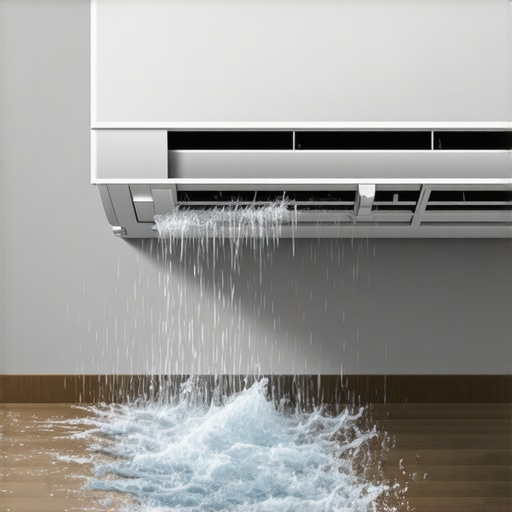
You’re sitting in your living room, the humidity outside is thick enough to chew, and then you hear it. Drip. Drip. Slosh. You head to the mechanical closet or the attic, and there it is: a rusted metal tray filled with gray, stagnant water. Your AC unit is leaking water from the bottom pan, and your first instinct is to panic. Relax. As someone who has spent three decades crawling through fiberglass-filled crawlspaces and dodging wasps on 130-degree rooftops, I can tell you that water is just physics in action. But if you ignore it, that physics will turn into a $10,000 mold remediation bill faster than a tin knocker can fold a piece of 26-gauge galvanized steel.
The Narrative: The $12,000 Drain Line
I remember a call last August in the middle of a record-breaking heatwave. I followed a ‘Sales Tech’—one of those guys who carries a shiny iPad but doesn’t own a set of manifold gauges—into a house owned by a retired schoolteacher. The previous tech had told her the entire evaporator coil was ‘porous’ and she needed a full AC installation for twelve grand. I walked in, looked at the secondary drain pan, and saw it was bone dry, but the primary pan was overflowing. I blew out a slug of algae from the 3/4-inch PVC condensate line with a shot of CO2, and the water vanished. Total cost of parts? Zero. That ‘Sales Tech’ was trying to hit his monthly quota on the back of a woman who just needed a basic maintenance visit. This is why you need to understand the mechanical anatomy of your system.
Thermodynamic Zooming: How Water Happens
To understand the leak, you have to understand Latent Heat. Your AC doesn’t just cool the air; it deconstructs the atmosphere of your home. When that warm, humid return air hits the evaporator coil, the refrigerant inside (the ‘juice’ or ‘gas’) is boiling at around 40 to 45 degrees Fahrenheit. This temperature is well below the dew point of the air. As the air passes through the fins, the water vapor loses energy and undergoes a phase change from a gas to a liquid. This is condensation. On a humid day in a place like Houston or Atlanta, a 3-ton system can pull 10 to 20 gallons of water out of the air daily. That water is supposed to collect in the primary pan and exit through the drain line. When it ends up in the bottom safety pan, the system is failing its primary directive.
“The removal of latent heat is as critical to human comfort as the reduction of sensible temperature, yet it is often the most neglected aspect of system design.” – ASHRAE Fundamentals Handbook
The Forensic Diagnosis: Why the Pan is Overflowing
There are four main reasons why you’re seeing water where it shouldn’t be. First, the Clogged Condensate Line. This is the ‘heart attack’ of HVAC. Dust, skin cells, and pet dander bypass your cheap 1-inch pleated filter, hit the wet coil, and form a biological sludge often called ‘white slime.’ This slime eventually plugs the P-trap. Without a clear path out, the water backs up into the primary pan and overflows into the emergency bottom pan.
Second, we have Internal Pan Failure. In older furnaces or air handlers, the primary drain pan is made of plastic or galvanized metal. Over years of thermal cycling, plastic can crack, and metal can rust through. If you have a furnace repair technician out for a winter tune-up and they don’t check the integrity of that pan sitting above the heat exchanger, they aren’t doing their job. A rusted-through primary pan will dump water directly into the furnace cabinet, which can short out your integrated furnace control (IFC) board.
Third, let’s talk about Static Pressure and ‘Pookie’. If your ductwork was sized by a guy who thinks a ‘rule of thumb’ is a scientific measurement, your blower motor might be pulling too much static pressure. This can actually ‘suck’ the water off the coil before it can even hit the pan, spraying it into the cabinet. We use ‘Pookie’ (mastic) to seal every joint, but no amount of sealant can fix a system where the return air drop is 30% too small for the blower’s CFM output.
The Danger of the ‘Frozen Coil’
If you see ice on the suction line (the big copper pipe that should be ‘beer can cold’), your leak isn’t a drainage issue—it’s a thermodynamic one. A frozen coil happens due to low airflow (dirty filter/dead blower) or low refrigerant. When that block of ice finally melts, it does so faster than the drain pan can handle. This ‘deluge effect’ overwhelms the system. If you see ice, turn the system to ‘Fan Only’ and call a real pro who knows how to use a subcool and superheat calculation, not just someone looking to sell you a mini-split you don’t need.
“Equipment shall be installed in a manner that prevents the accumulation of water in the structure.” – ACCA Manual S (Residential Equipment Selection)
The Math: Repair vs. Replace
If your system is 12 years old and uses R-22 (the old ‘gas’), and you have a cracked internal pan, you’re looking at a $1,500 repair on a dead-end technology. With the 2025 transition to A2L refrigerants like R-454B, the price of equipment is about to jump 20-30%. If your pan is leaking and your compressor sounds like a tin can full of rocks, bite the bullet on a new AC installation now. But if it’s just a clogged line or a $150 float switch, tell the sales tech to kick rocks. HVAC isn’t magic; it’s a closed-loop system governed by the second law of thermodynamics. Keep your coils clean, your filters changed, and your ‘tin knocker’ happy, and you’ll stay dry all summer long.