The Cold and Clammy Conundrum: A Forensic Diagnosis
I’ve spent thirty-two years dragging my tool bag through attics that would cook a Thanksgiving turkey and crawl spaces that look like the set of a horror movie. In that time, I’ve heard one complaint more than any other: ‘My AC is set to 68 degrees, but I’m still sweating.’ That right there is the sound of a system failing its primary mission. See, most people think an AC installation is just about moving cold air. It’s not. It’s about heat transfer, and specifically, the war between sensible heat and latent heat. If your house feels like a cold swamp, your equipment is losing the battle against the latent load. I recently followed a ‘Sales Tech’—one of those guys who spends more time whitening his teeth than cleaning his gauges—who quoted a homeowner eight grand for a new furnace repair and a massive 5-ton condenser because the ‘old one couldn’t keep up.’ The house was only 1,800 square feet. All he was doing was trying to upsell a system that would short-cycle itself to death, leaving the air saturated with water. I caught him mid-pitch and showed the homeowner the psychrometric reality: she didn’t need more ‘juice,’ she needed to control the dew point.
“The most expensive equipment in the world cannot overcome a bad duct system, and oversizing equipment to compensate for humidity is a recipe for microbial growth and structural rot.” – Industry Axiom (ACCA Manual RS)
Thermodynamic Zooming: The Physics of the Sweat
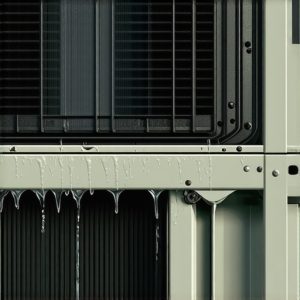
To understand why a whole-home dehumidifier is a necessity rather than a luxury, you have to look at the evaporator coil. When the refrigerant—or ‘gas’ as some of the old-timers call it—boils inside those copper fins, it drops the temperature of the coil below the dew point of the return air. As the blower motor pushes humid air across that freezing metal, water vapor condenses into liquid drops. This is latent heat removal. However, a standard heating service or cooling cycle is governed by a thermostat that only looks at sensible heat (the temperature you see on the wall). If your unit is even slightly oversized, it reaches that target temperature so fast that the coil doesn’t have enough time to wring out the moisture. This is called short-cycling. You end up with 72-degree air at 70% relative humidity. It’s disgusting. It feels like wearing a wet wool sweater in a walk-in cooler. A dedicated whole-home dehumidifier pulls that moisture out independently of the cooling cycle, allowing your AC installation to focus on the sensible temperature while the dehumidifier handles the heavy lifting of water removal.
The Mechanical Anatomy of a Dry Home
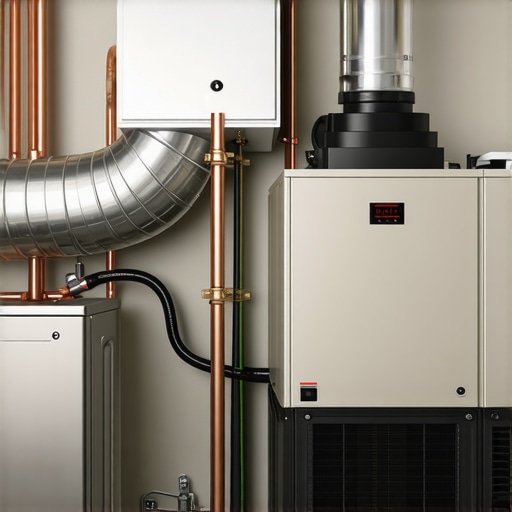
A whole-home dehumidifier isn’t just a portable unit on steroids. It’s integrated into your supply and return plenums. It uses a refrigeration cycle to cool the air to pull out moisture, but then it does something brilliant: it uses its own condenser heat to ‘reheat’ that air before it enters your ducts. This means you aren’t over-cooling the house just to get the humidity down. When I’m installing these, I’m looking at the static pressure. We use ‘Pookie’—that’s duct mastic for the uninitiated—to seal every joint. If your ductwork is leaky, you’re just sucking in humid air from the attic or crawlspace, making the dehumidifier work twice as hard. Whether you’re running a traditional split system or a high-efficiency mini-split, the logic remains the same: you cannot reach true comfort without managing the grains of moisture in the air. I’ve seen furnace repair calls that were actually just humidity issues causing the blower motor to struggle against the heavy, wet air. By adding a dedicated unit, you’re actually extending the life of your compressor because it doesn’t have to ‘hunt’ for comfort by running sub-cooled cycles.
“Ventilation air must be conditioned to maintain indoor relative humidity below 60% to prevent the growth of mold and mildew.” – ASHRAE Standard 62.2
Static Pressure and the Tin Knocker’s Secret
If you think a heating service is just about the flame, you’re wrong. It’s about the air. Every time I see a ‘Sales Tech’ push a new unit without checking the static pressure, I want to throw my manifold gauges at them. High humidity increases the density of the air, which places more load on the fan. When we integrate a whole-home dehumidifier, we often have to rework the return air drops. We’re looking for ‘beer can cold’ on the suction line of the AC, but we want the dehumidifier to discharge air that is dry and neutral. This prevents the ‘clammy’ feeling and protects your home’s bones. High humidity rots the headers over your windows and feeds the mold in your drywall. Adding a dehumidifier to your central system is the only way to ensure that when your AC shuts off, the moisture doesn’t just come roaring back from the damp evaporator coil. It’s about physics, not magic. If you want a house that feels like a sanctuary and not a locker room, you stop focusing on the thermostat and start focusing on the hygrometer.