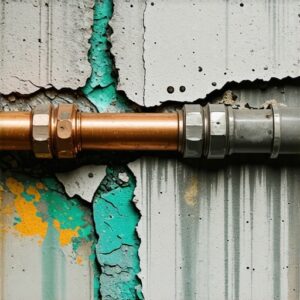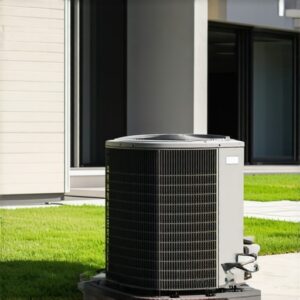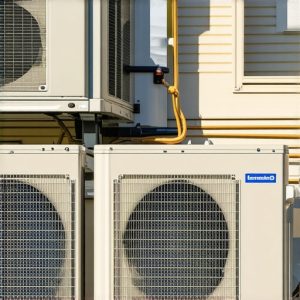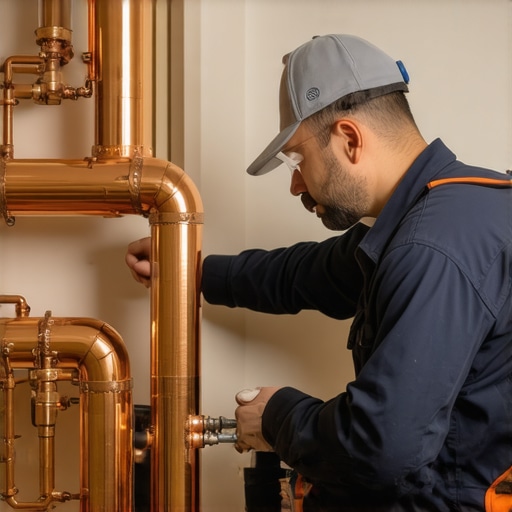
I followed a so-called “comfort adviser” last August who had just quoted a retired schoolteacher named Eleanor nearly fourteen grand for a complete AC installation. He told her that her entire line set was “contaminated beyond salvage” and needed a full rip-out, requiring her drywall to be torn open from the basement to the attic. I walked in with my digital manifold gauges, flushed the line with a little nitrogen, and found nothing but a microscopic pinhole leak right at the service valve flare. It took me forty minutes to braze it shut, pull a deep vacuum down to 350 microns, and get her system running. But here is the kicker: there are times when that “Sales Tech” is actually telling the truth, even if they do not understand the thermodynamics behind why they are saying it. Replacing your copper refrigerant lines is not always a scam, but if you do not know the physical science behind what is flowing through those tubes, you are going to get taken for a ride.
The Copper Lifeline: Why Liquid and Vapor Lines Dictate System Health
Your air conditioning system does not actually “create” cold air; it is a thermal transport mechanism. The copper lines—specifically the small, high-pressure liquid line and the larger, insulated suction line—are the circulatory system of this process. The suction line should always feel “beer-can cold” and sweaty to the touch, carrying low-pressure vapor back to the compressor, while the liquid line carries warm, high-pressure liquid toward the metering device. When a contractor proposes a new AC installation, they are dealing with a critical shift in modern system architecture. If your old unit ran on R-22 (the old ozone-depleting chlorofluorocarbon) and your new system uses R-410A or the newer A2L refrigerants like R-454B, you are dealing with vastly different operating pressures and chemical compositions.
“The chemical compatibility of lubricants and refrigerants with system materials is critical to ensuring long-term compressor reliability and preventing premature system failure.” – ASHRAE Handbook—HVAC Systems and Equipment
The old R-22 systems utilized mineral oil to lubricate the compressor. Modern systems, including ductless mini-split units and standard split-system evaporators, utilize Synthetic Polyolester (POE) oil. POE oil is highly hygroscopic, meaning it acts like a sponge for moisture. If an installer attempts to reuse old copper lines that are saturated with old mineral oil, the two lubricants will not mix. Instead, they form a nasty, acidic sludge that attacks the varnish on the new compressor windings. Within a few months, you will experience a catastrophic compressor burnout. The smell of a burnout is unforgettable—a sour, acrid, chemical stench that permanently ruins your recovery equipment and ruins your day.
The Physics of Line Sizing and Velocity
Airflow and refrigerant velocity are the twin kings of thermodynamic efficiency. You cannot simply hook up a new 3-ton condenser to an old line set designed for a 2-ton system and expect it to work. If the suction line diameter is too large, the refrigerant velocity drops. When velocity drops, the POE oil cannot make its way back up the vertical risers to lubricate the compressor, starving the mechanical bearings until they screech and seize. Conversely, if the line is too small, you create a severe pressure drop. This forces the compressor to work twice as hard, driving up your electrical bills and causing high head pressure that will cook your start capacitor on the first hot day of summer.
In northern climates where a system might pull double duty as a heat pump, or run alongside a high-efficiency furnace repair during seasonal transitions, line sizing becomes even more critical. During a winter heating service call, we often see systems where incorrect line sizes have caused liquid slugging—where raw liquid refrigerant enters the compressor crankcase because the velocity was not calibrated correctly. Compressors are designed to pump vapor, not liquid. Trying to compress a liquid is like trying to compress a brick; something mechanical is going to break, usually the reed valves or the scroll spirals.
The Myth of “The Flush” vs. Total Line Replacement
Many homeowners ask why we cannot just use a chemical flush to clean out the old copper instead of running new lines. While chemical flushes exist, they are not a magic wand. If your copper lines have multiple ninety-degree elbows hidden behind finished drywall, the flush can pool in those low spots. When the new system is vacuumed and charged, that residual solvent mixes with the new gas, thinning out the lubricating oil and causing premature bearing wear. This is why a dedicated tin knocker or experienced installer will always advocate for new copper whenever accessibility allows. It is the only way to guarantee a pristine, contaminant-free environment for the new refrigerant to do its thermodynamic work.
“Reusing existing refrigerant lines without verifying sizing, wall thickness, and total cleanliness is a primary cause of premature compressor failures in replacement systems.” – ACCA Manual 4
If you are upgrading to a high-efficiency mini-split system, the tolerances are even tighter. These systems use electronic expansion valves (EEVs) that have tiny metering orifices no wider than a sewing needle. A single speck of carbon slag from an un-nitrogenized braze joint, or a drop of residual mineral oil, will clog that EEV instantly, leaving you with an expensive system that refuses to heat or cool.
How to Protect Your Wallet From the Upsell
Before you agree to let an HVAC company tear down your walls to replace your line set, ask them to show you the physical evidence. A legitimate technician will perform a nitrogen pressure test and show you the pressure drop on a digital micron gauge. If they claim the lines are leaking, they should be able to pinpoint the leak with an electronic leak detector or bubble solution. If the lines are the correct size for the new system, are structurally sound, and can be thoroughly purged with dry nitrogen while brazing to prevent oxidation, reuse is sometimes acceptable—but only if the technician takes the time to pull a true vacuum below 500 microns to boil off any hidden moisture. Do not let a fast-talking sales rep pressure you into thousands of dollars in drywall repair without seeing the engineering math behind their recommendation.