The Era of the ‘Sales Tech’ and the Death of the Analog Gauge
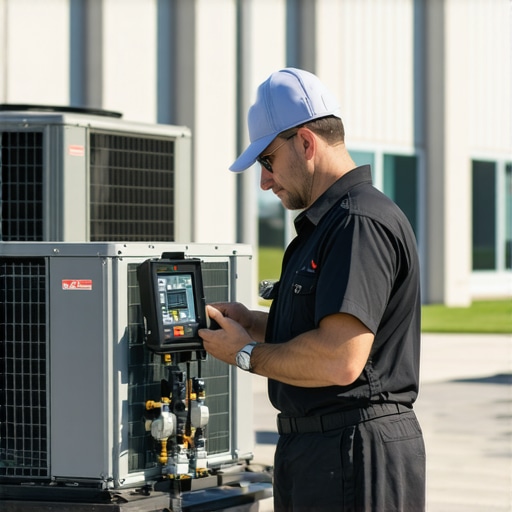
I followed a kid last week who looked like he’d never seen a crawlspace in his life. He was wearing a crisp white polo, carrying a tablet, and he’d just quoted a homeowner in a stifling 95-degree brick ranch $18,000 for a full AC installation and furnace repair combo. His diagnosis? A ‘catastrophic compressor failure.’ I walked up to that same condensing unit, pulled the service panel, and smelled it. No acidic stench of a burnout. No scorched wires. I hooked up my digital manifold—the same one that ‘Sales Tech’ didn’t even own—and saw the truth. The Juice (refrigerant) was fine; the capacitor was just swollen like a bad thyroid. A $40 part and twenty minutes of labor later, that compressor hummed to life. This is the reality of the 2026 HVAC landscape. If your technician isn’t using high-precision digital tools, they aren’t diagnosing; they’re guessing at your expense.
“The most expensive equipment in the world cannot overcome a bad duct system.” – Industry Axiom
The Physics of 2026: Why R-454B Changes Everything
We are currently standing on a regulatory cliff. As of 2025 and 2026, the old standby R-410A is being phased out in favor of A2L refrigerants like R-454B and R-32. These aren’t just new labels; they are ‘mildly flammable’ gases that operate under different thermodynamic profiles. In a humid climate like the Gulf Coast or the Atlantic seaboard, the margin for error during an AC installation has shrunk to zero. If your tech is still using old-school analog ‘swing’ gauges, they are eyeballing a process that requires surgical precision. A digital manifold test doesn’t just check pressure; it calculates Target Superheat and Subcooling in real-time. This is critical because if you’re off by even two ounces of gas, the evaporator coil won’t hit its dew point. When that happens, the unit might move air that feels ‘cool,’ but it won’t pull the latent heat (humidity) out of the air. You’ll end up with a house that feels like a cold, damp swamp, which eventually leads to mold growth inside your mini-split or air handler.
Thermodynamic Zooming: The Airflow Manifesto
Most people think an air conditioner ‘creates cold.’ It doesn’t. It’s a heat mover. It’s a thermodynamic pump. My old mentor used to scream, ‘You can’t cool what you can’t touch!’ This is why airflow matters more than horsepower. When we perform a heating service or an AC check, the digital manifold tells us if the system is ‘hunting.’ If the suction line isn’t ‘beer can cold’ with the exact right temperature-to-pressure ratio, your compressor is working double-time for half the output. In 2026, new systems come with sensors that will literally lock the system down if it detects a leak or improper flow. If your tin knocker (duct guy) didn’t size the return air drops correctly, the static pressure will skyrocket, and those fancy new A2L sensors will trip constantly. You’ll be calling for furnace repair not because the heat exchanger is cracked, but because the control board is confused by the lack of airflow.
“Proper refrigerant charging is critical for the performance and longevity of systems using A2L refrigerants.” – ASHRAE Standard 15.2
The Hidden Danger of the ‘Cheap’ Install
I see it every day: homeowners choosing the lowest bid for a mini-split or a central air swap. Here’s what you’re actually buying: a guy who uses Pookie (mastic) to hide gaps in the plenum instead of actually sealing the metal, and a guy who skips the nitrogen purge during brazing. Without a nitrogen purge, soot forms inside the copper lines. That soot eventually clogs the TXV (Thermal Expansion Valve). A digital manifold test during the commissioning phase is the only way to prove the system is operating within the manufacturer’s tight 2026 tolerances. If they can’t show you a digital printout of the subcooling, they haven’t finished the job. Don’t let a ‘Sparky’ or a fly-by-night handyman touch these new systems. The high head pressures of the 2026 units will cook a capacitor or blow a seal in a heartbeat if the sensible heat isn’t being managed properly through cleaned coils and perfect gas charges. Investing in a precision-tuned AC installation now is the only way to avoid the ‘July 4th Panic’ three years down the road when the system fails under a 110-degree load.