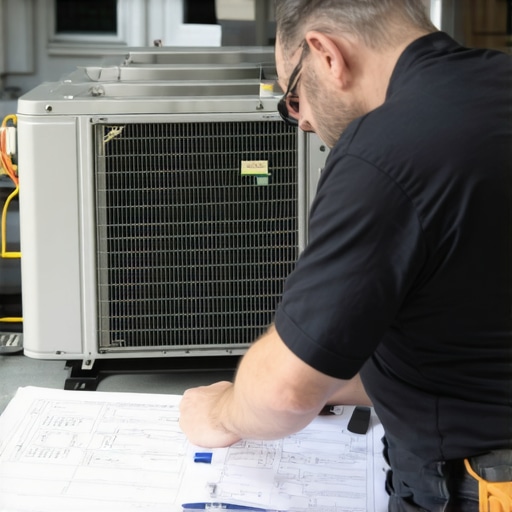
The Sound of a Thumping Compressor and the Silence of a Missing Permit
There is a specific sound a compressor makes right before it gives up the ghost—a rhythmic, metallic thumping that sounds like a heart failing in a tin chest. I’ve heard it ten thousand times in thirty years of dragging my tool bag through fiberglass-filled attics. But these days, the sound that bothers me more is the silence of a ‘Sales Tech’ when you ask them about mechanical permits. As we stare down the barrel of 2026, the HVAC industry is in the middle of the most chaotic regulatory shift since we moved away from R-22, and if you aren’t looking at the fine print of your AC installation quote, you are likely being set up for a $350 to $500 surprise from the city inspector.
The Narrative Matrix: The Case of the ‘Platinum’ Sales Trap
Last month, I followed a ‘Comfort Advisor’—that’s the fancy title companies give to guys who haven’t touched a manifold gauge in five years—to a house where he’d just quoted a $24,000 ‘Platinum Series’ inverter system. The homeowner, a retired shop teacher who knew enough to be dangerous, was suspicious. The quote was three pages of marketing fluff about ‘NASA-grade air purification’ and ‘seamless integration,’ but it didn’t mention a single word about the municipal mechanical permit. When I pulled the panels off his old unit, I found a clogged condensate drain and a $40 contactor with pitted points. The ‘Sales Tech’ had told him the ‘juice’ was acidic and the whole system was a ticking time bomb. It wasn’t. But more importantly, if he had signed that contract, he would have been legally liable for the unpermitted work when he tried to sell his house three years later. I’ve seen homeowners forced to tear out brand-new ductwork because a tin knocker didn’t get the static pressure calculations approved by the building department.
“The most expensive equipment in the world cannot overcome a bad duct system, nor can it bypass the legal requirements of the jurisdiction in which it is installed.” – ACCA Manual J Principles
Thermodynamic Zooming: Why 2026 is a Different Beast
If you think a 2026 AC installation is just like the one you had in 2015, you’re dead wrong. We are now fully into the era of A2L refrigerants like R-454B and R-32. These are ‘mildly flammable.’ Don’t let that scare you—your stove’s natural gas is much worse—but it means the physics of the install have changed. We are now installing leak detection sensors inside the evaporator coil cabinet. If that sensor detects the ‘gas’ (refrigerant) escaping, it has to kill the power to the outdoor unit and kick the blower motor into high gear to dilute the concentration. This adds complexity to the furnace repair or air handler setup that didn’t exist three years ago. When we talk about a $350 permit fee, we’re talking about the inspector verifying that these safety mitigations are actually wired correctly. If your contractor is ‘skipping’ the permit to save you money, they are skipping the safety check on a flammable pressurized system. That’s not a deal; that’s a liability.
The Humidity Trap in the Humid South
In our climate, the enemy isn’t just the heat; it’s the latent heat—the moisture suspended in the air. A ‘Sales Tech’ loves to oversize a unit because it’s an easy way to ensure the house gets cold fast. But an oversized unit ‘short cycles.’ It hits the thermostat setpoint in ten minutes and shuts off. The problem? The evaporator coil needs to stay below the dew point for at least fifteen to twenty minutes to actually wring the water out of the air. If your contractor didn’t perform a Manual J load calculation (which the permit office usually requires), you’ll end up with a house that’s 68 degrees but 70% humidity. It feels like a cold swamp. You’ll be calling for heating service or AC repair within two years because the high static pressure is killing the blower motor.
“The technician shall ensure that the recovery or charging of any A2L refrigerant is conducted in a manner that prevents cross-contamination and adheres to the strict venting and pressure-testing standards set forth by the EPA.” – EPA Section 608 Supplement
The Anatomy of a Hidden Fee: Mini-Splits and Furnaces
Whether you are looking at a multi-zone mini-split or a standard furnace repair that turns into a replacement, the ‘Sparky’ (electrician) and the tin knocker both need their work inspected. In many jurisdictions, a $350 permit fee covers the mechanical, electrical, and sometimes even the plumbing (for the condensate drain) inspections. If your quote says ‘Permits to be pulled by homeowner’ or doesn’t list them at all, run. That’s a sign the company is using sub-par labor that can’t pass a basic code review. They’ll slap some ‘pookie’ (mastic) over a leaky duct joint and call it a day. A real pro wants the inspector there. It’s a second set of eyes that proves the suction line is ‘beer can cold’ and the static pressure is within the manufacturer’s ‘sweet spot.’ Under the new 2026 standards, those inspections are going to be more rigorous than ever, focusing on the new refrigerant sensors and the proper sizing of the circuit breakers for the new A2L-compatible compressors.
Final Verdict: Don’t Save Money on the Paperwork
At the end of the day, HVAC is physics, not magic. You can’t cheat the laws of thermodynamics, and you shouldn’t try to cheat the building department. That $350 fee is the cheapest insurance policy you’ll ever buy. It ensures that your AC installation actually meets the 2026 safety standards and that your family isn’t sleeping on top of a poorly-wired, mildly-flammable refrigerant leak. When the salesman starts talking about ‘discounts’ for skipping the permit, tell him you’d rather have a technician who knows how to use a Micron gauge and a manometer than a guy who knows how to hide from the city inspector. Real comfort comes from knowing the job was done by the book, not just that the air coming out of the vent is cold today.