The Sound of Friction: Why Your Furnace is Screaming
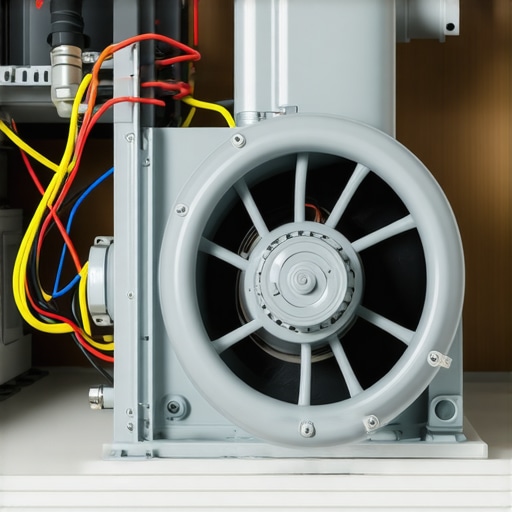
That high-pitched, metallic shriek echoing through your floor vents isn’t just an annoyance; it is the sound of mechanical friction winning a war against your bank account. As a tech who has spent three decades dragging a tool bag through frozen crawlspaces in the Northeast, I can tell you that a squealing blower motor is a final warning. If you ignore it, you won’t just be looking for furnace repair; you’ll be looking for a space heater in a blizzard. In the 2026 HVAC landscape, with the push toward high-efficiency ECM (Electronically Commutated Motors) and the regulatory shift in how we handle indoor air quality, a failing motor is often a symptom of a much deeper systemic failure in your ductwork. [image: A detailed cross-section of a furnace blower motor showing worn bearings and a dust-clogged squirrel cage blower wheel]
The Sales Tech Scam: A Case Study in Honesty
I remember a call last February during a polar vortex. A ‘Sales Tech’—one of those guys who spends more time on his hair than his manifold gauges—had just left a customer’s house. He’d quoted this retired machinist $12,000 for a full AC installation and furnace swap because the blower was ‘leaking magnetism.’ There is no such thing. I walked in, heard the motor struggling to overcome a massive load, and pulled out my manometer. The ‘Sales Tech’ hadn’t even looked at the filter, which was a 4-inch pleated monstrosity so loaded with dust it was acting like a wall. I replaced the $35 capacitor, cleaned the squirrel cage, and the unit purred. The customer didn’t need a new system; he needed a tech who understood physics, not a salesman with a quota.
“The most expensive equipment in the world cannot overcome a bad duct system.” – Industry Axiom
Thermodynamic Zooming: The Physics of the Blower
To understand why your motor is dying, you have to understand the thermodynamic load. Your furnace’s heat exchanger is a series of metal chambers where gas combustion happens. The blower motor is the lungs of the operation. It pulls return air across that heat exchanger, where thermal energy is transferred to the air stream. If the motor slows down or the bearings start to bind, the airflow drops. This causes the heat exchanger to overheat, which can lead to a cracked heat exchanger—a lethal situation involving carbon monoxide. In 2026, many homeowners are opting for a mini-split to augment their heating, but if your primary furnace blower is failing, it’s often because of ‘Static Pressure.’ This is the resistance the motor faces when trying to push air through the tin. If your tin knocker (duct installer) undersized the returns, the motor has to work twice as hard, cooking the lubricant in the bearings until they start to scream.
Fix 1: The Capacitor & The ‘Juice’ Test
The first thing to check is the run capacitor. Think of this as the motor’s battery. It provides the phase shift needed to keep the motor spinning efficiently. If the capacitor is weak (losing its microfarads), the motor will hum, run hot, and eventually the bearings will dry out and squeal. A heating service pro will check this with a multimeter. If it’s below 10% of its rated capacity, swap it. It’s a $20 part that saves a $600 motor.
Fix 2: Cleaning the Squirrel Cage (The Balance Act)
If your motor is vibrating or chirping, the blower wheel (squirrel cage) might be ‘out of round’ due to dirt buildup. Even a few grams of dust on the leading edge of the blades can cause an imbalance that destroys the motor’s shaft bearings. I’ve seen furnace repair jobs where the wheel was so caked with pookie (mastic) and dust that it was barely moving air. Cleaning these blades restores the laminar flow and reduces the torque required by the motor.
Fix 3: Correcting the Static Pressure
In 2026, we are seeing more high-MERV filters that ‘choke’ older systems. If your motor is squealing, try removing the filter for 30 seconds. If the noise changes pitch, your ductwork is too restrictive. You might need a larger return air drop or a bypass damper.
“Properly sized ductwork is the foundation of all HVAC efficiency and equipment longevity.” – ACCA Manual D Standards
The 2026 Verdict: Repair or Replace?
If your furnace is over 15 years old and the motor is shot, you have to weigh the cost. With new A2L refrigerant regulations making AC installation more expensive, sometimes fixing the old iron is the smarter move for another few seasons. However, if your heat exchanger is rusted, don’t let a sparky or a bad tech talk you into just a motor swap. Safety is non-negotiable.