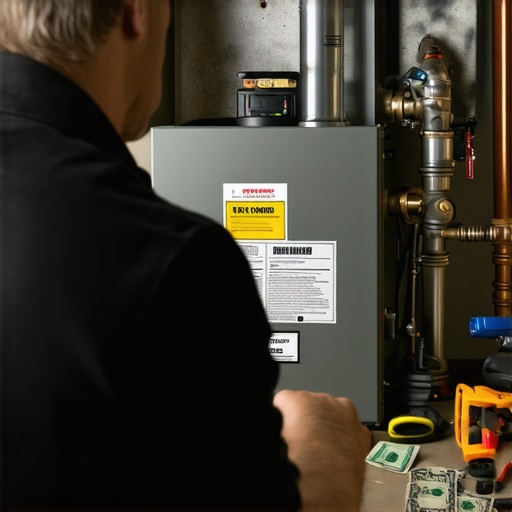
The 3 AM Silence: A Forensic Diagnosis of Your Heating System
There is a specific kind of silence that wakes a service tech up in the middle of a sub-zero night. It isn’t the absence of sound; it’s the absence of the 120-volt hum from an inducer motor or the rhythmic ‘click-click-whoosh’ of a gas furnace finding its flame. By 2026, we are seeing more high-tech components than ever, but the physics of heat transfer hasn’t changed since the first caveman rubbed two sticks together. Most homeowners think a dead furnace means a $10,000 heating service bill, especially when a ‘Sales Tech’—those guys who wear pristine white shirts and carry iPads but don’t know a multimeter from a toaster—shows up at your door. Let me tell you about a call I took last February. A corporate outfit had just quoted a guy $14,500 for a full AC installation and furnace replacement because his ‘thermal coupler was integrated into the motherboard.’ That’s a fancy way of lying to a senior citizen. I walked in, pulled a $15 flame sensor from my van, scrubbed it with a dollar bill, and the heat roared to life. He didn’t need a new system; he needed a tech who cared about static pressure and thermodynamics, not a commission check. Real furnace repair is about understanding why the system failed, not just what part to swap. If your unit is acting up, 90% of the time it’s one of three things that costs less than a decent lunch.
“The most expensive equipment in the world cannot overcome a bad duct system. If the air can’t move, the heat can’t leave.” — ACCA Manual D (Residential Duct Systems)
1. The Ghost in the Machine: The Flame Sensor Current (Total Cost: $0 to $15)
The most common call I get is the ‘short cycle.’ The furnace starts, the igniter glows orange (that’s your silicon carbide or silicon nitride surface igniter hitting 2500°F), the gas hits the burners, and then—click—it dies after three seconds. This is often the flame sensor. From a physics perspective, the furnace uses a process called flame rectification. The control board sends out an AC voltage to the sensor. When the flame hits the metal rod, the ionized particles in the fire allow a tiny amount of current to flow in one direction, converting AC to DC microamps. If that rod is coated in carbon or silica from the air, the board can’t ‘see’ the flame. It thinks the gas is leaking without a fire, so it shuts the valve for safety. You don’t need a heating service pro to fix this. You need a 1/4-inch nut driver and a piece of Scotch-Brite. Pull the sensor, clean the oxidation, and you’ve saved yourself a $300 diagnostic fee. If the ceramic is cracked, a new one is $15 on any supply site. [image_placeholder_1]
2. The ‘Breathing’ Problem: Static Pressure and the High Limit Switch (Total Cost: $10)
In the North, where the polar vortex likes to sit on our chests, homeowners love those high-MERV ‘HEPA’ filters. They think they’re cleaning the air, but they’re actually suffocating the furnace repair prospect right out of the box. Imagine trying to run a marathon while breathing through three wet napkins. That’s what a MERV 13 filter does to a blower motor not designed for it. When airflow is restricted, the heat exchanger can’t transfer its sensible heat to the air stream. The temperature inside the cabinet skyrockets until it hits the High Limit Switch. This is a bi-metal disc that warps and breaks the circuit when it gets too hot. When it ‘trips,’ the furnace shuts off the burners but keeps the blower running to cool down. If this happens enough, the switch fails or, worse, your heat exchanger cracks from the constant expansion and contraction. The fix? A simple, $10 pleated filter changed every 30 days. Don’t let the mini-split guys tell you that your ductwork is ‘obsolete’ just because you didn’t change a filter. Airflow is king, and ‘Pookie’ (the mastic we use to seal ducts) is your best friend for keeping that pressure where it belongs.
“Proper maintenance of heat transfer surfaces is essential to maintain the design AFUE and prevent premature component failure.” — ASHRAE Standard 103
3. The Clogged Throat: Pressure Switch and Condensate Traps (Total Cost: $5)
If you have a high-efficiency (90%+) furnace, you are basically running a chemistry experiment in your basement. These units extract so much heat that the flue gases turn into acidic water (condensate). This water drains through plastic tubing into a trap. If a ‘Sparky’ or a ‘Tin Knocker’ didn’t pitch the drain lines correctly, or if dust and gunk build up in the trap, the water backs up. There is a safety device called a pressure switch that monitors the vacuum created by the inducer motor. If the water blocks the ‘throat’ of the furnace, the pressure switch won’t close, and the unit won’t even try to ignite. I’ve seen ‘Sales Techs’ quote whole new AC installation packages because of a ‘dead inducer’ when the reality was just a $5 piece of vinyl tubing clogged with a dead spider or some algae. Blow out the lines, clean the trap with warm water, and you’re back in business for 2026. This is pure physics: you can’t have combustion without proper venting and drainage. If your furnace is ‘chirping’ or won’t start the vent motor sequence, check the drain lines before calling for an emergency heating service. Keeping the ‘juice’ (refrigerant) and the gas flowing safely is all about the small details that big companies ignore to hit their sales quotas.
This post hits the nail on the head when it comes to small, inexpensive fixes that can prevent costly repairs down the line. I especially appreciate the emphasis on cleaning the flame sensor, since it’s such a simple step that many homeowners overlook. I’ve found that regular maintenance like changing filters and inspecting condensate lines can make a huge difference in efficiency and longevity. Interestingly, I had a furnace act up recently during a cold snap, and it turned out to be a clogged condensate trap—cost me just a few dollars to fix after cleaning it out. It makes me wonder, how many homeowners are aware of these basic yet crucial checks? It’s pretty empowering to realize that with just a few tools and some basic know-how, you can troubleshoot and even fix many common issues without waiting for a technician.