The Scent of a Silent Killer: Why Your Basement Smells Like Metallic Decay
You know that smell. It’s not just dust burning off the ribbons for the first time in October. It’s a sharp, acidic, metallic tang that hits the back of your throat. As a technician who has spent three decades crawling through spider-infested crawlspaces and balancing on joists, I can tell you that smell usually means one thing: your heat exchanger is failing, and your ‘budget’ heating service just ignored it. In the HVAC trade, we see it every winter. A homeowner pays $59 for a ‘tune-up,’ a kid with a clean uniform and a clipboard walks in, stays for fifteen minutes, and leaves a sticker on the side of the furnace. But did he actually look at the heart of the machine? Probably not. Airflow is the lifeblood of your home, and the heat exchanger is the lung. If those lungs are scarred, cracked, or rusted, the air you’re breathing isn’t just cold—it’s toxic.
The Forensic Diagnosis: Anatomy of a Thermal Failure
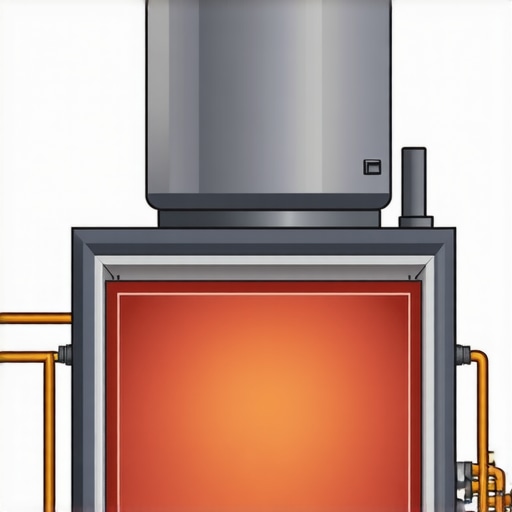
To understand why your 2026 heating service is likely failing you, we have to look at the mechanical anatomy. A furnace isn’t a magic box; it’s a thermodynamic battlefield. You have the burners creating a controlled explosion of natural gas or propane. That fire shoots into the heat exchanger—a series of serpentine metal tubes. Your blower motor then pushes house air over the outside of these tubes. The heat transfers through the metal (sensible heat exchange), and the combustion gases (carbon monoxide, nitrogen dioxide) stay inside the tubes to be vented out the flue. It’s a perfect system until physics intervenes. In the North, where temperatures plummet and the furnace cycles fifty times a day, that metal is constantly expanding and contracting. Imagine taking a paperclip and bending it back and forth. Eventually, it snaps. That’s exactly what happens to a heat exchanger. If a technician doesn’t pull the blower motor or use a high-definition borescope to check the internal curves, they aren’t doing a heating service; they’re doing a visual scan of a metal box.
“The most expensive equipment in the world cannot overcome a bad duct system, nor can a high-efficiency burner compensate for a breached heat exchanger that compromises indoor air quality.” – Industry Axiom
The Sales Tech Scam: A Real-World Post-Mortem
Last January, I followed a tech from one of those ‘Big Box’ franchises. They had quoted a homeowner in a drafty Victorian a $14,000 full system replacement, claiming the ‘whole unit was shot’ because of a bad igniter. I arrived to find a sweet old lady shivering in a parka. I didn’t look at the thermostat first. I went straight for the combustion analysis. While the ‘Sales Tech’ was busy trying to sell her a smart thermostat she didn’t need, he missed the soot patterns on the burner door. I pulled the high-limit switch and shoved my camera into the primary cell. There it was: a hairline fracture four inches long, hidden behind the inducer motor assembly. The ‘Sales Tech’ didn’t even have a mirror in his bag. He wanted the commission on a new AC installation and furnace combo, but he was willing to leave her with a furnace that was actively leaking 20 parts per million of CO into her return air plenum. I didn’t sell her a $14,000 system that day; I performed a targeted furnace repair by replacing the heat exchanger under warranty and saved her life. That’s the difference between a ‘Sparky’ playing with wires and a real tech who understands the physics of combustion.
Thermodynamic Zooming: The Latent Heat of Condensation
If you have a modern 90% AFUE (Annual Fuel Utilization Efficiency) furnace, the stakes are even higher. These units have a secondary heat exchanger. This is where the real science happens. In a standard furnace, the exhaust stays hot enough to stay in a gaseous state. In a high-efficiency unit, we extract so much heat that the exhaust gases actually turn back into liquid—this is the latent heat of condensation. This liquid is highly acidic. It’s basically a mixture of water and carbonic acid. If your heating service tech isn’t checking the condensate trap and the secondary exchanger for signs of ‘pitting,’ that acid will eat through the metal from the inside out. Once that secondary exchanger clogs with ‘white rust,’ your furnace will start ‘short cycling.’ It’ll run for three minutes, get too hot because it can’t breathe, and shut down. Most techs will just swap the flame sensor and leave. A real pro checks the static pressure to see if the ‘Tin Knocker’ who built your ducts 20 years ago actually gave the system enough return air to keep the metal from cooking.
“Ventilation systems shall be designed to ensure that the pressure differentials do not cause the backdrafting of naturally aspirated appliances.” – ASHRAE Standard 62.1
Mini-Splits and the 2026 Regulatory Cliff
We’re heading into a massive shift in 2026. With the transition to A2L refrigerants (like R-454B), the world of AC installation is changing. But this affects your heating too. Many homeowners are moving toward ‘dual-fuel’ systems—a high-efficiency furnace paired with a mini-split heat pump. This is a smart move for cold climates. The mini-split handles the ‘sensible heat’ load down to about 30°F using electricity, and the gas furnace kicks in when the ‘Polar Vortex’ hits. However, if your tech doesn’t understand the ‘reversing valve’ logic or how to properly charge the ‘juice’ (refrigerant) in sub-zero temps, your backup heat will never engage. I’ve seen ‘Sales Techs’ install these systems with the outdoor unit’s ‘suction line’ exposed to the wind, wondering why the house won’t get above 62 degrees. It’s not magic; it’s physics. You need a technician who knows that ‘Pookie’ (mastic) belongs on every duct joint to prevent the loss of CFM (Cubic Feet per Minute) before it ever reaches your vents.
The Math of Survival: Repair vs. Replace
When I’m standing in a basement, looking at a cracked exchanger, the question is always: ‘Is it worth the furnace repair?’ If the unit is under 10 years old, the part is usually under warranty. You’re just paying for the labor to ‘gut the pig’—which is trade-speak for taking the entire furnace apart to slide the new cells in. But if that furnace is 15 years old and sitting on a rusted-out base, you’re throwing good money after bad. A new 2026-compliant system will use 30% less gas and provide far better humidity control. But beware: the cheapest bid is usually the most expensive one in the long run. If they don’t perform a Manual J load calculation to see if your house actually needs 80,000 BTUs, they’ll just ‘oversize’ it. An oversized furnace is a death sentence for a heat exchanger. It heats up too fast, shuts down, and repeats the cycle, accelerating the metal fatigue that causes the very cracks we’re trying to avoid. Don’t let a ‘Sales Tech’ skip the combustion analysis. Demand the CO readings. Demand to see the borescope footage. Because in the dead of a Chicago winter, airflow isn’t just a luxury—it’s the only thing keeping the frost off your windows and the poison out of your lungs.