The Sound of a Straining System
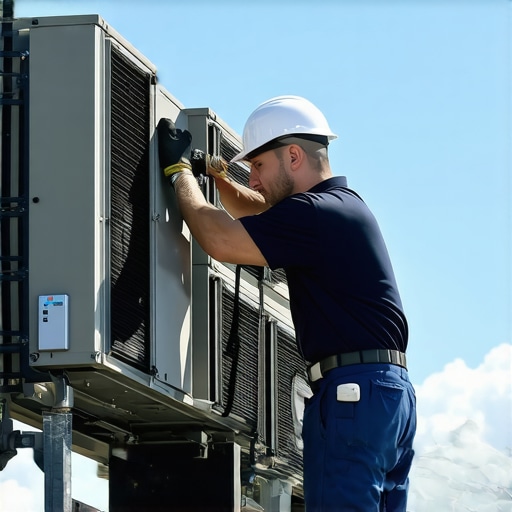
I can hear a failing commercial unit from the parking lot before I even grab my manifold gauges. It’s a rhythmic, metallic ‘clack-clack-clack’ of a contactor chattering because the low-voltage transformer is screaming for mercy under a 110-degree sun. You think a heatwave is just ‘hot weather,’ but to a rooftop unit (RTU), it’s a mechanical war. My old mentor, a man who had more refrigerant in his veins than blood, used to scream at me, ‘You can’t cool what you can’t touch!’ He wasn’t talking about the air; he was talking about the molecules. If your airflow is restricted, those evaporator coils are just blocks of useless copper. This is why airflow matters more than horsepower. If you don’t prep your commercial system before the mercury hits triple digits, you aren’t just looking at a ‘service call’—you’re looking at a catastrophic compressor burnout that smells like acidic rot and costs as much as a mid-sized sedan.
The Forensic Anatomy of a Commercial Heatwave
When the ambient temperature on a gravel rooftop hits 120°F, the physics of refrigeration start to work against you. Your system works by moving heat, not creating ‘cold.’ It’s a thermodynamic trade. The suction line should be ‘beer can cold,’ a sign that the refrigerant is boiling off and absorbing latent heat from your building. But when the condenser coils are packed with cottonwood seeds and ‘Pookie’ (that’s duct mastic for the uninitiated), the heat has nowhere to go. The head pressure skyrockets. The juice (refrigerant) stays a high-pressure gas instead of condensing into a liquid, and suddenly, your compressor is trying to compress a gas that’s already too hot. That’s how you kill a 20-ton scroll compressor.
“The most expensive equipment in the world cannot overcome a bad duct system.” – Industry Axiom
The Capacitor: The Heart Attack of the HVAC World
In the Southwest or any dry, high-heat zone, sensible heat is the primary enemy. It cooks electrical components. I’ve seen ‘Sales Techs’ try to sell a whole new AC installation when all the unit needed was a $40 start capacitor. These little silver cans store energy to kick-start the motors. In a heatwave, they bulge and leak oil. If your capacitor is weak, the motor draws more amps, generates more internal heat, and eventually trips the thermal overload. Once that happens, you’re dead in the water. We check the microfarads. If they’re 10% below rating, they’re out. No questions asked. It’s cheaper than a midnight emergency heating service call when the heat pump reversing valve gets stuck because the electrical pulse was too weak.
The Airflow Manifesto: Why Your Vents Are Lying
Commercial spaces often have ‘dead zones.’ One office is a walk-in freezer; the other is a sauna. Most owners think they need more ‘gas,’ but usually, they need a tin knocker to fix the static pressure. Closing vents is a crime in the HVAC world. It doesn’t save energy; it increases the static pressure, slows down the blower motor, and causes the evaporator coil to freeze into a solid block of ice.
“The design and installation of the air distribution system shall be based on the heat loss and heat gain of the spaces to be served.” – ACCA Manual N
If you’re dealing with a server room that’s melting, don’t just crank the main AC. That’s how you wear out a furnace’s blower prematurely. Instead, a dedicated mini-split is the surgical solution. It handles the high sensible heat load of the servers without forcing the main RTU to short-cycle and slug liquid refrigerant back to the compressor.
The 2025 Regulatory Cliff
We are currently in the ‘Great Refrigerant Transition.’ R-410A is being phased out for A2L refrigerants like R-454B. This means if your commercial unit is more than 12 years old and leaks ‘the gas,’ you are facing a massive financial decision. The new units require leak sensors and different spark-proof motors because the new refrigerants are ‘mildly flammable.’ This summer, if I find a major leak in an old R-22 or even an early R-410A system, a furnace repair or simple patch isn’t enough. You have to weigh the cost of a recharge—which is now priced like liquid gold—against a modern, high-efficiency install. Don’t let a Sales Tech scare you into it, but do the math on the SEER2 ratings.
The Pre-Heatwave Checklist (The Non-Scam Version)
1. Wash the Coils: Not just a sprinkle. You need to get the ‘mat’ of dirt out. If you don’t, the head pressure will stay 50 PSI higher than it should, eating your compressor from the inside out. 2. Check the Contactor: If the points are pitted, they’ll weld shut. That’s how you get a ‘runaway’ compressor that keeps going until it explodes. 3. Check the Pookie: Ensure the plenums are sealed. You’re paying to cool the rooftop if they aren’t. 4. Blower Belt Tension: A slipping belt loses 20% of your airflow. That’s 20% of your cooling capacity gone for a $15 part. Commercial HVAC isn’t magic; it’s a balance of pressures and temperatures. Keep the air moving, keep the coils clean, and keep the ‘Sparky’ away from your control board unless he knows what a 24V common is. Real maintenance is about catching the $50 problem before it becomes a $15,000 disaster.