The Sound of the Industrial Beast
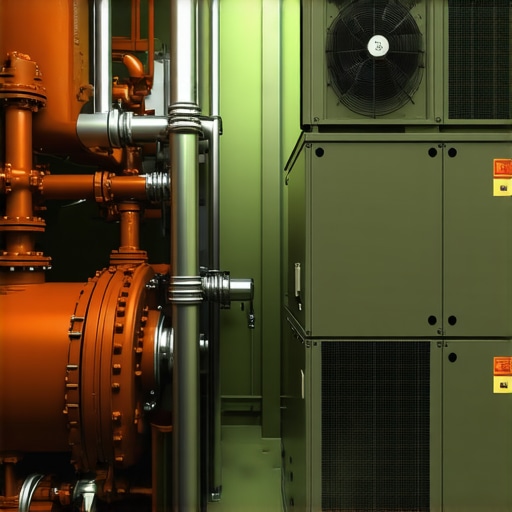
Walk into a mechanical room housing a 500-ton centrifugal chiller and you don’t just hear the noise; you feel it in your teeth. It’s a high-pitched whine, a mechanical scream of physics being forced into submission. Now, go stand on the roof next to a 10-ton RTU (Roof Top Unit). It sounds like a lawnmower. If you treat that chiller like it’s just a bigger version of the RTU, you’re not an HVAC technician; you’re a liability. I’ve seen enough ‘Sales Techs’ try to apply residential furnace repair logic to a commercial plant to know that ignorance in this field carries a six-figure price tag. [image_placeholder_1]
The Narrative: The Case of the $200,000 Ghost
I remember following a ‘senior specialist’ from a big-box franchise to a data center three years back. This guy had the shiny truck and the iPad, but he didn’t know a sub-cooling calculation from a grocery list. He told the facility manager that their water-cooled chiller was ‘slugging’ and needed a complete compressor overhaul—a $200,000 job. He’d seen some oil residue and panicked. I walked in, pulled an oil sample for an actual lab analysis, and checked the approach temperature. The ‘oil’ was just some overspray from a sloppy ‘Sparky’ working on a nearby conduit, and the vibration was a loose mounting bolt on the primary pump. That ‘Sales Tech’ was ready to gut a perfectly healthy machine because he didn’t understand the thermodynamic zooming required for industrial systems. This is why we don’t guess; we measure.
The Regulatory Cliff: The End of the R-410A Era
We are currently standing on the edge of the most significant regulatory shift in thirty years. The EPA is sunsetting R-410A, and the move to A2L refrigerants like R-454B is changing the maintenance game. While a standard AC installation or a mini-split might just require a new leak detector, chillers are a different animal. We’re talking about ‘mildly flammable’ refrigerants in massive volumes. The sensors required for a chiller room now have to be calibrated with the precision of a surgical tool. If you’re buying the cheapest RTU on the market this year, you’re buying a dinosaur. In 2025, the parts for that ‘deal’ you got will be worth their weight in gold, and not in a good way.
“The most expensive equipment in the world cannot overcome a bad duct system, but a poorly maintained chiller will bankrupt a building faster than any duct leak.” – Industry Axiom
Thermodynamic Zooming: Why Water Changes Everything
In a standard RTU, we use air-to-refrigerant heat exchange. It’s simple, but it’s inefficient. Air is a lousy conductor of heat. In a chiller, we’re using water or a glycol mix. We are looking at the ‘Approach Temperature’—the difference between the temperature of the leaving fluid and the saturated refrigerant temperature. If that approach drifts by even two degrees, you aren’t just losing efficiency; you’re killing the compressor. In a Southwest climate, where 115°F ambient heat is the norm, high head pressure is the silent killer. While an RTU might just trip a high-pressure switch and wait for a heating service call, a chiller with fouled tubes will try to fight the physics until the motor windings cook in their own juice.
The Airflow Manifesto vs. The Hydronic Reality
I’ve heard ‘Tin Knockers’ argue that airflow is the only thing that matters. They’re 90% right when it comes to furnace repair or AC installation. If the static pressure is wrong, the unit dies. But in the chiller world, we worry about water chemistry. If your ‘Pookie’ (mastic) isn’t sealed on an RTU duct, you lose some CFM. If your water treatment tech misses a beat on a cooling tower, you get scale. Scale is the ‘insulation’ from hell. A layer of scale thinner than a human hair on the condenser tubes can drop your chiller’s efficiency by 10%. You don’t wash chiller tubes with a garden hose like you do an RTU coil; you use mechanical brushes and acid descalers.
“The design and maintenance of chilled water systems must prioritize the removal of non-condensables to maintain the integrity of the heat transfer cycle.” – ASHRAE Standards
The Trap: Brand Science and The Maintenance Gap
Whether it’s Trane, Carrier, or York, the brand matters less than the person holding the manifold gauges. However, the maintenance schedules are night and day. An RTU needs a quarterly check: filters, belts, and a quick look at the contactors. A chiller requires a forensic audit. We’re talking about oil spectrometry to look for bearing wear, eddy current testing of the tubes to find pits before they become leaks, and vibration analysis. If you treat a chiller maintenance contract like a ‘seasonal tune-up,’ you’re begging for a catastrophic failure in the middle of a July heatwave. We don’t ‘top off’ the gas here. If it’s low on juice, there’s a leak in a thousand feet of copper tubing, and we find it.
The Physics of Comfort: It’s Not Magic
At the end of the day, whether you’re dealing with a mini-split in a bedroom or a centrifugal monster in a basement, the physics of latent heat removal remains the same. But the scale of a chiller means the margin for error is zero. We don’t just ‘make it cold.’ We manage a thermodynamic cycle that involves thousands of gallons of water and hundreds of pounds of refrigerant. If you want a system that lasts thirty years instead of ten, you stop listening to the guys selling ‘gold-plated’ service plans and start hiring the techs who still have ‘Pookie’ under their fingernails and a copy of the psychrometric chart burned into their retinas.