The Sound of a Wet Disaster
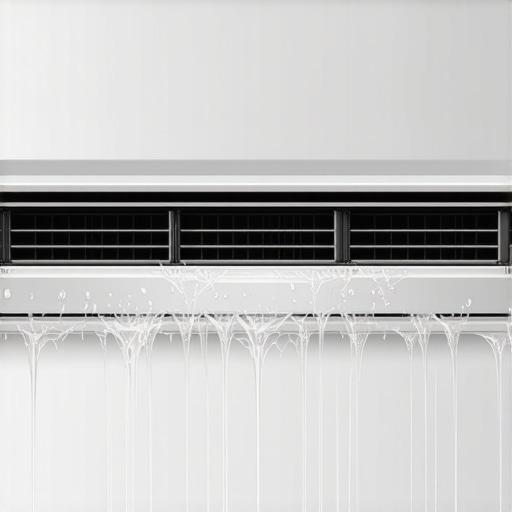
There is a specific sound that makes an HVAC tech’s skin crawl at 3 AM: the rhythmic drip-plink-splash of a mini-split indoor head unit turning into a wall-mounted waterfall. You didn’t pay for a water feature; you paid for high-efficiency cooling. When that unit starts spitting ice-cold droplets across your hardwood floor or down your drywall, it isn’t just a nuisance—it is a signal that the delicate balance of psychrometrics has been violated. Most ‘Sales Techs’ will walk in, take one look, and tell you the whole system is shot and you need a fresh AC installation. They’re usually lying. I’ve spent thirty years chasing leaks and diagnosing airflow, and I can tell you that a spitting mini-split is almost always a result of neglected physics or a lazy install.
The Physics Lesson: Sarge’s Beer Can Prophecy
My old mentor, ‘Sarge’ Miller, used to stand in the middle of a sweltering 95% humidity afternoon in the Deep South, holding a sweating can of soda. He’d point at the beads of water rolling off the aluminum and growl, ‘You can’t cool what you can’t touch, and if you touch it, you’re gonna make it cry.’ This is the core of thermodynamic zooming. Your mini-split’s evaporator coil is designed to drop well below the dew point of the room’s air. As the warm, wet air is pulled across those aluminum fins, the latent heat is removed. That heat energy turns into physical water—condensate. On a humid day, a single 12,000 BTU head can pull several gallons of water out of the air. If the path for that water isn’t perfect, gravity will find a different way out, usually right over the front louvers.
“Equipment must be sized to meet the calculated sensible and latent loads of the space; oversizing leads to poor humidity control and premature component failure.” – ACCA Manual S
The Forensic Diagnosis: Why It’s Spitting
When a unit ‘spits’—meaning it actually throws water droplets into the air stream—you are usually looking at a surface tension issue or an airflow velocity problem. If the evaporator coils are coated in even a fine layer of ‘bio-slime’ or dust, the water can’t ‘sheet’ down the fins into the drain pan. Instead, the high-velocity air from the blower wheel literally rips the droplets off the fins and flings them into your living room. This is why heating service and cooling maintenance aren’t just about ‘checking the juice.’ It’s about chemical cleaning of those fins to maintain the proper surface tension.
The Clogged Drain ‘Slug’
The most common culprit is the drain line. Mini-split drains are narrow—often just 5/8th of an inch. Inside the dark, damp environment of the drain pan, a cocktail of dust and humidity creates a biological ‘pookie’—a thick, snot-like algae. Once that line is restricted, the pan overflows. But if the unit is spitting while the pan is empty, you might have a cracked drain pan or a ‘Tin Knocker’ who didn’t level the unit during the initial AC installation. If the ‘gas’ (refrigerant) is low, the coil might partially freeze. When that ice melts during the off-cycle, it doesn’t always hit the pan; it bypasses the drainage system entirely.
The Humid South Logic: Latent Heat Overload
In humid climates like Houston or Miami, the ‘Enemy’ is Latent Heat. If your mini-split is oversized—a common mistake made by ‘Sparky’ or an unlicensed handyman—it will ‘short cycle.’ It hits the temperature setpoint so fast that it doesn’t have time to actually pull the moisture out of the air. The coil stays wet, the room stays clammy, and eventually, the moisture saturates the internal insulation of the unit until it starts dripping from every seam. You don’t need a bigger unit; you need a unit that runs longer at a lower speed to wring the air dry.
“The most expensive equipment in the world cannot overcome a bad duct system or improper condensate management.” – Industry Axiom
Repair vs. Replacement: Doing the Math
A professional cleaning and drain flush usually costs between $200 and $400. Compare that to the $4,000+ cost of a new head unit and the ‘gas’ recovery required to swap it. Unless your evaporator coil is pitted and leaking refrigerant (the acidic ‘sour’ smell of a burnout), there is no reason to replace a spitting unit. If you’ve reached the point where you’re considering furnace repair or a total system overhaul, start with the basics: check the pitch, clear the ‘slug’ from the line, and scrub the fins. Comfort is physics, not magic. Don’t let a ‘Sales Tech’ talk you into a new system when all you need is a shop-vac and some coil cleaner.