The Airflow Manifesto: Why Your Old House Is Starving for BTUs
Look, I’ve spent thirty years crawling through crawlspaces that were clearly designed by people who hated technicians, and if there is one thing I have learned, it is this: your 1920s Victorian or that mid-century bungalow was never meant to have a forced-air system. My old mentor, a guy who could smell a refrigerant leak from the curb, used to scream at me, ‘You can’t cool what you can’t touch!’ He was right. Airflow is the lifeblood of comfort, and in these old structures, trying to shove a traditional AC installation into existing ‘tin’ is like trying to breathe through a cocktail straw while running a marathon. This is where the mini-split changes the game, provided you don’t let a ‘Sales Tech’ talk you into a system that is sized for a warehouse when you only need to cool a master suite.
“Proper equipment selection requires an accurate heating and cooling load calculation. Over-sizing equipment to compensate for poor building envelopes leads to short-cycling and premature component failure.” – ACCA Manual S
When we talk about retrofitting, we aren’t just slapping a plastic box on a wall. We are performing a surgical intervention on the home’s thermodynamics. In the Northeast or the Great Lakes region, where these old houses dominate, we face the ‘Polar Vortex’ problem. You need a heating service that doesn’t quit when the mercury hits zero. Traditional heat pumps used to be a joke in the snow belt, but modern inverter-driven mini-splits have changed the physics. They don’t just turn on and off; they modulate. They sip ‘juice’ (refrigerant) and adjust the compressor frequency to match the load. It’s the difference between a light switch and a dimmer. This is crucial because an old home has a massive ‘latent heat’ load. Latent heat is the energy trapped in the moisture of the air. If your unit is oversized—a classic mistake by guys looking for a quick commission—the evaporator coil won’t stay below the dew point long enough to wring the water out. You’ll end up with a house that is 68 degrees but feels like a Louisiana swamp.
The Forensic Diagnosis: Anatomy of an Old Home Retrofit
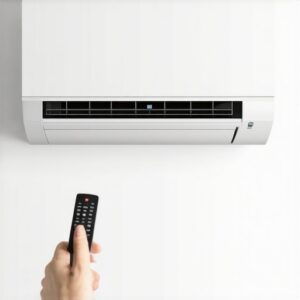
Before you call a ‘Sparky’ to run the 220V lines, you have to look at the ‘Static Pressure’ of the environment. In a mini-split setup, we are bypassing the ductwork entirely, which eliminates the friction loss that kills traditional furnace repair efforts. When I walk into a job site, the first thing I look at isn’t the thermostat; it’s the envelope. Where is the heat escaping? In old homes, it’s usually the ‘stack effect’ pulling cold air through the rim joists and pushing hot air out the attic. A mini-split allows for ‘Zoning,’ which is the only way to treat a three-story house that has a 15-degree temperature swing between floors. [IMAGE_PLACEHOLDER_1]
The strategy for a successful retrofit starts with the ‘Line Set’—the copper tubes that carry the gas. In an old home, you don’t want to butcher the plaster and lath. We use ‘Pookie’ (mastic) and high-quality line-set covers to keep the aesthetic intact while ensuring the suction line stays ‘beer-can cold.’ If that suction line isn’t sweating and cold to the touch, your mass flow rate is off, and you’re killing your compressor. I’ve seen too many ‘tailgate specials’ where the tech didn’t even use a vacuum pump to pull the system down to 500 microns. If there is moisture in that line, it reacts with the oil and creates acid. That’s how you get a burnout that smells like a vinegar factory exploded in your attic.
Thermal Zoning vs. The Central Air Trap
Most homeowners think they need a massive unit to solve their problems. That is the ‘Horsepower Myth.’ I followed a kid last week who quoted a homeowner $18,000 for a 5-ton central system in a house with 4-inch ducts. The static pressure would have been so high the blower motor would have hummed like a jet engine before burning out in three years. I told her the truth: ‘Ma’am, your ducts are the problem, not the AC.’ We installed a multi-head mini-split system instead. By placing heads in the high-load areas—the kitchen and the south-facing bedrooms—we addressed the ‘Sensible Heat’ exactly where it was being generated. This is the ‘Airflow Manifesto’ in action: move the heat, don’t just fight it.
“The design and installation of the air distribution system shall be based on the calculated heat gain and heat loss of the building.” – ASHRAE Standard 62.2
In cold climates, the ‘defrost cycle’ is the enemy. When you’re using a mini-split for heating service in the dead of winter, the outdoor coil will frost over. A cheap unit will struggle, leaving you in the cold while it tries to thaw itself out. A high-end retrofit involves selecting ‘Hyper-Heat’ models that can maintain 100% capacity down to 5°F. This isn’t magic; it’s just better engineering of the flash gas injection cycle. If your furnace repair guy tells you a heat pump can’t work in the North, he’s stuck in 1995. He probably still uses a manifold gauge set that’s leaking more gas than it’s measuring.
Strategic Placement: The Art of the Wall-Hung Head
Placement is everything. You don’t put a head unit directly over a bed unless you want a sinus infection, and you don’t put it in a corner where the ‘Coanda Effect’ causes the air to short-cycle back into the return. You want that air to throw across the room, hugging the ceiling before dropping down to mix with the stagnant air near the floor. This is ‘Thermodynamic Zooming’—understanding how the air molecules are actually behaving in the space. In an old home with high ceilings, this is even more critical. If you don’t get the air to mix, you’ll have a pocket of cold air at your feet and a layer of heat at your head. That’s not comfort; that’s a physics fail.
Maintenance: Don’t Let Your Investment Turn into a Biohazard
The final part of the strategy is the one no one wants to talk about: the ‘Dirty Sock Syndrome.’ Because mini-splits have such tight fins on the evaporator coils to maximize surface area, they can trap organic matter. If you don’t clean those filters every month, you’re growing a science project. A real technician will show you how to pop the cover and wash those screens. If a company tries to sell you a ‘bi-annual maintenance plan’ for $400 that just involves a guy spraying a can of foam on the coil, you’re being fleeced. You need to check the condensate drain. In these old houses, we often have to use ‘condensate pumps’ because there’s no gravity drain nearby. If that pump fails, you’ve got a waterfall on your wallpaper. Always ask for a secondary safety switch; it’s a five-dollar part that saves a five-thousand-dollar floor.