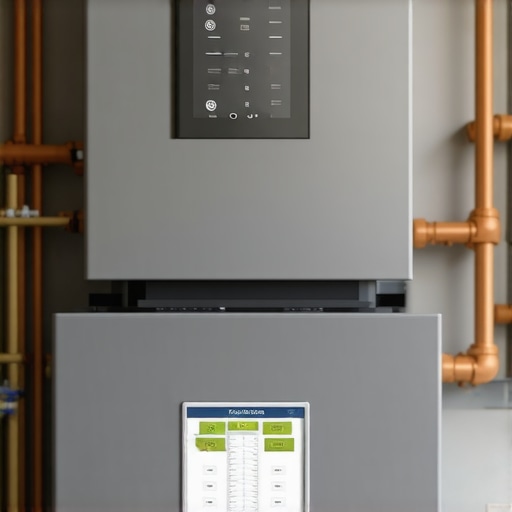
The Frantic Click of a Dying Cycle
You’re sitting in your living room in the dead of a Great Lakes January, and you hear it: the rhythmic, mechanical heartbeat of a machine that’s lost its mind. The draft inducer motor kicks on with a whine, the igniter glows a dull orange, the burner roars for exactly forty-five seconds, and then—click. Silence. Then it starts all over again. In the trade, we call this short cycling, and it’s the fastest way to turn a high-efficiency furnace into a pile of scrap metal. If your 2026 model is doing this, don’t call the guy who’s going to sell you a new unit before he even takes the door off. He’s a ‘Sales Tech,’ and he’s looking for a commission, not a solution.
I remember following one of these guys out to a job in a blizzard three years ago. The homeowner was an retired schoolteacher, shivering in a parka because a ‘technician’ told her the primary heat exchanger was shot and she needed a $14,000 system. I took one look at the burner assembly, pulled out a piece of scotch-brite, cleaned a single metal rod, and the heat stayed on for the rest of the winter. Total cost of parts? Zero. That’s the difference between knowing the physics of combustion and knowing how to read a sales script. Airflow and sensor logic dictate the life of your equipment. If the sensors don’t see what they expect, the ‘brain’ (the integrated furnace control or IFC) pulls the plug to keep your house from becoming a localized blast zone.
“Proper equipment sizing and duct design are the foundation of HVAC performance. The most expensive equipment in the world cannot overcome a bad duct system.” – ACCA Manual J Standards
The Flame Sensor: The Guardian of the Juice
The first culprit in the 2026 furnace cycle-of-doom is the flame sensor. This isn’t a complex computer chip; it’s a simple stainless steel rod that sits in the path of the fire. Through a process called flame rectification, the IFC sends an AC current to the sensor. The flame itself acts as a conductor, converting that AC into a tiny DC microamp signal. If the sensor is coated in carbon or silica (common in newer high-efficiency burners), the signal drops. The furnace thinks the gas is flowing without a flame—a recipe for a boom—and shuts the gas valve immediately. This is the classic 30-to-90 second cycle. You don’t need a new furnace repair; you need a technician who knows how to use a multimeter to check for 2.0 to 5.0 microamps.
The High Limit Switch: The Airflow Architect’s Nightmare
If your furnace runs for five or ten minutes then quits, you’re likely hitting the High Limit Switch. This is a safety device designed to trip when the heat exchanger gets too hot. Why does it get too hot? Because you’re suffocating it. This is where the ‘Airflow is King’ mantra comes in. If your AC installation was done by a ‘tin knocker’ who didn’t understand static pressure, your furnace is trying to push 1200 CFM of air through a 600 CFM duct. The heat can’t escape the exchanger, the metal expands too fast, and the limit switch breaks the circuit. Over time, this thermal cycling causes the metal to fatigue and crack. Thermodynamic Zooming tells us that heat transfer only happens if there’s a temperature gradient; if the air stops moving, the heat stays in the steel, and the steel eventually fails. Check your filters—if they’re caked in dust, you’re killing your compressor and your heat exchanger simultaneously.
The Pressure Switch: Venting and the ‘Sparky’ Connection
The third sensor in the triad is the pressure switch. In modern 2026 systems, this diaphragm monitors the negative pressure created by the draft inducer motor. It’s making sure the chimney or PVC venting isn’t blocked by a bird’s nest or ice. In the North, we see this constantly during a polar vortex. If the inducer can’t pull a vacuum, the switch won’t close, and the ‘gas’ never flows. Sometimes, it’s not even the switch—it’s a cracked rubber tube or a clogged condensate port. High-efficiency furnaces are basically giant dehumidifiers that happen to make heat; if the water can’t drain out, the pressure switch won’t let the fire start. If you’re considering a mini-split as a backup, this is often why—people lose faith in their complex central systems when a simple drain clog shuts down the whole house.
“All combustion equipment shall be installed such that the temperature of the flue gases does not fall below the dew point to prevent corrosive condensate.” – ASHRAE Standard 15.2
Before you commit to a full heating service overhaul, look at the math. A sensor cleaning or replacement is a few hundred dollars. A ‘Sales Tech’ will try to tell you that R-410A is dead and you need to switch to an R-454B system immediately because your furnace is ‘old’ at eight years. That’s garbage. A well-maintained furnace with proper airflow can last 20 years. If your unit is short-cycling, it’s screaming for help, not for a replacement. Make sure your tech checks the static pressure and the microamps before they ever pull out a credit card reader. Comfort isn’t a commodity you buy; it’s a result of physics being respected by the person holding the manifold gauges.