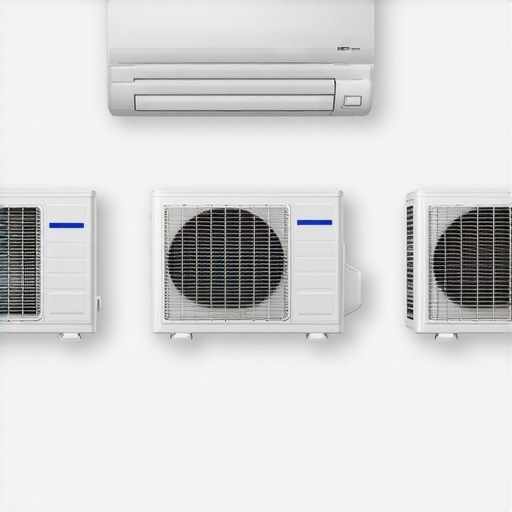
The Anatomy of a Midnight Drip: Why Your Mini-Split is a Managed Rainstorm
You’re lying in bed in the middle of a swampy July night when you hear it: drip… drip… splash. It’s not the faucet. It’s your sleek, wall-mounted mini-split deciding to relocate the humidity of the outdoors directly onto your $4,000 mahogany dresser. Most folks think an AC installation is just about hanging a box and clicking a remote, but as someone who’s spent three decades chasing ghosts in mechanical rooms, I can tell you that a mini-split is essentially a controlled indoor rainstorm. When that unit pulls latent heat out of your air, it’s stripping out gallons of water. If that water doesn’t have a clear path to the exit, it’s going to find one through your drywall.
I remember following a ‘Sales Tech’—one of those guys with a crisp white shirt and zero grease under his fingernails—out to a house in the suburbs. He’d quoted this couple $12,000 for a full system replacement because the indoor head was ‘leaking refrigerant and freezing up.’ I walked in, saw the water stains, and pulled the cover. The coil wasn’t freezing; the drain pan was backed up with a sludge that looked like lime-green snot because the previous installer didn’t understand basic physics. A $15 blowout of the line and a shot of biocide saved them ten grand. That tech didn’t have a clue, or worse, he did. Either way, he forgot the golden rule: Airflow and drainage are the heartbeat of the system.
“The most expensive equipment in the world cannot overcome a bad duct system—or in the case of ductless, a failure to respect the laws of fluid dynamics.” – Industry Axiom
Thermodynamics and the Dew Point: The ‘Why’ Behind the Wet
To understand why these hacks are non-negotiable for 2026, you have to understand Thermodynamic Zooming. When your evaporator coil drops below the dew point of the room, moisture molecules in the air lose their kinetic energy and condense into liquid. In a high-humidity environment like the South, a single 12,000 BTU head can produce over a gallon of water an hour. That water has to travel through a tiny 5/8-inch hole. If your heating service pro isn’t checking these lines during the winter, you’re asking for a mold colony by spring. Let’s look at how to bulletproof your home against the ‘Water-Wall’ effect.
Hack 1: The ‘Pookie’ and Pitch Protocol
Gravity is the only employee that never goes on strike. Most water damage stems from a sagging drain line. When we run the suction line and drain through a wall penetration, installers often get lazy with the ‘Pookie’ (mastic). If the hole isn’t sealed correctly, hot humid air from the wall cavity hits the cold drain line, creating secondary condensation. Hack: Ensure a minimum 1/4-inch drop per foot of run. If you see a ‘belly’ in the flexible drain line, you’re looking at a future blockage. Secure it with hard-pipe PVC wherever possible to maintain a rigid, predictable slope.
Hack 2: The Secondary Float Switch (The Fail-Safe)
Most mini-splits have a built-in sensor, but they are notoriously finicky. For 2026, I’m recommending a secondary overflow switch installed directly into the drain pan or the line. This is a simple circuit breaker. If the water rises 1/8th of an inch too high, it kills power to the outdoor compressor. It’s better to be hot for an hour while you clear a clog than to wake up to a ruined floor. This is standard AC installation practice for any tech worth their salt.
Hack 3: The ‘Juice’ Neutralizer (Biocide Strips)
The dark, damp environment of a condensate pan is a Five-Star hotel for algae and ‘white slime.’ This gunk acts like a dam. I tell my clients to stop worrying about ‘topping off the gas’ (if you need refrigerant, you have a leak, period) and start worrying about the chemistry of their drain pan. Hack: Use slow-dissolve biocide strips specifically rated for mini-splits. Do NOT use bleach; it’s too corrosive for the thin plastics and can eat through the coil’s protective coating over time.
“Condensate disposal systems shall be provided with a water-level monitoring device that will shut off the equipment in the event that the primary drain is blocked.” – ASHRAE Standard 62.2 (Modified Context)
Hack 4: The Siphon-Break (The ‘Gurgle’ Killer)
Ever hear your mini-split making a weird glugging sound? That’s a static pressure issue. If the drain line is piped directly into a plumbing stack or stuck into a deep P-trap without a vent, it can create a vacuum. The water gets held in the pan by air pressure until it overflows. Hack: Install a small T-joint on the exterior side of the wall to act as a vent. This breaks the siphon and allows the ‘juice’ to flow freely. It’s a 50-cent part that prevents a $500 furnace repair call-out for related electrical shorts.
Hack 5: The Annual CO2 Blast
Forget the garden hose. You can’t wash out a mini-split line from the outside-in without making a mess. Every spring, I use a portable CO2 gun to blow out the lines from the indoor unit outward. This clears the ‘dust-mud’—that mixture of skin cells, pet dander, and moisture that settles in the bottom of the line. If you’re paying for a heating service, make sure they aren’t just looking at the flame; make sure they are clearing the summer’s leftovers from those drains.
The Math of Maintenance vs. Disaster
A proper drain maintenance kit costs maybe $40. A new ‘Sparky’ (electrician) to rewire a shorted control board because of a leak will cost you $400. A mold remediation team? You’re looking at $5,000 minimum. In the world of HVAC, we have a saying: ‘You can’t cool what you can’t touch.’ If your evaporator is submerged in its own filth, it isn’t touching the air, and it isn’t cooling your house. It’s just a very expensive humidifier. Stop listening to the ‘Sales Techs’ who want to sell you a new outdoor unit every time a drain clogs. Trust the physics, check your pitch, and keep your ‘Pookie’ tight. Your drywall will thank you in 2026.