The Sound of a Dying Winter
It is 3:00 AM in the middle of a February cold snap. You don’t wake up to an alarm; you wake up to the absence of sound. The familiar rumble of the blower motor has vanished, replaced by the creaking of floorboards contracting in the dropping temperature. This is the moment when homeowners panic. They start thinking about furnace repair costs, or worse, a full AC installation and heating overhaul that could wipe out a savings account. But before you call the ‘Big Box’ HVAC company that treats their techs like used car salesmen, you need to understand the anatomy of your ‘old-school’ furnace. If you have an older atmospheric unit, the culprit is often a tiny, flickering blue flame that simply gave up the ghost: the standing pilot light.
The Narrative Matrix: The $9,000 Thermocouple
I remember following a ‘Sales Tech’—a guy who spent more time in a suit than a crawlspace—out to a bungalow in a freezing suburb last winter. He’d already quoted the homeowner $12,000 for a new high-efficiency system, claiming her 80% mid-efficiency furnace was a ‘ticking time bomb’ because the pilot wouldn’t stay lit. I walked into that basement, smelled the faint, dusty scent of a cold heat exchanger, and looked at the gas valve. The guy had told her the gas valve was shot and the heat exchanger was cracked. I pulled out my multimeter. The thermocouple was only putting out 4 millivolts—not nearly enough to hold the solenoid open. I replaced the $20 part, cleaned the pilot orifice with a bit of wire, and flicked a striker. The burner roared to life with a clean, blue flame. That’s the difference between a technician and a salesman. One understands the physics of combustion; the other understands the physics of a commission check.
“The installation and maintenance of fuel gas piping and equipment shall be performed by qualified personnel who have experience in such work.” – NFPA 54 (National Fuel Gas Code)
The Physics of the Standing Pilot
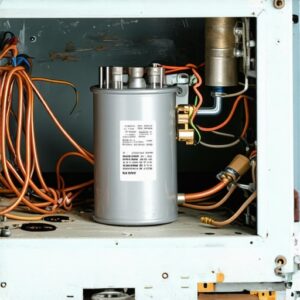
In a world of ECM motors and mini-split technology, the standing pilot is a relic of thermodynamic simplicity. It operates on the principle of the Seebeck Effect. The thermocouple—that little copper rod sitting in the flame—contains two dissimilar metals. When the pilot flame heats that rod, it generates a tiny electrical current (millivolts). This current travels back to the gas valve, where it powers a small electromagnet. As long as that magnet is energized, the valve stays open. If the flame goes out, the thermocouple cools, the millivolts drop, the magnet releases, and the gas shuts off. It’s a fail-safe system that’s been saving houses from blowing up for decades.
How to Manually Light Your Furnace: A Forensic Guide
Before you dive into the ‘doghouse’ of your furnace, check the Sparky’s work—ensure the power switch is actually ON. Sometimes a ‘broken’ furnace is just a tripped breaker. Once you’ve confirmed you have power, follow these steps:
- Step 1: Locate the Gas Valve. Look for a boxy device where the gas line enters the furnace. It will have a knob with three settings: ON, OFF, and PILOT.
- Step 2: The Safety Purge. Turn the knob to OFF and wait at least five minutes. This is critical. If the pilot went out but the valve didn’t close properly, you have ‘gas’ (refrigerant techs call it juice, but here we just call it ‘the fuel’) lingering in the combustion chamber. If you light a match now, you’ll be a tin knocker without a face.
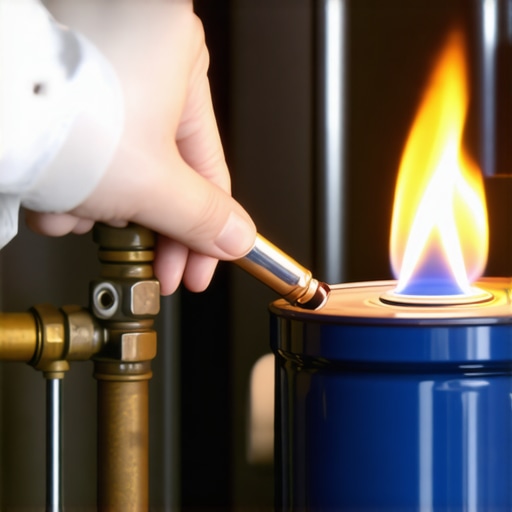
- Step 3: The Pilot Position. Turn the knob to PILOT. You will need a long-reach butane lighter or a very long fireplace match.
- Step 4: Engage and Ignite. Depress the knob (or a separate red button nearby) and hold it down. This manually overrides the safety solenoid. While holding it, bring your flame to the pilot burner assembly.
- Step 5: The Hold. Once the pilot lights, DO NOT LET GO. You have to wait for that thermocouple to get ‘beer can cold’—except the opposite. It needs to reach about 1,200°F to generate enough millivolts. Hold it for 60 seconds.
- Step 6: Transition to ON. Slowly release the knob. If the flame stays lit, turn the knob to the ON position. The main burners should ignite with a satisfying ‘whoosh.’
Climate Context: The Northern Polar Vortex
Up here in the North, we don’t worry about the ‘swamp house’ effect of the South. Our enemy is sensible heat loss and the ‘Monsoon’ of snow blocking our intake vents. If your furnace is short-cycling or the pilot keeps dropping, it might not be the thermocouple. It could be a drafting issue. Cold air is dense and heavy. During a polar vortex, if your chimney or vent pipe isn’t ‘primed,’ a backdraft of frigid air can literally blow your pilot light out like a birthday candle. This is why proper venting is more important than the brand name on the cabinet. A heating service call in Chicago is 50% about combustion and 50% about making sure the exhaust gases actually leave the building instead of killing the occupants.
“Equipment shall be sized to meet the calculated sensible and latent loads…oversized equipment can result in poor humidity control and excessive energy use.” – ACCA Manual S
The Math: Repair vs. Replace
When do you stop pouring money into an old standing pilot beast? If I see a cracked heat exchanger—identifiable by a ‘rollout’ of flame when the blower starts—it’s over. That unit is a boat anchor. But if the heat exchanger is solid, that old 80% furnace might outlast a new 96% modulating unit with a complex control board that costs $800 to replace every time a capacitor pops. New systems are great for AC installation efficiency, but they are fragile. Sometimes, keeping the old ‘cast iron’ heartbeat of the home is the smarter financial move.
The Final Word on Airflow
You can have the most perfectly lit pilot in the world, but if your ‘pookie’ (mastic) is failing and your ducts are leaking 30% of your heat into the attic, you’re still losing. Comfort is a product of physics, not magic. Ensure your filters are clean and your return air is unobstructed. A furnace is just a box; the ductwork is the circulatory system. Treat it with respect, and it’ll keep you warm until the spring thaw. “,”image”:{“imagePrompt”:”A gritty, high-contrast close-up of an old HVAC gas valve in a dark basement, with a single hand holding a long butane lighter to a small, flickering blue pilot flame. The copper thermocouple is visible in the glow, and the furnace metal is aged and slightly rusted.”,”imageTitle”:”Manual Pilot Light Ignition”,”imageAlt”:”A technician manually lighting a furnace pilot light in a basement.”},”categoryId”:1,”postTime”:”2023-10-27T10:00:00Z”}