The Sound of a Silent House
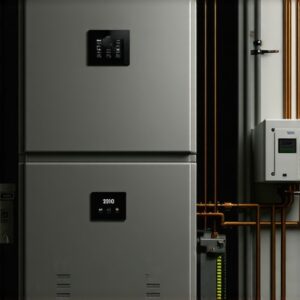
There is a specific kind of silence that hits you when you walk into a house where the HVAC system has given up the ghost. It is not just the lack of noise; it is the lack of vibration. Most homeowners do not realize that their comfort is a delicate dance of thermodynamics and electrical frequency. When you stare at a blank thermostat screen, you are looking at the failure of a 24-volt control circuit that is the brain of your home’s respiratory system. Whether you are relying on a complex furnace repair in the dead of a blizzard or an AC installation that cost you a second mortgage, that little plastic box on the wall is the only thing standing between you and the raw elements.
The Sales Tech Scam: A Case of the $12,000 Blown Fuse
I remember a call I took last February. I followed one of those ‘Sales Techs’ from a big-box franchise—the kind of guy who wears a crisp white shirt and carries a tablet but doesn’t have a single smudge of Pookie (mastic) on his boots. He had quoted a young couple in a drafty colonial $12,000 for a full furnace and AC installation because their thermostat was ‘dead’ and he claimed the ‘internal logic of the heat exchanger had collapsed.’ That is a lie, by the way. Heat exchangers don’t have logic; they are just metal boxes for fire. I walked in, pulled the cover off their furnace, and found a blown 3-amp purple fuse on the control board. A $5 part. The ‘Sales Tech’ had ignored the fact that a tiny bit of insulation had rubbed off a wire, creating a short. I fixed the wire, popped a new fuse in, and the Juice started flowing again. The couple cried; I just wanted a coffee.
“The most expensive equipment in the world cannot overcome a bad duct system.” – Industry Axiom
The Anatomy of the Control Loop
To understand why your thermostat won’t turn on, you have to understand the Sparky side of HVAC. Your system isn’t just one big machine; it is a series of interconnected components that rely on a 24-volt transformer to talk to each other. When you call for cooling, the thermostat sends that 24V signal down the ‘Y’ wire to the contactor in your outdoor unit. The contactor is basically a heavy-duty switch. When it gets that 24V, a magnetic coil pulls down a set of points, allowing 240V to scream into the compressor. This is where Thermodynamic Zooming comes in. The compressor isn’t ‘making cold.’ It is a pump that moves refrigerant (the Gas) through a cycle of phase changes. In the evaporator coil, the pressure drops, causing the refrigerant to boil at a very low temperature. This pulls Sensible Heat out of your air, but more importantly, it drops the coil temperature below the dew point to remove Latent Heat—the humidity that makes you feel like you’re living in a wet sock.
Why the Screen Goes Dark: The Forensic Diagnosis
If your thermostat is a blank void, we have to look at the ‘R’ wire. This is the 24V power supply. If the R-wire loses its ‘juice,’ the brain dies. In our Northern climate, especially during a heavy heating service season, this is often caused by a tripped safety. The Float Switch is the most common culprit. See, even in winter, high-efficiency furnaces produce condensate. If your drain line is clogged, that water backs up into a safety switch which breaks the R-wire circuit to prevent a flood. You think your thermostat is broken; I know your drain is just full of gunk. Another common failure is the transformer itself. These are usually mounted inside the furnace or air handler. They take 120V house power and step it down. If a contactor coil on your outdoor AC unit shorts out, it can ‘vampire’ too much current and fry that transformer. You can replace the thermostat a hundred times, but until you fix that shorted coil, you are just throwing money into the wind.
“Properly sized equipment requires accurate calculation of both sensible and latent heat loads.” – ACCA Manual J
The Static Pressure Nightmare
I’ve seen guys install a beautiful new mini-split or a high-efficiency furnace, only for the homeowner to complain that the thermostat keeps resetting or the house won’t reach temperature. Usually, it’s because some Tin Knocker thirty years ago undersized the return air ducts. If your system can’t breathe, the heat exchanger gets too hot, the ‘high limit’ switch trips, and it cuts power to the control circuit. This is why airflow is king. You can have a 5-ton unit, but if your ducts can only move 2 tons of air, you have a 2-ton unit that is going to die an early, painful death from high head pressure. We use a manometer to check Static Pressure. If that pressure is too high, it is like trying to breathe through a cocktail straw while running a marathon. No thermostat fix in the world can solve bad physics.
Emergency Fixes You Can Do Right Now
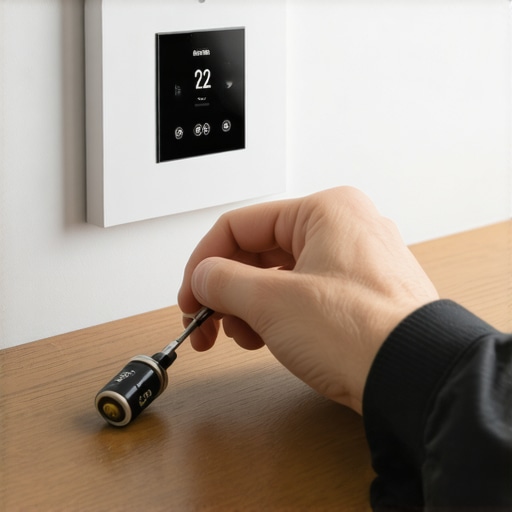
Before you call me out at 2 AM and pay my ’emergency’ rate, check the basics. First, check your circuit breakers. A tripped breaker for the indoor unit means no power to the transformer, which means a dead thermostat. Second, if you have a high-efficiency system, check the PVC vent pipes outside. In a Chicago winter, hoarfrost or ice can block those pipes. The pressure switch will detect the blockage and shut the whole thing down for your safety—dead thermostat again. Third, pull the thermostat off the wall and look at the wires. If you see a ‘C’ wire (usually blue), that is the ‘Common’ wire that provides a continuous return path for electricity. If that wire is loose, your smart thermostat won’t have enough power to stay lit. If you don’t have a C-wire and you’re relying on ‘power stealing,’ you’re asking for a headache when the battery inevitably fails during a cold snap.
The Truth About Maintenance
The industry loves to sell ‘maintenance plans’ that are just glorified sales pitches. Real maintenance is about checking the microfarads on a capacitor and ensuring the flame sensor isn’t carboned up. It’s about making sure your furnace repair doesn’t turn into an AC installation because you ignored a $20 part. If your thermostat is out, it is a symptom, not the disease. The disease is usually a lack of airflow, a clogged drain, or a failing electrical component that has been struggling for months. Don’t let a tech talk you into a whole new system just because your screen is blank. Demand a multimeter test on the 24V side. If they can’t tell you where the voltage is dropping, they aren’t a tech—they’re a salesman in a uniform. Keep your coils clean, keep your filters changed, and remember that Beer Can Cold is a feeling, but Static Pressure is a law.