The Diagnostic Nose: Why Smells Are Your First Warning
In thirty years of crawling through crawlspaces and humping toolbags up to frozen rooftops, I’ve learned one thing: your nose is the most expensive tool in your kit. Before I even pull the panels off a 90% AFUE furnace, I know exactly what’s failing by the scent profile. Most homeowners think a weird smell is just ‘part of the season,’ but in the world of thermodynamics, a smell is a symptom of a mechanical breakdown or a chemical reaction that shouldn’t be happening. If you’re smelling sulfur or burning plastic, your system is screaming for a furnace repair before it becomes a total AC installation project next summer. This isn’t just about comfort; it’s about physics, safety, and not letting your house turn into an expensive bonfire.
The Physics Lesson: Why Airflow Dictates Equipment Life
My old mentor, a grizzled old tin knocker who could fabricate a transition in his sleep, used to grab me by the collar when he saw me rushing a diagnostic. He’d scream, ‘You can’t heat what you can’t touch!’ He was talking about the surface area of the heat exchanger and the critical nature of static pressure. If the air isn’t moving across those heat exchanger cells at the exact CFM (Cubic Feet per Minute) specified by the manufacturer, the metal expands too far, the molecules fatigue, and you get that first whiff of trouble.
“The most expensive equipment in the world cannot overcome a bad duct system.” – Industry Axiom
When airflow is restricted—usually because some ‘Sales Tech’ sold you a 5-ton unit for a house with 3-ton ductwork—the heat exchanger becomes an oven. It’s not just heating the air; it’s cooking itself. This leads directly to the smells we’re talking about today. Whether you’re running a traditional furnace or a modern mini-split, the laws of heat transfer remain the same. If the energy has nowhere to go, it stays in the cabinet and starts melting things.
The Sulfur Smell: The Mercaptan Red Alert
If you smell sulfur or rotten eggs, stop reading this and call a pro. Natural gas is naturally odorless. Utility companies pump in a chemical called mercaptan so you can detect a leak. This isn’t a ‘wait until Monday’ situation. If that smell is coming through your registers, you have a gas leak. It could be a cracked manifold, a failing gas valve that isn’t seating properly, or a compromised secondary heat exchanger in a high-efficiency unit. In these cold North climates, where we’re pushing systems to the limit during a polar vortex, the expansion and contraction of these metal components can cause hairline fractures that bleed gas. This is where heating service becomes a matter of life and death, not just convenience.
The Burning Plastic Stench: The Anatomy of an Electrical Meltdown
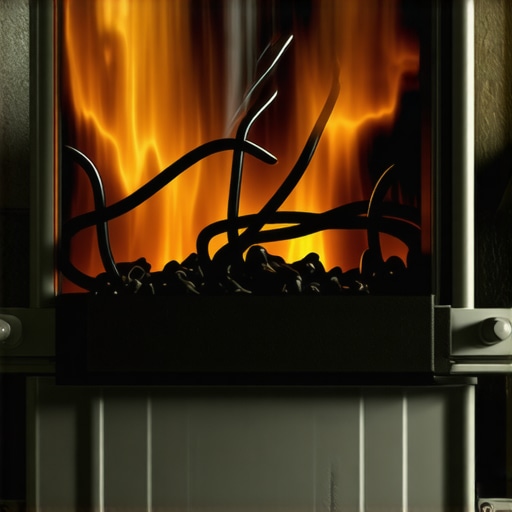
Now, if the smell is more like acrid, burning plastic or ‘fishy’ electronics, we’re looking at a different beast. This is the smell of wire insulation or a control board giving up the ghost. When a blower motor starts to fail—maybe the bearings are shot and it’s pulling high amperage—it generates massive amounts of heat. That heat travels up the wiring harness.
“Electrical components shall be installed and maintained to prevent the risk of ignition from overheating or arcing in the presence of combustible atmospheres.” – ASHRAE Standards
When that Sparky-level voltage hits a loose connection on the control board, it creates resistance. In the world of HVAC, resistance equals heat. That heat melts the plastic coating on the wires, releasing toxic fumes into the airstream. This often happens because the system is fighting high static pressure. If your filters are clogged or your return air drop is too small, the motor has to work twice as hard to push air through the AC installation coil and into the house. It’s like trying to run a marathon while breathing through a cocktail straw.
The Forensic Diagnosis: Capacitor vs. Motor
When I arrive for a furnace repair and smell that ozone/plastic mix, the first thing I check is the run capacitor. The ‘Sales Techs’ will tell you the whole motor is dead and quote you $1,200. I check the uF (microfarads). A weak capacitor causes the motor to ‘hunt’ for its start-up torque, generates heat in the windings, and eventually melts the insulation. If the ‘juice’ can’t flow properly, the whole system becomes a heat-sync. If the blower is humming but not turning, it’s cooking. If the inducer motor—the little fan that pulls the exhaust gases out—is seized, it will smell like burning oil and plastic. Replacing a $50 capacitor or a $300 inducer is a lot cheaper than a $15,000 system replacement because you ignored the smell.
The Cold Climate Reality: Why Heat Pumps Struggle
In our climate zone, we see a lot of people switching to dual-fuel systems or mini-split setups. When these systems go into ‘Defrost Mode’ or kick on the auxiliary heat strips (basically giant toaster wires), you might smell a ‘burning dust’ or ‘burning plastic’ scent. If it’s just the first time you’ve used the heat this year, it’s likely just dust on the heat strips. But if it persists, it means those strips are cycling too long because the heat pump can’t keep up with the sensible heat demand. This is why proper sizing is king. An undersized unit is a fire hazard; an oversized unit is a dehumidification nightmare.
The Math of Repair vs. Replace
I tell my customers this: if your furnace is over 15 years old and the heat exchanger is what’s causing that sulfur smell, it’s time to pull the plug. You don’t put a new transmission in a car with a rusted-out frame. But if it’s a blower motor or a control board causing that plastic stench, and the heat exchanger is clean (no cracks, no soot), then we fix it. We apply the ‘Pookie’ (mastic) to the duct leaks, we check the ‘Gas’ (refrigerant) levels if it’s a heat pump, and we get that airflow back to factory specs. Comfort isn’t magic; it’s just physics that someone bothered to measure correctly. Don’t let a ‘Sales Tech’ scare you into a new unit when a real tech with a multimeter can find the source of the stench in twenty minutes.