The Sulfur Ghost in the Machine: A Technician’s Diagnosis
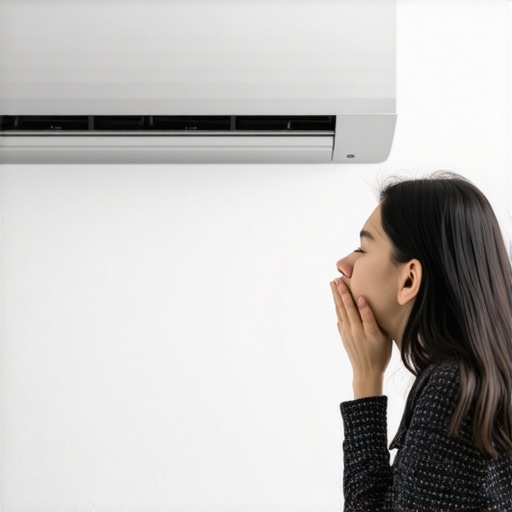
You’re sitting in your living room, the thermostat clicks, the inducer motor whirrs, and then it hits you: the unmistakable, stomach-turning stench of rotten eggs. Your first instinct is to check the fridge for a forgotten carton of grade-A jumbo whites, but the smell is coming from the registers. As someone who has spent three decades crawling through crawlspaces and dragging manifolds across scorching rooftops, I can tell you right now: that smell is not a coincidence, and it’s definitely not your groceries. In the HVAC trade, we don’t believe in ghosts, but we do believe in physics, chemistry, and the unfortunate tendency of homeowners to ignore a furnace repair until the house smells like a chemical plant.
The Narrative Matrix: Exposing the ‘Sales Tech’ Shenanigans
I remember a call last February in a biting Chicago suburb. I was following a ‘Sales Tech’ from one of those big-box franchises—the kind of guy who carries a tablet more comfortably than a pipe wrench. He’d told this retired couple that their entire evaporator coil was ‘decomposing’ and they needed a full AC installation to the tune of $14,000 because of that sulfur smell. I walked in, pulled the cabinet door off their high-efficiency furnace, and found the real culprit. It wasn’t ‘decomposing metal’—which isn’t even a thing in that context. It was a dead star-nosed mole that had crawled into the return air drop and met its maker right against the secondary heat exchanger. A twenty-minute extraction and a bit of antimicrobial spray solved what a $14,000 quote couldn’t. This is why you never trust a guy whose primary tool is a financing application.
“The most expensive equipment in the world cannot overcome a bad duct system.” – Industry Axiom
Thermodynamic Zooming: Why the Smell Travels
To understand why your heating service or cooling cycle is delivering a bouquet of sulfur, you have to understand the air handler’s role as a vacuum. When your blower motor kicks on, it creates a pressure differential. It sucks air from the return vents, pulls it across the evaporator coil (which should be ‘beer can cold’ on the suction line during summer), and pushes it through the supply ducts. If there is a gas leak or biological decay anywhere in that stream, the system effectively ‘atomizes’ the scent. During a cooling cycle, the coil drops below the dew point to remove latent heat—that’s the humidity that makes you feel like you’re breathing through a wet wool blanket. As that moisture condenses and drips into the primary drain pan, it can trap odors. If your P-trap is dry or your ‘Pookie’ (mastic) seal on the plenum is cracked, you’re pulling air—and smells—from places you shouldn’t, like a sewer line or a gas manifold.
The Primary Suspect: Natural Gas and Mercaptan
If you have a gas furnace and the smell is persistent, we aren’t talking about a dead mouse anymore. Natural gas is naturally odorless. Utility companies add mercaptan, a sulfur-based odorant, specifically so you’ll notice a leak. If your system is a ‘packaged unit’ or if your furnace and AC share a cabinet, a cracked heat exchanger or a loose fitting on the gas valve can leak mercaptan into the air stream.
“Ventilation systems shall be designed to prevent the entry of products of combustion into the conditioned space.” – ASHRAE Standard 62.1
This is a ‘call a pro now’ situation. A cracked heat exchanger doesn’t just smell; it leaks carbon monoxide. A mini-split system won’t have this issue since it’s ductless, but for those with traditional central air, that rotten egg smell is often the only warning you get before the ‘Sparky’ (electrician) or the fire department has to get involved.
The Physics of the North: Heat Exchangers and Polar Vortexes
In colder climates like Chicago or the Northeast, our equipment takes a beating. The constant expansion and contraction of metal in a high-efficiency furnace can lead to ‘flame rollout’ or stress fractures. When you call for furnace repair because of a smell, a real technician is looking for those hairline cracks where the ‘gas’ (refrigerant) isn’t the problem, but the raw fuel is. We check the static pressure; if your ‘tin knocker’ (duct guy) built a return that’s too small, the furnace overheats, the metal fatigues, and suddenly you’re smelling the gas line every time the heat cycles. It’s not magic; it’s the inevitable result of thermal stress.
Repair vs. Replace: The Cold Hard Math
When do you stop patching the leak and start looking at AC installation? If your unit is over 12 years old and the ‘juice’ (refrigerant) is R-22, you’re looking at a dinosaur. But if that rotten egg smell is just a clogged condensate drain or a cracked gas manifold, you’re looking at a $300 to $700 fix. Don’t let a Sales Tech convince you that a smell in the vents requires a whole new 16-SEER variable-speed heart transplant for your home. Check your filters, check your drain pans, and for the love of airflow, make sure your ‘Pookie’ hasn’t dried up and crumbled away. Comfort is physics, and physics doesn’t require a $15,000 commission to work correctly. If the smell persists after a thorough cleaning, it’s time to call a technician who knows his way around a combustion analyzer, not just a sales brochure. Proper heating service is about safety first, then efficiency, and finally, making sure your house doesn’t smell like an omelet gone wrong.