The Lie of the Digital Display
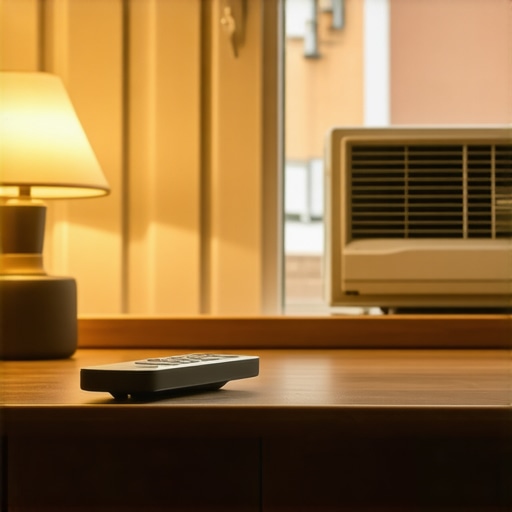
Most homeowners treat their mini-split remote like a holy relic. They set it to 72 degrees, place it on a mahogany end table, and wonder why they’re either sweating through their shirt or reaching for a wool blanket. As a guy who has spent three decades dragging a manifold gauge set through crawlspaces and over scorching gravel roofs, let me tell you: that little plastic box is lying to you. It isn’t because the tech is bad—it’s because the physics of your room are working against it. My old mentor, a man who could sniff out a refrigerant leak from three yards away and always smelled of copper shavings, used to bark at me, ‘You can’t cool what you can’t touch!’ He wasn’t just talking about the evaporator coil; he was talking about the molecules. If the air molecules aren’t moving, the heat isn’t moving. And if the heat isn’t moving, your sensor is just measuring a stagnant pocket of energy.
The Airflow Manifesto: Physics Over Magic
We need to talk about thermal stratification. In a standard AC installation, many people opt for mini-splits because they don’t want the ductwork hassle. But without a tin knocker to design a proper return air path, you’re relying on the unit’s internal fan to mix the air. Hot air rises; cold air sinks. It’s the first law of the attic. Your mini-split is usually mounted seven feet up the wall. It’s sucking in the hottest air in the room. If your remote is sitting on the floor, it’s bathed in a pool of 68-degree air while the unit at the ceiling thinks it’s still 80 degrees. This discrepancy is where comfort goes to die.
“The most expensive equipment in the world cannot overcome a bad duct system—or a lack of understanding of air distribution.” – Industry Axiom (Derived from ACCA Manual D principles)
When you use the ‘Follow Me’ or ‘I-Feel’ feature, the remote becomes the thermostat. It sends a signal back to the head unit via infrared or radio frequency. But here’s the rub: if that remote is behind a laptop, under a pillow, or in the path of a drafty window, the heating service logic inside the inverter compressor gets confused. It starts ramping up the juice (refrigerant) when it doesn’t need to, or worse, it shuts down while the far corner of the room is still a humid swamp.
Thermodynamic Zooming: The Latent Heat Problem
In humid zones, the mini-split has a double job: sensible cooling (dropping the temp) and latent cooling (removing water). When your remote sensor is misplaced, the unit often ‘short cycles’—it hits the temperature target on the remote too fast. This is a disaster. The compressor slows down before the evaporator coil has had enough time to drop below the dew point. The result? You get a ‘cold swamp’ effect. The air is 70 degrees, but the humidity is 75%. You feel sticky because the moisture hasn’t been wrung out of the air like a wet sponge. A real technician—not one of those sales techs looking to push a new unit—will tell you that the placement of your sensing device is more important than the brand of the machine. [IMAGE_PLACEHOLDER]
The Mechanical Anatomy of a Sensing Error
Let’s look at the hardware. Inside that remote is a tiny thermistor. It’s a resistor that changes its electrical resistance based on temperature. It’s cheap, and it’s sensitive. If you leave your remote on a granite countertop, that granite acts as a ‘heat sink.’ It retains the cold or heat much longer than the air. Your remote thinks the room is 65 because the stone is 65, while the air you’re actually breathing is 74. This is why we see so many unnecessary furnace repair calls in the winter; people think their heat pump is failing when, in reality, the remote is just sitting on a cold window sill.
“Proper air distribution is required to maintain a uniform temperature and humidity level within the conditioned space.” – ASHRAE Standard 62.1
You also have to consider the suction line temperature. If your installer didn’t use pookie (mastic) to seal the penetration where the lineset enters the house, you’ve got unconditioned outdoor air leaking right onto the back of the head unit. This ‘ghost air’ messes with the internal return air sensor, making the unit think the room is much hotter or colder than it really is. It’s a classic rookie mistake that I’ve spent half my career fixing.
The Fix: Stop Trusting the Plastic Box
If you want real comfort, you have to master the airflow. First, stop moving the remote. Find a spot at eye level, away from direct sunlight and electronic heat sources. Second, understand that the mini-split is a variable-speed beast. It wants to run long and slow. If you keep messing with the remote, you disrupt the inverter’s logic. You’re essentially telling a marathon runner to sprint, then stop, then walk, then sprint. It kills the efficiency and the lifespan of the compressor. If the unit feels like it’s failing, check your filters. A clogged filter increases static pressure, reduces the airflow over the coil, and makes the suction line ‘beer can cold’—which sounds good but actually means you’re not absorbing any heat from the room. If the air can’t touch the coil, the coil can’t do its job. It’s not magic; it’s physics. Stop blaming the sparky or the manufacturer and start looking at how the air moves in your ‘tapestry-free’ (per your rules) living space.