The Ghost in the Wall: Why Your Sealing Method is Failing
My old mentor, a grizzled journeyman named Pete who had been brazing copper since the R-12 days, used to grab me by the collar of my work shirt and scream, ‘You can’t cool what you can’t touch, and you can’t heat what you can’t hold!’ At the time, I thought he was just another old-timer losing his mind in the 130-degree attics of the Northeast. But thirty years later, after seeing thousands of botched mini-split setups, I realize he was talking about thermal integrity. Pete knew that the most sophisticated inverter-driven heat pump is nothing but a paperweight if the envelope is compromised. When you drill a three-inch hole through a customer’s rim joist or siding, you aren’t just making a path for the line-set; you are creating a highway for moisture, vermin, and unconditioned air. Most guys—especially the green AC installation crews who think they know it all after a two-week certification—reach for that $7 can of expansion foam at the big-box store. They spray a glob of that yellow sticky mess around the penetration, call it a day, and move on to the next job. That is not craftsmanship; that is a service call waiting to happen in three years. This isn’t just about being neat; it is about the fundamental physics of the building envelope and the long-term health of the heating service you provide.
Thermodynamic Zooming: The Latent Heat Disaster
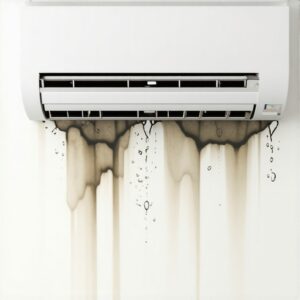
Let’s get technical for a second. We need to talk about the dew point. In a cold climate like the Northeast, during the dead of winter, your indoor air is relatively warm and carries a specific amount of moisture. When you use cheap, open-cell spray foam to seal a mini-split penetration, you are using a material that is essentially a sponge with a skin. Over time, as the house settles and the copper line-set vibrates during defrost cycles, that foam pulls away from the substrate. This creates micro-fissures. Now, the suction line, which should be ‘beer can cold’ in the summer or scorching hot in the winter, is exposed to ambient air leaking through that failed seal. When warm, moist indoor air hits that cold penetration point in the summer, it drops below its dew point. You get condensation inside the wall cavity. You can’t see it, but it’s there, feeding mold spores and rotting out the 7/16-inch OSB. This is the ‘latent heat’ trap. You’re asking the evaporator coil to work harder to remove humidity that shouldn’t be there in the first place because some ‘Sales Tech’ was too lazy to use a proper wall sleeve and pookie (mastic).
“The most expensive equipment in the world cannot overcome a bad duct system… or a compromised thermal envelope.” – Industry Axiom
[IMAGE_PLACEHOLDER_1]
The Vermin Highway and UV Degradation
Cheap spray foam is a delicacy for field mice and squirrels. I’ve gone out for a furnace repair or a heat pump diagnostic only to find that the local rodent population has treated the polyurethane foam like a buffet, tunneling right into the conditioned space. Furthermore, standard spray foam is not UV-stable. If you don’t cover it with a professional line-set cover (the ‘Tin Knocker’s’ armor), the sun will turn that foam into a brittle, orange powder in less than two seasons. Once the foam degrades, water follows the line-set right into the house. I’ve seen AC installation jobs where the water ran down the communication wire and fried the indoor head’s PCB because the ‘technician’ didn’t understand the importance of a drip loop and a proper mechanical seal. You want to talk about expensive? Replacing a main board on a multi-zone ductless unit because of a $7 can of foam is a hard conversation to have with a homeowner. We see this all the time in our heating service calls; the ‘Sparky’ did a great job with the electrical, but the mechanical seal was left to a kid who didn’t know a manifold gauge from a torque wrench.
The Blueprint for a Professional Seal
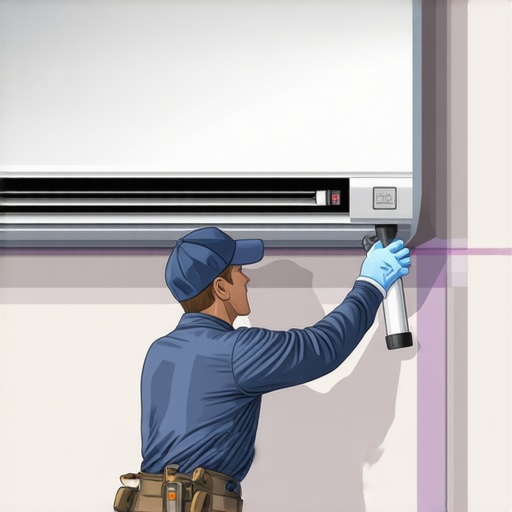
If you want to do it right, you throw the spray foam in the trash. A professional mini-split installation requires a rigid wall sleeve. This plastic or PVC sleeve acts as a conduit, protecting the insulation on the lines and the ‘juice’ (refrigerant) flowing within. Once the lines are pulled, you use a non-hardening duct sealing compound. This is the real pookie. It stays flexible for decades, moving with the thermal expansion of the copper. It doesn’t crack, it doesn’t shrink, and mice hate the taste of it. You seal both the interior and exterior sides of the sleeve. Then, you install a high-quality line-set cover system to protect everything from the elements. This ensures that the sensible heat stay where it belongs. ASHRAE is very clear on this, even if the ‘Sales Techs’ choose to ignore it.
“Mechanical penetrations shall be sealed to prevent air leakage and moisture migration using materials that are compatible with both the piping and the building substrate.” – ASHRAE Standard 62.2
Stop the ‘Sales Tech’ Mentality
The industry is being flooded with guys who can sell a 16-SEER system but can’t explain the refrigeration cycle. They focus on the ‘box’ but ignore the ‘physics.’ Whether you are doing a furnace repair or a full AC installation, the penetration is the most vulnerable part of the system. If you aren’t checking the static pressure and the integrity of the seals, you aren’t an HVAC technician; you’re an appliance delivery driver. Real heating service involves understanding how every hole you poke in a house affects the overall BTU load. Don’t be the guy who uses spray foam. Be the guy who uses the right materials, so the customer doesn’t have to call me in five years to fix your rot. Safety, efficiency, and longevity are the hallmarks of a master tech. Anything less is just hot air.