The Sound of a Silent Beep: When the Ghost in the Machine Stops Talking
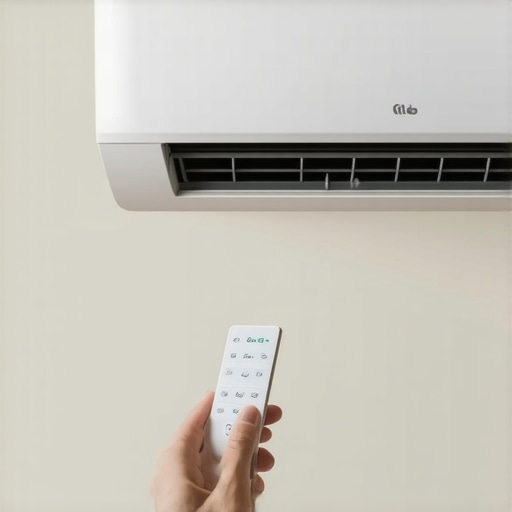
There is a specific kind of silence that haunts a technician. It is not the peaceful silence of a well-oiled furnace repair or a perfectly balanced duct system. It is the frustrated silence of a homeowner repeatedly mashing a button on a plastic remote while their high-tech indoor unit stares back at them, cold and indifferent. You bought a mini-split because you wanted surgical precision in your cooling, but now you are standing in a 85-degree bedroom, and the ‘brain’ of your system has decided to go on strike. I have spent thirty years navigating the bowels of HVAC systems, and I can tell you that when a remote stops syncing, 90% of the time, it is not a ‘broken’ unit. It is a failure of communication, a break in the invisible digital handshake that happens between your hand and the evaporator’s IR receiver. I recently followed a ‘Sales Tech’—those guys who wear clean shirts and carry clipboards instead of pipe wrenches—who quoted a young couple $12,000 for a full AC installation because he told them their multi-zone inverter board was ‘fried.’ I walked in, pulled the front cover, and found a single, charred cockroach that had decided to make a bridge across the sensor pins. A $20 part and a can of contact cleaner later, they were back in business. That is the difference between a technician and a salesman.
The Forensic Anatomy of the Mini-Split Communication Loop
To understand why your remote is failing, you have to stop thinking of your AC like a simple light switch. A modern mini-split is a sophisticated computer that happens to move heat. When you press ‘Cool,’ the remote sends a burst of infrared (IR) light. This isn’t just a signal; it is a packet of data. If your room has high-frequency LED lighting or if you have a massive 4K television blasting interference, that signal gets garbled. We call this ‘noise.’ In the humid South, where I’ve spent my fair share of time sweating through my work shirt, we see another enemy: the ‘Cold Swamp’ effect. If the unit was oversized during the initial heating service or cooling setup, it short-cycles. This leads to massive humidity spikes inside the cabinet, which can cause a microscopic layer of oxidation on the IR receiver board’s pins. You think the remote is dead; in reality, the ‘eye’ of the unit is just wearing a pair of foggy glasses. We have to dive into the thermodynamic zooming here: your mini-split doesn’t just blast cold air. It uses an inverter-driven compressor to modulate the flow of ‘juice’ (refrigerant) to maintain a precise temperature. This requires the indoor unit to constantly report back to the outdoor unit via a 14/4 shielded communication wire. If that wire was installed by a ‘tin knocker’ who didn’t understand low-voltage shielding, the electromagnetic interference from your house wiring can actually scramble the remote’s commands before the board even processes them.
“Systems shall be sized to meet the calculated sensible and latent loads. Oversizing can lead to poor moisture removal and equipment cycling issues that degrade indoor air quality.” – ACCA Manual S: Residential Equipment Selection
The Logic Engine: Why the Remote and the Board Desync
If you have changed the batteries and you still aren’t getting that satisfying ‘beep,’ we have to look at the logic. Most mini-split remotes are actually ‘state-aware.’ This means the remote thinks it knows what the AC is doing, even if the AC didn’t get the memo. If you walked out of the room and changed the temperature, then walked back in, the remote might be sending a command that the board thinks is redundant or illogical. This is where ‘Sparky’ (the electrician) often gets confused. They check for 240V at the disconnect and say, ‘It’s got power!’ But HVAC is about data. You need to perform a hard reset. I’m talking about pulling the disconnect for a full ten minutes to let the capacitors bleed out. This clears the memory of the EPROM chip on the indoor board. While that’s happening, you need to check the ‘Pookie’ (mastic) around your line set penetrations. I’ve seen cases where humid air from the attic was being sucked through the wall hole right onto the back of the control board, causing it to overheat and ignore IR signals. You can’t cool what you can’t touch, and if the air the sensors are ‘touching’ is actually 100-degree attic air leaking through a poorly sealed hole, the system’s logic goes haywire.
The 2025 Transition and the Future of Repair
We are entering a weird era in HVAC. With the death of R-410A and the move toward A2L refrigerants like R-454B, these units are getting even more sensitive. The new boards have even more sensors, including leak detectors. Sometimes, a remote won’t sync because the unit has entered a ‘soft lockout’ due to a sensor error you can’t even see. This is why I tell people to avoid the ‘Sales Tech’ who immediately jumps to a furnace repair or a new AC installation. You need someone who can read a schematic and check the DC voltage on the communication line (usually between terminals 2 and 3 on most mini-splits). If you see a pulsing voltage between 10V and 24V DC, your board is talking. If it’s a flat zero, your board is dead. But if the voltage is there and the remote still won’t work, you’re looking at a $50 IR receiver replacement, not a $10,000 system. Don’t let someone talk you into a new unit just because they’re too lazy to use a multimeter.
“Proper airflow is the foundational requirement for all thermodynamic exchange within a direct expansion system. Without verified static pressure, performance data is meaningless.” – ASHRAE Standard 62.2
The Veteran’s Checklist for Sync Issues
Before you call me out for a service visit, do these three things. First, take your phone camera and point the remote at the lens. Press a button. If you see a purple flicker on your phone screen, the remote is sending ‘gas.’ If not, the remote is toast. Second, kill the power at the breaker, not just the remote. We need to clear the board’s ‘brain.’ Third, check for any ‘ghost’ signals. Are there new electronics in the room? Fluorescent ballasts can be notorious for screaming over the frequency your mini-split uses. Remember, comfort is a matter of physics, not magic. Whether it is a complex heating service or a simple remote resync, the goal is to maintain the thermodynamic balance of your home. If your technician doesn’t talk about latent heat or static pressure, they aren’t a technician; they’re a part-swapper. Keep your coils washed, your filters changed, and don’t let a ‘Sales Tech’ scare you into a purchase you don’t need just because a $0.50 capacitor or an IR eye decided to take a nap.