The Paradox of the Rooftop Iceberg
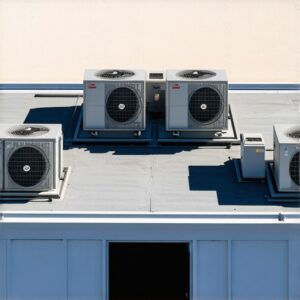
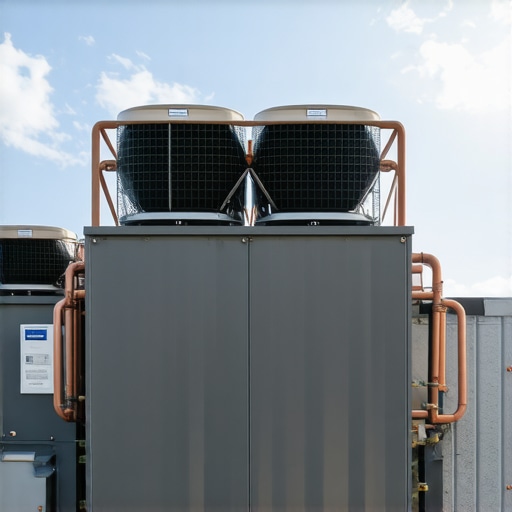
You’re standing on a blistering TPO white-membrane roof in the dead of July. The ambient temperature is pushing 103°F, and the humidity is thick enough to chew. Yet, there it is: a 20-ton commercial package unit encased in a three-inch thick block of solid ice. It’s a thermodynamic insult. Most facility managers see ice and think, ‘It’s too cold.’ I see ice and I see a system that has fundamentally failed its primary mission: heat transfer. As an HVAC veteran who has spent three decades dragging recovery tanks across scorching rooftops, I’m telling you right now: that ice isn’t a sign of ‘over-cooling.’ It is the physical manifestation of a system that can no longer breathe. When we talk about AC installation or heating service, people forget that an HVAC system is essentially a giant lung. If you choke it, it dies.
The 108-Degree Emergency: A Lesson in Neglect
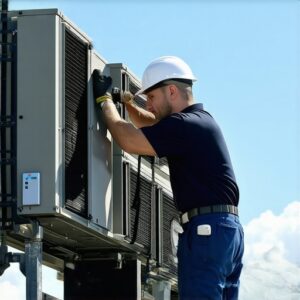
I remember a call back in ’98, mid-August in a humid coastal corridor. The client was a high-end data center. The manager was panicked because their primary RTU (Rooftop Unit) was ‘smoking.’ It wasn’t smoke; it was water vapor. I climbed the ladder and found the entire evaporator section frozen solid, the ice actually bulging out the cabinet panels. The ‘Sales Tech’ who beat me there was already writing up a quote for a $22,000 replacement, claiming the compressor had ‘internal bypass failure.’ I told the old lady running the office to hold her checkbook. I grabbed my nut driver, pulled the filter rack, and found what looked like a wool blanket. They hadn’t changed the pleated filters in eighteen months. The furnace repair guys who did the winter service ignored the cooling side. I thawed it out with a water hose, swapped $40 worth of filters, and that unit ran for another ten years. The moral? Physics doesn’t care about your sales quotas.
“Equipment capacity is only as effective as the distribution system’s ability to move the BTUs through the heat exchanger medium.” – ACCA Manual J Standards
Thermodynamic Zooming: Why the Ice Forms
To understand why a unit freezes in the heat, we have to look at the latent heat of vaporization. Inside that unit, the evaporator coil is filled with juice (refrigerant). This liquid refrigerant is designed to boil into a vapor as it absorbs heat from your building’s return air. If the air is moving correctly, the coil stays above 32°F because the heat from the room is constantly ‘warming’ the coil. But if the airflow drops—maybe because of a snapped belt, a dead blower motor, or a tin knocker who undersized the return drops—the temperature of that refrigerant plummet below the freezing point. Since the air in a humid climate is loaded with moisture, that moisture hits the sub-freezing metal and instantly turns to ice. This is what we call ‘crossing the dew point’ with a vengeance. Once a thin layer of frost forms, it acts as an insulator, preventing what little air is left from reaching the coil. It’s a death spiral of ice.
The Forensic Diagnosis: Airflow vs. Charge
In the trade, we have a saying: ‘Check the air before you check the gas.’ A lot of hacks will see a low suction line pressure and immediately think the unit is low on gas. They start dumping R-410A into a system that is actually just restricted. Now you’ve got a frozen coil AND an overcharged system. When that ice finally thaws, the liquid refrigerant is going to slug the compressor and kill it. You need to check the static pressure. If the mini-split or RTU is struggling, it’s usually one of three culprits: 1. The Evaporator Coil is ‘pelted’ with grease and skin cells (common in restaurants). 2. The blower belt is slipping (that screeching sound isn’t a ghost, it’s a failure). 3. The ductwork is leaking so much air that the ‘Pookie’ (mastic) has dried up and blown out, leaving the unit to starve for return air.
“Moisture removal, or latent cooling, is a function of the evaporator coil surface temperature remaining below the dew point of the entering air, while maintaining mass flow balance.” – ASHRAE Fundamentals Handbook
The Real Cost of the ‘Topping Off’ Scam
If a technician tells you that you need to ‘top off’ your refrigerant every year, they are either lazy or lying. A commercial HVAC system is a sealed loop. If it’s low on juice, there is a hole. Period. Adding gas without finding the leak is like trying to fill a bucket with a hole in the bottom while charging the customer for the water. In the humid South, a small leak leads to lower pressures, which leads to—you guessed it—a frozen coil in July. This puts massive strain on the compressor’s bearings. You can hear it: a rhythmic, deep-throated ‘thump’ that indicates the compressor is struggling to pump liquid instead of vapor. That is the sound of your bank account emptying.
Solving the July Freeze-Up
If your commercial unit is currently a block of ice, here is the forensic protocol. First, turn the ‘Cooling’ off but keep the ‘Fan’ on. This uses the warm building air to thaw the coil from the inside out. Second, check the filters. If you can’t see light through them, throw them away. Third, look at the condensate drain. If it’s backed up, the water has nowhere to go and will accelerate the freezing process. For long-term health, you need a technician who understands psychrometrics, not just someone who knows how to use a screw gun. Whether it’s AC installation or a complex heating service transition, the physics of airflow remains the king of the mountain. Don’t let a ‘Sales Tech’ convince you that an ice cube on your roof requires a total system replacement. Most of the time, the machine just needs to breathe.