The Sound of a Choking Blower Motor
I can hear it the moment I step onto a commercial rooftop. It is a high-pitched, strained whistle that tells me a blower motor is fighting a losing battle against a 1.2-inch water column of static pressure. Most building managers think a filter is just a piece of pleated cardboard designed to keep the dust off the desks. They are wrong. In my thirty years of crawling through plenums and sweating over heat exchangers, I have learned one immutable truth: Airflow is the lifeblood of thermodynamics, and the filter is the gatekeeper. If you neglect that gatekeeper, you aren’t just letting in dust; you are committing mechanical homicide on your equipment. Don’t listen to the ‘Sales Tech’ who tells you that your system is just ‘old’ and needs a total AC installation the moment it stops cooling. Usually, the poor thing is just suffocating.
The $22,000 Lie: A Tale from the Trenches
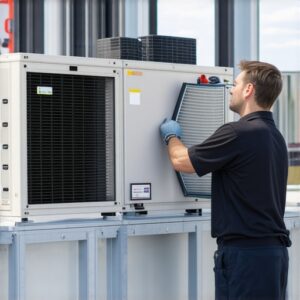
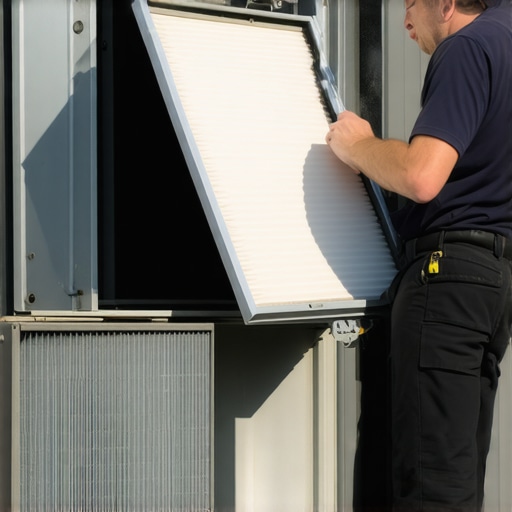
Last November, during a brutal cold snap that had every heating service company in the city booked out for weeks, I followed a guy we call a ‘Sales Tech.’ He had visited a local distribution center and told the owner that three of their gas-fired rooftop units had cracked heat exchangers and needed immediate replacement. Quote: $66,000. The owner called me for a second opinion. I climbed up the ladder with my combustion analyzer and a simple manometer. I didn’t find cracks. I found MERV 13 filters so loaded with warehouse particulates that they had bowed inward, creating a bypass gap where dirt was caking directly onto the secondary heat exchangers. The units were tripping their high-limit switches because the heat couldn’t escape. The air wasn’t moving. I pulled the ‘bricks’ (what we call those plugged filters), cleaned the sensors, and the furnace repair was done for the cost of a service call and a few cases of filters. That ‘Sales Tech’ wanted a commission; I wanted the physics to work.
“The most expensive equipment in the world cannot overcome a bad duct system or the restriction of airflow caused by improper maintenance.” – Industry Axiom
Thermodynamic Zooming: Why Filters Matter for Latent Heat
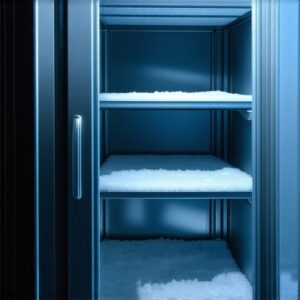
When we talk about cooling a commercial space, we aren’t just ‘making things cold.’ We are moving energy. In a heavy-load environment, your evaporator coil is designed to drop below the dew point of the ambient air. This is how we remove latent heat—the humidity that makes a room feel like a swamp even if the thermometer says 70 degrees. If your filters are clogged, the velocity of the air crossing that coil drops. When air moves too slowly, the coil temperature plummets, often dropping below 32°F. Now, instead of dehumidifying, you are flash-freezing the condensate. Your coil becomes a literal block of ice. Once that happens, the mini-split or the massive RTU is done. The ‘gas’ (refrigerant) can’t boil off into a vapor, and you risk sending liquid refrigerant back to the compressor. We call that ‘slugging,’ and it will shatter a compressor’s internal valves faster than a sparky can trip a breaker. A strict filter schedule prevents this thermal runaway by ensuring the mass flow of air matches the design specifications of the system.
The Airflow Manifesto: Static Pressure is the Silent Killer
In the trade, we talk about Total External Static Pressure (TESP). Think of it like blood pressure for your HVAC system. A clean filter has a ‘clean pressure drop,’ usually around 0.1 to 0.2 inches of water column. As it loads up with skin cells, carpet fibers, and outdoor pollutants, that pressure drop increases. Most commercial blowers are rated for a maximum TESP of 0.5 to 0.8 inches. When you go over that, the motor has to work twice as hard to move half as much air. This creates a feedback loop of heat. In the winter, during a standard heating service, we see this manifest as ‘short cycling.’ The furnace gets too hot, the limit switch pops, the burner shuts off, the fan cools it down, and the cycle repeats. This constant expansion and contraction of the metal heat exchanger is exactly what leads to the cracks that actually do require a full system replacement. You aren’t just saving on the electric bill with a filter schedule; you are preventing the metal fatigue that kills furnaces.
“Air conditioning and heating systems shall be maintained to provide the required outdoor air-flow rate and shall be operated to maintain the design minimum total air-flow rate.” – ASHRAE Standard 62.1
The 2025 Regulatory Cliff and Why Maintenance is Non-Negotiable
We are entering a new era in 2025. The transition from R-410A to A2L refrigerants like R-454B means that new systems are becoming more complex and more expensive. An AC installation next year will cost you 20-30% more than it did two years ago because of the new leak detection sensors and flammability protocols. This makes your current ‘juice’ (refrigerant) and your current equipment more valuable than ever. You cannot afford to burn out a compressor because some tin knocker didn’t emphasize the importance of MERV ratings. If you’re running a commercial space, you need a logbook. You need to see the date the filters were pulled and the condition they were in. If they come out looking like a wool sweater, you’ve waited too long. You want them to be ‘dirty but translucent’—that’s the sweet spot where you’re getting filtration without the catastrophic pressure drop.
The Myth of the 90-Day Filter
Marketing departments love the ’90-day’ promise. In a commercial setting, that’s a lie. If you have a high-traffic retail space or a manufacturing floor, your filters might be ‘spent’ in 21 days. I’ve seen mini-split units in server rooms where the tiny plastic mesh filters needed cleaning every two weeks just to keep the head pressure from skyrocketing. Use your senses. Smell the air coming out of the vents. If it smells ‘dusty’ or slightly metallic, your filters are likely bypassing. Listen for the ‘whump’ when the blower kicks on; that’s the sound of the ductwork flexing under the strain of high static pressure. Don’t wait for the system to fail. A furnace repair in the middle of a January blizzard will cost you five times what a year’s supply of filters would. Physics doesn’t care about your budget, and thermodynamics doesn’t take days off. Get a schedule, stick to it, and keep the ‘Sales Techs’ off your roof.