The Sound of a Dying Warehouse and the Stench of Mismanagement
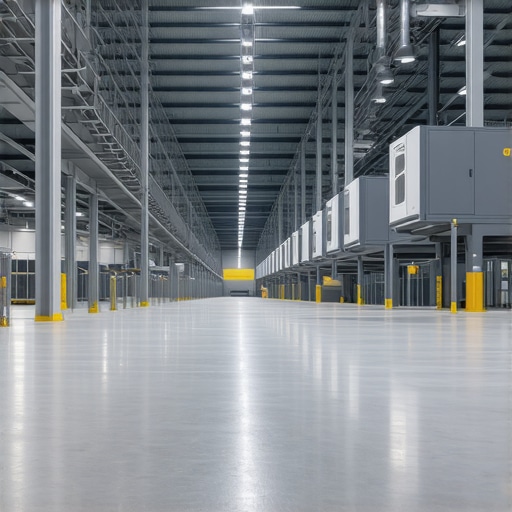
Walk into a 100,000-square-foot warehouse in the middle of a Gulf Coast August, and your skin tells you everything the building automation system (BAS) might be lying about. It’s that heavy, clingy weight—the latent heat—that turns a distribution center into a petri dish. If you hear the rhythmic, metallic thumping of an imbalanced blower wheel or the high-pitched whine of a compressor struggling against high head pressure, you know the system is losing the war. I’ve spent thirty years on sun-baked rooftops, and I can tell you that most commercial humidity problems aren’t caused by ‘old units.’ They are caused by bad physics and even worse advice from guys wearing shiny shirts who call themselves technicians but couldn’t tell a micron gauge from a manifold.
The Sales Tech Trap: A Story of Greed and Gaskets
Last year, I followed a ‘Sales Tech’ from a regional firm into a massive pharmaceutical storage facility. The manager was vibrating with stress because their humidity was spiking at 68%, threatening millions in inventory. This kid, who probably hadn’t been in the trade long enough to burn his knuckles on a suction line, quoted them $450,000 for a full AC installation overhaul. He told them their compressors were ‘tired’ and the ‘juice’—the refrigerant—was ‘stale.’ Total garbage. Refrigerant doesn’t get tired; it’s a chemical compound in a sealed loop. I spent twenty minutes looking at their outdoor air dampers. The tin knocker who installed the ductwork had left the fresh air intake 100% open in a climate where the ambient dew point was 75°F. We were essentially trying to air condition the entire state of Louisiana. A $150 actuator fix and a bit of pookie (mastic) to seal the cabinet leaks saved that manager half a million bucks. That’s the difference between a salesman and a mechanic.
“The most expensive equipment in the world cannot overcome a bad duct system or a fundamental misunderstanding of the building’s latent load.” – Industry Axiom
Thermodynamic Zooming: The War on Latent Heat
To understand warehouse humidity, you have to stop thinking about ‘temperature’ and start thinking about ‘moisture mass.’ Sensible heat is what you feel on the thermometer; latent heat is the energy hidden in water vapor. In a large warehouse, your heating service or cooling system isn’t just moving air; it’s a giant dehumidifier. When the AC installation is oversized—a common sin—the unit ‘short cycles.’ It hits the sensible setpoint in ten minutes and shuts off. But it takes at least twenty minutes of runtime for the evaporator coil to stay below the dew point long enough to wring the water out of the air. If the unit shuts down too soon, that moisture stays in the building, and you end up with a ‘cold swamp’—it’s 68°F but feels like a locker room.
The Anatomy of the Commercial RTU
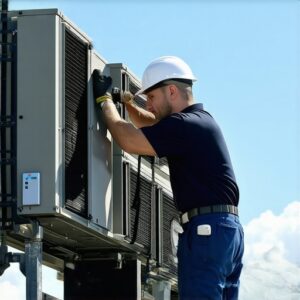
In a large commercial setting, the Rooftop Unit (RTU) is the heart. If you’re performing a furnace repair in the winter or a cooling tune-up in the summer, you have to treat it like a forensic autopsy. First, check the Thermal Expansion Valve (TXV). This is the brain that regulates refrigerant flow. If it’s hunting or sticking, your coil temperature will fluctuate, and you won’t get consistent dehumidification. Second, the blower. If the static pressure is too high because some tin knocker undersized the return drops, your airflow slows down too much, the coil freezes, and you’re dead in the water. We need that air to move across the fins at exactly the right velocity to maximize ‘dwell time’—the time the air spends touching the cold copper. As my old mentor used to scream, ‘You can’t cool what you can’t touch!’
“Properly managed ventilation air is the primary defense against the accumulation of indoor pollutants and excessive moisture levels in commercial structures.” – ASHRAE Standard 62.1
Mini-Splits and Targeted Zones
Often, the main warehouse floor is fine, but the shipping offices or IT closets are sweltering. This is where a mini-split system is a surgical strike. Instead of dragging the entire 50-ton RTU down to 65 degrees just to keep one office comfortable, we drop in a ductless head. It’s efficient, it has its own dedicated condensate pump, and it handles the specific latent load of that small space without messing with the warehouse’s main psychrometric balance. However, if the installer doesn’t slope the drain line properly or misses the flare nut torque, you’ll have a ceiling tile full of water in a week. Details matter.
Preventive Maintenance vs. The ‘Scam Tune-Up’
A real heating service or cooling check-up isn’t just spraying a hose at the condenser. It’s checking the ‘approach temperature.’ It’s measuring the amperage draw on the inducer motor during a furnace repair to make sure the heat exchanger isn’t cracked and leaking CO into the warehouse. It’s checking the p-traps on the condensate lines. In a warehouse, if those traps dry out, the negative pressure of the blower will literally suck sewer gas or humid outdoor air back into the building. It’s a small detail that causes massive humidity spikes. If your tech doesn’t pull out a psychrometer to check the wet-bulb temperature, he’s just a guy with a flashlight, not a professional.
The Physics of Comfort is Not Magic
Managing a warehouse’s atmosphere is about controlling the dew point. If your floor is sweating (the ‘Slab Sweat Syndrome’), it’s because your air’s dew point is higher than the temperature of the concrete. You don’t need a bigger AC; you need more air movement or a dedicated desiccant system. Stop listening to the guys trying to sell you ‘horsepower’ and start looking at the physics of your AC installation. Comfort is a byproduct of correctly managed thermodynamics. Keep your coils clean, keep your pookie tight, and never trust a tech who doesn’t get his hands dirty.