The Sound of a Dying Investment
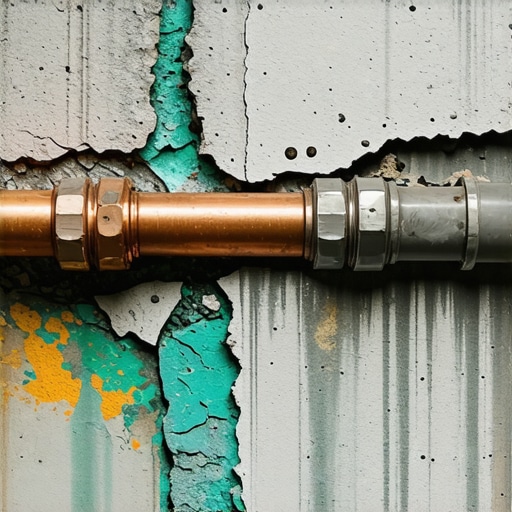
The first thing you notice isn’t the heat; it’s the silence. Not the good kind of silence where the house is perfectly conditioned and the thermostat is satisfied, but a heavy, expectant silence where the indoor blower is hummimg fruitlessly while the compressor outside is screaming for mercy. As a tech who has spent three decades dragging gauges through crawlspaces and sweating through my shirt before 8:00 AM, I’ve seen every shortcut in the book. But the one that makes my blood boil faster than R-410A on a vacuum pump is seeing a copper line set disappear into a concrete slab without a trace. It’s a ticking time bomb, a mechanical burial, and it’s one of the most expensive mistakes an AC installation crew can make.
The Physics of the Stone Tomb
My old mentor, a guy we called ‘Static’ because he could feel a ductwork restriction just by standing near a register, used to bark at me: ‘You can’t cool what you can’t touch!’ He wasn’t just talking about airflow; he was talking about the integrity of the thermodynamic cycle. In a humid coastal climate, where latent heat (that’s the moisture in the air, for the uninitiated) is the real enemy, your air conditioner isn’t just a ‘cooler’—it’s a massive dehumidifier. When you bury those refrigerant lines—the suction line and the liquid line—directly in concrete, you are fighting the laws of physics from day one. Concrete is porous, it’s alkaline, and it’s a thermal heat sink that doesn’t give a damn about your SEER rating.
“The most expensive equipment in the world cannot overcome a bad duct system, nor can it survive a compromised refrigerant circuit.” – Industry Axiom
When we talk about ‘Thermodynamic Zooming,’ we have to look at what’s happening inside that copper. The evaporator coil is dropping below the dew point to wring the humidity out of the air. That ‘juice’—the refrigerant—has to travel back to the condenser at a specific temperature. If that line is encased in concrete, the concrete acts as a giant radiator, sucking heat out or dumping it back in, completely throwing off your subcooling and superheat. You’re essentially asking your compressor to run a marathon while someone is stepping on its oxygen hose. Eventually, that compressor is going to give up the ghost, and you’ll be smelling that acidic, sour stench of a burnout that tells me I’m about to give you a very bad day.
The Chemistry of Corrosion: Why Copper and Concrete Hate Each Other
Concrete is a chemical cocktail. It’s high in alkalinity, and when it gets damp—which it always does because slabs wick moisture from the earth—it starts a slow, agonizing process of formicary corrosion on the copper. This isn’t the green patina you see on an old statue; this is microscopic tunneling that turns your expensive copper into a sieve. You’ll start losing ‘gas’ at a rate of a few ounces a year. A ‘Sales Tech’ will come out, ‘top it off’ (which is a scam, by the way—it’s a sealed system, if it’s low, it’s leaking), and charge you $400 for the privilege. But they won’t find the leak because it’s buried under six inches of reinforced aggregate. They’ll tell you that you need a whole new AC installation, but they won’t tell you that the new unit will die just as fast if they don’t fix the line set.
Forensic Diagnosis: Tracking the Hidden Leak
I remember a call last August. High-stakes emergency. A local bakery’s cooling went down on a Saturday morning. I walked in and the place felt like a steam room. I hooked up my gauges and saw the suction pressure was in the basement. I checked the evaporator coil—no ice. I checked the condenser—fan was spinning, but the suction line (which should be ‘beer can cold’) was lukewarm. I followed the lines and saw them disappear into the floor. My ultrasonic leak detector started screaming the moment I put it near the crack in the slab. The owner wanted a quick fix. I told him, ‘I can’t weld what I can’t see, and I’m not a plumber with a jackhammer.’ We had to bypass the slab entirely and run a new line set through the ceiling, properly wrapped in Armaflex and sealed with Pookie (mastic) at every penetration. It wasn’t pretty, but it was physics.
The Regulatory Reality and the 2025 Shift
As we move into the era of A2L refrigerants like R-454B, the stakes are even higher. These ‘mildly flammable’ gases require absolute system integrity. Buried lines that leak aren’t just an efficiency problem anymore; they are a compliance and safety nightmare.
“Refrigerant piping shall be protected from mechanical injury and shall be accessible for repair or replacement.” – ASHRAE Standard 15
If you can’t get to the pipe, you can’t maintain the system. This applies to your standard split system and even more so to a mini-split, where the tolerances are razor-thin. If you’re doing a furnace repair and realize the AC side of the coil is leaking into the slab, you’re looking at a total system redesign.
Repair vs. Replace: The Math of the Slab
If you have buried lines and you’re facing a $1,200 repair bill for a leak you can’t find, it’s time to pull the plug. But don’t let a ‘Sparky’ or a ‘Tin Knocker’ tell you it’s okay to just reuse those old buried lines for a new high-efficiency heat pump. The new oils used in modern systems (POE oils) are like a detergent; they will scour the inside of those old, corroded pipes and dump all that gunk right into your new TXV valve. You’ll be calling for a heating service or AC repair within six months. The only real solution is to abandon the ‘concrete coffin’ and run the lines where they belong: in the open air, properly insulated, and protected from the elements. Comfort isn’t magic; it’s the result of respecting the thermodynamics of the machine.
The Anatomy of a Proper Installation
A real technician knows that the line set is the umbilical cord of the system. It needs to be protected, not just from the sun, but from the building itself. If a line must pass near or through concrete, it should be sleeved in PVC pipe with plenty of clearance for expansion and contraction. Copper grows and shrinks as it heats and cools; if it’s trapped in stone, it will literally rub itself to death against the aggregate. Whether you are looking for a mini-split for a garage or a full AC installation for a 4,000-square-foot home, ensure those lines are visible. If your contractor pulls out a bag of quick-set concrete to ‘neatly’ hide your pipes, fire them on the spot. Your wallet, and your compressor, will thank you.