The Rhythmic Ghost in Your Walls: Identifying the Banging
If you have ever been woken up at 2:00 AM by a rhythmic ‘thump-thump-thump’ vibrating through your bedroom wall, you probably thought your house was haunted. It isn’t. It’s your lineset. After thirty years of chasing ghosts in attics and crawling through crawlspaces that would make a rat claustrophobic, I can tell you that a banging copper line is more than just an annoyance; it is a symptom of physical stress on your system. Most ‘Sales Techs’—those guys who show up with a shiny clipboard and zero grease under their fingernails—will tell you that a noisy lineset means you need a full AC installation. They’ll tell you the compressor is ‘slugging’ or that the internal valves are shot and you’re looking at a $12,000 bill. They are lying. Most of the time, the fix is about $15 in materials and an hour of actual labor.
I remember following one of these ‘Commission Cowboys’ out to a job in a drafty Victorian home near the city. The homeowner, a retired schoolteacher, was terrified. This Sales Tech had told her that the banging in her walls was her compressor ‘exploding’ and that if she didn’t replace the whole system, she’d have a refrigerant leak that would ‘poison the house.’ I walked into the basement, saw the line vibrating against a floor joist, and put a single piece of rubber insulation between the copper and the wood. The noise stopped instantly. He wanted fifteen grand; I charged her for a service call and a cup of coffee. That is the difference between a mechanic and a salesman.
The Physics of the Thump: Thermodynamic Zooming
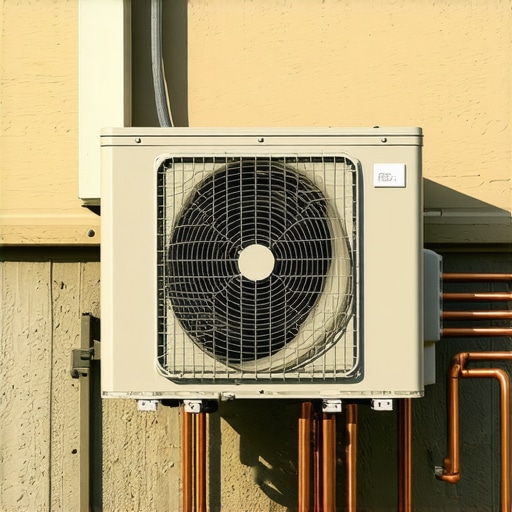
To understand why that copper is hitting your siding or your studs, you have to understand the thermal gymnastics happening inside that tube. We aren’t just moving ‘cold air’—we are moving heat. Your mini-split or central air system is a heat-moving machine. The suction line—the larger, insulated copper pipe—should be ‘beer can cold’ as it returns refrigerant to the outdoor compressor. Inside that line, the refrigerant is in a low-pressure vapor state. When the compressor kicks on, it creates a massive surge in pressure. If your suction line is under-supported or if the ‘Tin Knocker’ who installed your ducts didn’t leave enough clearance, that physical surge causes the pipe to jump. This is known as thermal expansion and contraction. Copper expands at a rate of roughly 1.1 inches per 100 feet for every 100°F temperature change. When that heating service stops and the AC kicks in, that metal is physically moving, and if it’s tight against a joist, it’s going to scream.
“Refrigerant piping shall be installed so that it does not vibrate and shall be supported by hangers or brackets to prevent vibration and damage to the piping.” – ASHRAE Standard 15-2019
The Anatomy of Vibration: Why it Happens
The banging usually comes from one of three mechanical failures. First is the Contact Point Failure. This is where the copper is touching the building’s framing. When the compressor—a massive reciprocating or scroll-driven motor—starts up, it sends a vibration down the ‘gas’ (refrigerant) line. If there is no isolation, your house becomes a sounding board for that motor. Second is the High Static Pressure Problem. If your furnace filter is choked or your ducts are too small, the blower motor works harder, causing the whole cabinet to vibrate, which transfers down the lineset. Finally, there is the Thermal Hammer. This happens during the transition from a furnace repair call where the lines were hot, to a cooling cycle where they suddenly drop to 45 degrees. The metal literally shrinks and slides against its hangers.
The Solution: Stopping the Noise Without a Sales Pitch
Fixing this doesn’t require a new unit; it requires a bit of ‘Pookie’ (mastic) and some common sense. Start by tracing the line. Anywhere that copper touches wood or metal, you need an isolator. I prefer using heavy-duty rubber grommets or even scraps of old Armaflex insulation. Don’t use tape; tape dries out and fails. You want a cushioned clamp. If you have a mini-split, ensure the plastic housing isn’t pinched. For central units, check the ‘Sparky’s’ electrical whip—sometimes the conduit is zip-tied too tightly to the copper, creating a bridge for vibration. If the noise is inside a wall you can’t reach, you might need to look at ‘soft starts.’ A soft start kit reduces the inrush current to your compressor, making it ramp up slowly instead of kicking like a mule. This prevents the initial ‘jump’ that starts the banging.
“The most expensive equipment in the world cannot overcome a bad duct system or improper piping support.” – Industry Axiom
Winter Transitions and Carbon Monoxide Safety
In colder climates where we switch from AC to heating service frequently, these vibrations can actually lead to bigger problems. If a copper line is constantly rubbing against a metal bracket, it will eventually wear a hole through the pipe. This is called ‘rub-through.’ Not only do you lose your refrigerant, but in systems like package units, this vibration can stress the heat exchanger. During a furnace repair, I always check for these friction points. A cracked heat exchanger isn’t just a noise issue; it’s a carbon monoxide hazard. If you hear banging, don’t just ignore it. It’s the sound of your system slowly killing itself through friction. Real HVAC work isn’t about selling boxes; it’s about the physics of airflow and the mechanical integrity of the ‘Tin.’ Take care of the vibration, and the system will take care of you.