The Scent of a Failing System (Or Just a Dirty One)
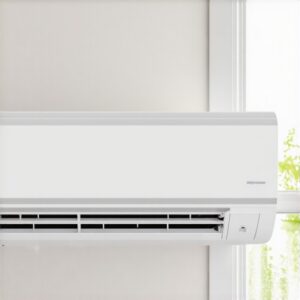
Listen, I’ve spent three decades crawling through crawlspaces and sweating through my shirt in attics that would cook a turkey. I’ve seen it all, from compressors that literally exploded to ‘tin knockers’ who thought duct tape was a structural element. But nothing gets a homeowner’s blood pressure up quite like a mini-split that starts pumping out the pungent, eye-watering scent of white vinegar. You didn’t leave a salad in the blower wheel. What you’re smelling is the byproduct of a biological turf war happening right inside your evaporator coil, and if some ‘Sales Tech’ told you that you need a total AC installation to fix it, they’re trying to pick your pocket.
The Sales Tech Scam: A Case of ‘Phantom Rot’
I followed a ‘Sales Tech’—one of those guys who spends more time on his hair and his iPad than he does on a manifold gauge—into a house last August. The customer was a retired teacher on a fixed income, and this kid had quoted her $7,200 for a new indoor head because of ‘unrepairable microbial corrosion.’ He told her the vinegar smell was the refrigerant leaking out and ‘souring.’ That’s a load of horse hockey. Refrigerant doesn’t smell like vinegar; it has a faint, ether-like sweet scent if you can smell it at all, and a leak that big would have the unit flat on its face in twenty minutes. All she actually needed was a $15 bottle of enzymatic cleaner and a 10-minute deep soak of the condensate pan. I caught the kid in the driveway and told him if I saw him lying to a senior again, I’d make sure the local licensing board heard about his ‘creative’ diagnostics.
“Proper commissioning and maintenance of a heat pump requires verification of both sensible and latent capacity to prevent microbial growth within the condensate system.” – ACCA Standard 5
Thermodynamic Zooming: Why the Vinegar Happens
To understand the smell, you have to understand the physics of latent heat. Your mini-split isn’t just a cooling machine; it’s a dehumidifier. In humid climates, the evaporator coil drops well below the dew point of the ambient air. As the air passes over those aluminum fins, the water vapor (latent heat) turns into liquid condensate. This water is supposed to hit the fins, drip into the plastic tray (the condensate pan), and exit through a 3/4-inch drain line. But here’s the rub: mini-splits are compact. The fins are spaced incredibly tight to maximize surface area. This creates a perfect, dark, damp petri dish. When certain bacteria—specifically Acetobacter—decide to move in, they feed on the dust and organic matter that bypasses your ‘filter’ (which is usually just a plastic screen that wouldn’t stop a gnat). These bacteria produce acetic acid as a metabolic byproduct. Acetic acid is the primary component of vinegar. You aren’t smelling a mechanical failure; you’re smelling bacterial farts.
The 10-Minute Fix: Reclaiming Your Air Quality
Before you call for a heating service or a furnace repair guy who doesn’t know a mini-split from a toaster, try this. Step 1: Pop the front cover and pull those screens. Wash them in the sink with Dawn dish soap—it cuts the skin oils that trap the dust. Step 2: Look at the evaporator fins. If they look ‘fuzzy,’ that’s your problem. Take a pressurized can of no-rinse evaporator coil cleaner (the stuff that foams up) and coat the entire coil. As the foam breaks down into liquid, it will carry the Acetobacter colonies down into the pan. Step 3: Pour a cup of warm water mixed with a teaspoon of bleach or a specialized pan tablet into the condensate tray. This clears the ‘Pookie’ (bio-slime) out of the drain line so the water doesn’t back up and start the cycle over again. If you do this once a season, you’ll never smell that vinegar again.
Airflow is King: The South/Humid Reality
In the humid Southeast, we deal with massive latent loads. If your unit is oversized—a common mistake during a rushed AC installation—the compressor ‘short cycles.’ It cools the room’s air temperature (sensible heat) so fast that it never stays on long enough to actually pull the moisture (latent heat) out of the air. You end up with a room that’s 68 degrees but feels like a swamp, and a coil that stays permanently damp but never gets a ‘good wash’ from heavy condensation flow. This ‘short cycling’ is the primary driver of ‘Dirty Sock Syndrome’ and vinegar smells. A variable-speed inverter (which most mini-splits have) should be hummin’ along at a low RPM for hours, not kicking on and off like a jackrabbit. If your tech didn’t do a Manual J load calculation, they probably gave you too much ‘juice’ for the space.
“The most expensive equipment in the world cannot overcome a bad duct system or improper sizing.” – Industry Axiom
When the Smell Means Something Else
Now, if the smell isn’t vinegar but more like a ‘sour gym locker,’ you’re looking at a different beast. That’s usually a fungal growth on the blower wheel itself. If you look up into the discharge vent with a flashlight and see little black dots on the cylindrical fan, you’ve got a real cleaning job ahead of you. That requires a bib kit and a pressure sprayer. But the vinegar? That’s almost always the coil and the pan. Don’t let a ‘Sparky’ or a ‘Sales Tech’ convince you that a smell requires a new $3,000 outdoor unit. HVAC is physics, not magic. It’s about static pressure, thermal transfer, and keeping the ‘gas’ (refrigerant) where it belongs while keeping the biology out of the condensate tray. Take care of your airflow, and the airflow will take care of you.