The Silence of the Airflow: When the IR Eye Goes Blind
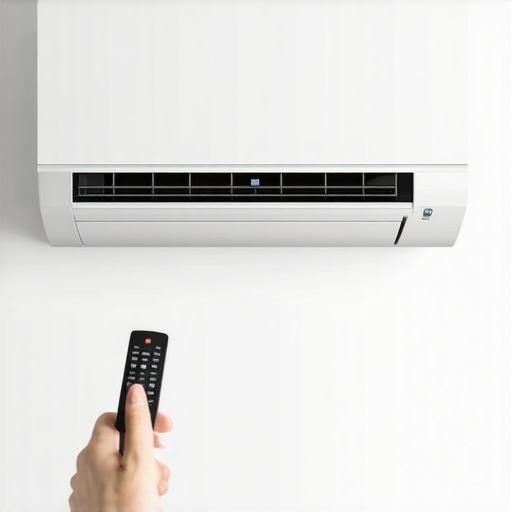
You press the power button. You hear… nothing. No beep, no motorized louvers swinging open, no rush of air. In thirty years of chasing ghosts in attics, I’ve seen plenty of homeowners standing in the middle of their living room, clicking that plastic remote like they’re trying to start a flooded lawnmower. If you’re in a place like Massachusetts or New York during a January deep freeze, that silence is the sound of your pipes potentially bursting. You called for a heating service, and instead, you’re getting a cold shoulder from a machine that thinks it’s on vacation. This isn’t just about a dead battery; it’s about the complex handshake between a handheld infrared transmitter and a sophisticated inverter-driven computer mounted on your wall.
The $12,000 ‘Fried Board’ That Wasn’t
Last winter, during a week where the mercury didn’t break 10°F, I followed one of those ‘Sales Techs’ out to a job in a drafty Victorian. This kid—clean shirt, no grease under his nails, probably couldn’t tell a manifold gauge from a stethoscope—had just quoted this homeowner $12,000 for a full AC installation and outdoor unit replacement. He told her the ‘main logic center was incinerated’ because the unit wouldn’t respond to the remote. I walked in, saw the red ‘Operation’ lamp blinking a specific three-flash pattern, and realized the unit was just in a defrost lockout because the previous tin knocker had kinked the line set, starving the evaporator of juice. But even simpler? The IR receiver was blocked by a layer of kitchen grease from a nearby stove. A $20 sensor and a microfiber cloth saved her twelve grand. That’s why I hate sales techs; they sell metal when they should be selling physics.
“Proper equipment maintenance and the calibration of control systems are essential to ensuring that the designed heat transfer coefficients are met throughout the life of the system.” – ASHRAE Standard 15
Thermodynamic Zooming: The Latent Heat of a Mini-Split
When your mini-split works, it’s a miracle of modern engineering. Unlike a standard furnace repair where we’re just burning gas to create fire, a heat pump is a magician. It extracts heat from sub-zero air. The indoor coil, the evaporator, has to drop significantly below the dew point of the room air to pull out moisture (latent heat) during the summer. In the winter, the outdoor coil becomes the evaporator, absorbing whatever microscopic thermal energy is left in the frozen air. If your remote isn’t talking to the head unit, the Electronic Expansion Valve (EEV) stays shut. No refrigerant flows. No heat moves. You aren’t just missing a ‘cool breeze’; you’re missing a phase change of matter occurring right above your TV.
The Forensic Diagnosis: Why the Remote is Ghosting You
First, let’s talk about the ‘Communication Wire.’ Most mini-splits use a 14/4 SOOW cable. This carries the high-voltage power and the DC signal. If that signal wire (usually the #3 terminal) is loose or corroded, the indoor unit can’t tell the outdoor compressor what to do. It looks like a remote issue, but it’s actually a ‘brain-to-body’ disconnect. Sparky might have run the wire, but if he didn’t tighten those lugs, the signal gets lost in the noise. Check the ‘IR Eye’ on the indoor unit. If you’ve used heavy cleaners or if there’s a film of pookie (mastic) nearby from a recent duct job, the infrared light can’t penetrate the sensor. Use your phone camera; look at the end of the remote through the screen while pressing a button. If you see a purple flash, the remote is sending ‘gas.’ If not, your remote is a paperweight.
“System performance is dictated by the weakest link in the communication and airflow chain; a failure in control signaling is as detrimental as a compressor failure.” – ACCA Manual J Standards
The Climate Factor: Polar Vortex vs. The Inverter
In the North, we deal with ‘Hoar Frost.’ If your outdoor unit is encased in ice, the indoor head might stop responding to the remote as a safety lockout. The thermistors (temperature sensors) on the coil see a massive temperature differential and tell the board to ‘Stop everything.’ You think the remote is broken; the machine thinks it’s saving its own life. This is where a professional heating service technician earns his pay. We don’t just look at the remote; we measure the resistance of those thermistors. If a sensor is off by even a few kilo-ohms, the whole system goes into a coma. It’s not magic; it’s Ohm’s Law. If you’re considering a new AC installation, always look for units with base pan heaters to prevent this ‘remote-dead’ illusion caused by ice buildup.
The Final Verdict: Repair or Replace?
If your mini-split is over 12 years old and the boards are starting to fail, you’re looking at the ‘Regulatory Cliff.’ With the move to R-454B and other A2L refrigerants in 2025, the old R-410A systems are becoming legacy hardware. However, a remote issue is usually a $200-$500 fix, not a $10,000 replacement. Don’t let a sales tech talk you into a new system because he’s too lazy to troubleshoot a signal wire or a dirty IR sensor. Real HVAC work happens with a meter in hand, not a sales brochure. Keep your coils clean, keep your filters clear, and make sure your suction line is ‘beer can cold’ in the summer. That’s the only way to ensure your comfort isn’t just a fantasy.