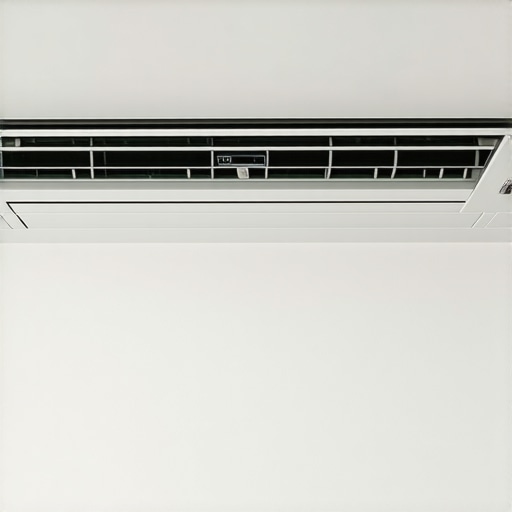
The Stench of Failure: Why Your Modern Mini-Split Smells Like a Locker Room
You spent four grand on a high-efficiency mini-split, and now your living room smells like a middle school gym locker in August. Welcome to the world of ‘Dirty Sock Syndrome.’ As a tech who has spent three decades crawling through blown-in insulation and brazing joints until my eyes bled, I’ve seen this more in the last three years than in the previous twenty. It isn’t a ‘broken’ unit; it’s a failure of physics and maintenance. When you call for a heating service or a quick fix, half the kids they send out today will try to sell you a whole new system before they even pull the plastic housing off the head unit. I don’t play that way. Airflow is king, and if your evaporator coil is a petri dish, your ‘AC installation’ was only half the job.
The Sales Tech Scam: A Case Study in Dishonesty
Let me tell you a story about a ‘Sales Tech’ I followed behind last month. He’d quoted a young couple in a humid coastal town $7,500 to replace a two-year-old indoor head unit because of a ‘permanent microbial infestation.’ He didn’t even check the pitch of the condensate line. I walked in, smelled that sour, acidic funk, and knew immediately what it was. The ‘juice’—that’s refrigerant for you homeowners—was flowing fine, but the unit was short-cycling because it was oversized, leaving the coil dripping wet and never allowing it to dry. I charged them for a deep chemical clean and taught them how to use the ‘Dry’ mode. Cost them a fraction of that scammer’s quote. That’s the difference between an Airflow Architect and a guy with a sales quota.
“Microbial growth on cooling coils and in drain pans shall be controlled through the use of effective moisture management and regular cleaning schedules to maintain acceptable indoor air quality.” – ASHRAE Standard 62.1
The Thermodynamics of Stink: Latent Heat vs. Sensible Heat
To understand why your 2026 model mini-split is failing the sniff test, you have to understand the dew point. Your evaporator coil doesn’t just cool the air (sensible heat); it removes moisture (latent heat). In humid climates, that coil is constantly below the dew point, sweating like a ‘Sparky’—that’s an electrician—trying to read a schematic. If the unit is oversized, it hits the temperature setpoint too fast and shuts off. The fans stop, the ‘gas’ stops flowing, and you’re left with a cold, soaking wet coil in a dark, warm box. That is the perfect breeding ground for bacteria and mold. It’s not magic; it’s biology meeting bad engineering. If your installer didn’t do a proper Manual J load calculation, they probably oversized the unit, thinking ‘bigger is better.’ It’s not. It’s a recipe for a swampy house.
The A2L Transition and the 2026 Reality
We are now fully into the era of R-454B and R-32 refrigerants. These A2L ‘mildly flammable’ gases require more sensitive equipment and tighter seals. But here is the kicker: the coils are getting denser to meet 2026 SEER2 requirements. More fins per inch means more surface area for cooling, but it also means more places for ‘Pookie’ (mastic), dust, and skin cells to get trapped. When that organic gunk gets wet, it rots. You can’t just spray a little canned air in there. You need a full disassembly of the blower wheel—the ‘barrel fan’—which is usually caked in black mold that you can’t even see from the floor. This is why a proper furnace repair or mini-split tune-up takes more than twenty minutes.
“The most expensive equipment in the world cannot overcome a bad duct system or improper moisture management.” – Industry Axiom
The Anatomy of the Fix: Beyond the Filter
If you want to stop the smell, you have to address the mechanical anatomy. First, check the ‘Suction Line.’ It should be ‘beer can cold’ and properly insulated. If it’s sweating into the wall, you’ve got bigger problems. Second, your ‘Tin Knocker’ or installer needs to ensure the condensate pump—if you have one—isn’t holding stagnant water. These tiny pumps are notorious for growing slime that smells like a vinegar factory. Third, you need to use the ‘Dry’ mode. Most modern mini-splits have a setting that runs the fan for 10-20 minutes after the cooling cycle ends to dry the coil. If yours doesn’t, you need to manually run the fan. It’s a pain, but it’s cheaper than a $10,000 replacement. Finally, stop buying those cheap 1-inch filters for your main house system and think your mini-split is fine. These units need their specific mesh filters washed every two weeks, not every six months. If you can’t breathe through it, neither can the machine.
The Verdict: Maintenance vs. The Sales Pitch
The next time a tech walks in and says you need a new AC installation because of a smell, ask them to show you the static pressure readings and the state of the blower wheel. If they can’t explain the difference between latent and sensible heat loads, kick them out of your house. Your 2026 mini-split is a precision instrument, not a window shaker from 1985. It requires a technician who understands that moisture is the enemy and airflow is the cure. Don’t be a victim of ‘Dirty Sock Syndrome’ or a Sales Tech’s commission. Keep the coils clean, keep the pitch steep, and never trust a guy who doesn’t have a little bit of ‘Pookie’ on his work boots.