Stop Building Links to Your Homepage and Start Cleaning Up Your Local Listings Instead
If you are an HVAC business owner, I have a hard truth for you: most of the SEO advice you’ve been buying is a waste of your money. I’ve seen thousands of local service businesses – plumbers, electricians, and heating specialists – flush their marketing budgets down the drain because they’re following a “one-size-fits-all” digital strategy designed for national e-commerce brands. They’re obsessed with “Domain Authority” and building high-octane backlinks to their homepages, thinking that a link from a tech blog in Silicon Valley will somehow help them get more furnace repair calls in Des Moines.
It won’t.
Google doesn’t care about your DA 90 link from a guest post if it can’t verify that your shop actually exists on the corner of 5th and Main. For a local contractor, the game isn’t about global authority; it’s about Local Prominence. If you want to dominate your market, you need to stop chasing vanity metrics and start fixing the foundational data that Google uses to trust you. Why hiring a generic SEO expert often tanks your local HVAC shop rankings is a lesson many learn too late. Your priority shouldn’t be another backlink; it should be cleaning up your local listings.
The “Backlink Trap”: Why Your National SEO Strategy is Failing Your Local Shop
The “Backlink Trap” is a phenomenon where business owners are convinced that more links equal higher rankings. In the world of National SEO, that’s largely true. If you’re selling software globally, you need massive domain authority. But you aren’t selling software. You’re fixing air conditioners. When a homeowner’s AC dies in 100-degree heat, they aren’t looking for the most “authoritative” website on the internet; they are looking for the most relevant, prominent, and proximate service provider in their neighborhood.
Google’s local algorithm is built on three pillars: Proximity, Relevance, and Prominence. Traditional link building barely touches these. In fact, aggressive homepage link building can sometimes look like spam to a local algorithm that expects to see a “natural” footprint. According to recent 2025/2026 ranking factor studies, “Prominence” is heavily weighted by the consistency of your business data across the web, not just the number of links to your homepage. If your business name is “Climate Masters HVAC” on your website but “Climate Masters Heating & Cooling” on Yelp, Google sees two different entities. This confusion dilutes your prominence.
To truly move the needle, you need to shift your focus to google business profile seo. This involves ensuring that every mention of your business across the digital landscape points to a single, verified entity. When Google sees 50 different directories all saying the exact same thing about your business, its confidence in your location and services skyrockets. That confidence is what gets you into the Map Pack, not a guest post on a “Top 10 Tech Trends” blog.
The High Cost of “Dirty” Data: How Citation Errors Kill Your Rankings
In the world of local search, your “NAP” (Name, Address, Phone number) is your digital fingerprint. If that fingerprint is smudged, Google can’t identify you. I call this “Dirty Data,” and it is the silent killer of HVAC marketing campaigns. A single typo – an extra digit in a phone number or an old suite number from three years ago – can sabotage your ranking.
Think about it from Google’s perspective. Their goal is to provide the most accurate information to the user. If they see three different phone numbers for your shop across the web, they aren’t going to guess which one is right. They are simply going to rank a competitor whose data is clean and consistent. How One Wrong Digit in Your Phone Number Sabotages Your HVAC Ranking isn’t an exaggeration; it’s a daily reality for thousands of businesses.
Citations come in two flavors:
- Structured Citations: These are listings on formal business directories like Yelp, Yellow Pages, and Angi. These have standardized fields for your NAP data.
- Unstructured Citations: These are mentions of your business on news sites, local blogs, or social media where the information isn’t in a standard box but is still readable by search engines.
If you have “dirty” data across these sources, you are essentially splitting your authority. Instead of one powerful listing ranking at #1, you have five weak versions of your business fighting for scraps on page four. How a single typo in your HVAC citations hands your leads to the competition is the first thing I look for when an HVAC owner tells me their “SEO isn’t working.” Usually, the SEO is fine, but the foundational data is a disaster.
Why the Google Map Pack is the Only Real Estate That Matters
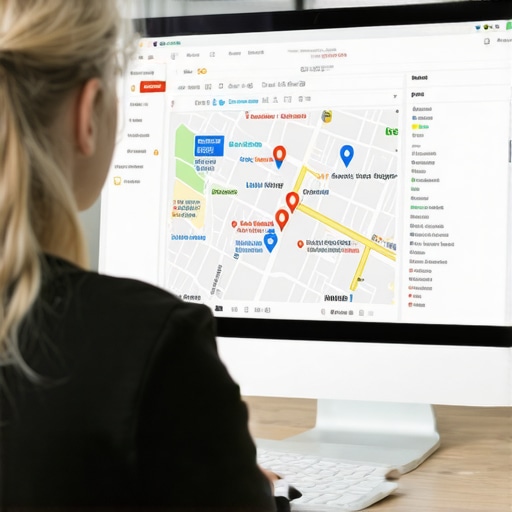
Let’s be honest: when was the last time you scrolled past the Map Pack to look at the organic “blue links” when you needed a local service? You didn’t. Neither do your customers. The “3-Pack” (the top three listings on Google Maps) captures the lion’s share of clicks and conversions. If you aren’t in those top three spots, you’re invisible.
To rank higher on google maps, you have to play by a different set of rules than organic SEO. While organic ranking factors still matter, Map Pack rankings are driven by the strength of your Google Business Profile (GBP). This is why a shop with a mediocre website but a perfectly optimized GBP and clean local citations will often outrank a massive franchise with a million-dollar website.
I see it all the time: Why your HVAC shop stays buried on maps despite having better reviews. The reason is usually a lack of “Entity” signals. Google doesn’t just want to know you’re good; it wants to be 100% sure you are who you say you are and that you are located where you say you are. Clean citations are the “proof” Google needs to put you in that coveted 3-Pack. Without them, your reviews and your backlinks are just noise.
The Step-by-Step Local Listing Cleanup Strategy
If you’re ready to stop wasting money on homepage links and start dominating your local market, here is the blueprint. This isn’t glamorous work, but it is the work that actually pays the bills.
1. Conduct a Comprehensive Audit
You can’t fix what you don’t know is broken. Use a google business profile audit tool to scan the web for every mention of your business. Look for variations in your name (e.g., “Climate Masters” vs. “Climate Masters HVAC”), old addresses, and disconnected phone numbers. Pay special attention to duplicate listings. Duplicate GBPs are a death sentence for rankings because they trigger Google’s “spam” filters.
2. Fix the Primary Data Aggregators
The local search ecosystem is fed by a few massive data aggregators like Data Axle and Neustar. If the information at these sources is wrong, it will keep “bleeding” out to smaller directories no matter how many times you fix them manually. Start at the source. Once the aggregators are clean, the rest of the web often follows suit over time.
3. Target Niche and Local Directories
Don’t just go for the “big” sites. For an HVAC shop, a link from a local Chamber of Commerce or a niche HVAC directory is worth ten times more than a generic directory. These signals tell Google you are an active member of the local business community. The One Checklist That Actually Ranks Your HVAC Business on Google Maps should always include a deep dive into these local-specific signals.
4. Optimize Your Google Business Profile Categories
This is a common mistake. If you’re an HVAC shop but you’ve only selected “Air Conditioning Contractor” and missed “Heating Contractor,” you’re missing half your market. Why Picking the Wrong Google Business Categories Is Hiding Your HVAC Shop is a simple fix that can result in an overnight jump in rankings. Use professional local seo tools to see what categories your top-ranking competitors are using.
Beyond Citations: Signals That Move the Needle in 2026
In 2026, the local algorithm has become even more sophisticated. It’s no longer enough to just have matching text on a screen. Google is looking for “Entity” signals – real-world proof that your business is active and legitimate.
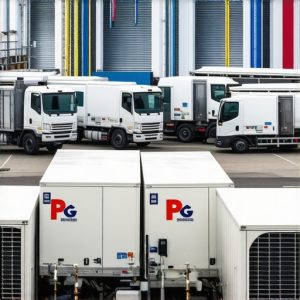
One of the strongest signals you can send is through visual data. Why Posting Photos of Your Actual Service Vans Boosts Your Ranking on Google Maps isn’t just about looking professional. When you upload a photo of a branded truck at a job site, Google can often read the metadata (EXIF data) and the branding on the truck to verify your location and service area. This is a massive trust signal that “generic” SEO agencies never mention.
Reviews also continue to evolve. Sterling Sky’s recent research shows that while review quantity is important, review “velocity” (how often you get new reviews) and the keywords used in those reviews are even more critical. If a customer mentions “best furnace repair in [City Name]” in their review, it significantly boosts your relevance for that specific search term. This is why you need google maps lead generation tools that help you automate the review request process, ensuring a steady stream of fresh, keyword-rich feedback.
Conclusion: Stop Chasing Vanity Metrics
The era of gaming Google with cheap homepage backlinks is over for local service providers. If you want to grow your HVAC business, you have to stop thinking like a national blogger and start thinking like a local authority. Your customers are looking for you on Google Maps, not in a guest post on a tech site.
Cleaning up your local listings and optimizing your Google Business Profile is the highest-ROI activity you can perform in 2026. It builds the foundation of trust that the algorithm requires to rank you. Don’t spend another dollar on “backlink packages” until you’ve audited your NAP data and secured your spot in the Map Pack. It’s time to improve local search presence by focusing on what actually drives calls: accuracy, consistency, and local prominence. Audit your listings today – your bottom line will thank you.