The Sunset of R-410A and the Birth of the A2L Era
Listen, if you have been around the trade as long as I have, you remember the R-22 phase-out. We called it ‘Liquid Gold’ because the price of a jug of gas went from fifty bucks to five hundred overnight. Well, history is repeating itself, but this time it is not just the juice changing; it is the entire physics of the equipment sitting in your living room. As we march into 2026, the EPA-mandated transition to A2L refrigerants like R-32 and R-454B is in full swing. If you are looking at a new mini-split or AC installation, there is a tiny component that could be the difference between a safe home and a code-violating disaster: the A2L Leak Sensor.
The Sales Tech Scam: A $12,000 Lie
I followed a ‘Sales Tech’—you know the type, clean fingernails, starched shirt, carries a tablet but doesn’t own a set of gauges—who quoted a retired shop teacher named Mr. Henderson $12,000 for a full system replacement. The kid told him his R-410A unit was ‘hazardous’ and that the government was going to ‘confiscate it’ by 2026. It was a total lie. All Mr. Henderson had was a pitted contactor that was humming like a beehive because of a loose terminal from a lazy sparky. I replaced the contactor for the cost of a nice steak dinner and a service call. But here is the kicker: while you do not need to trash your old system, if you *are* buying a new one in 2026, you better make sure that mini-split is actually up to the new UL 60335-2-40 standards. The ‘Sales Techs’ are currently trying to dump old, non-compliant inventory on unsuspecting homeowners before the regulations lock them out.
“The application of A2L refrigerants requires mitigation strategies, including sensors and ventilation, to ensure safety in the event of a leak.” – ASHRAE Standard 15
Thermodynamic Zooming: Why R-32 Changes the Game
Why are we even switching? R-32 has a much lower Global Warming Potential (GWP) than R-410A, but it comes with a catch: it is ‘mildly flammable.’ In the old days, a leak in your evaporator coil just meant your suction line wasn’t ‘beer can cold’ anymore and your house felt like a swamp. With R-32, if a leak occurs in a confined space, the concentration of refrigerant could theoretically reach a Lower Flammability Limit (LFL). This is where the physics of the evaporator coil gets intense. As the liquid refrigerant expands into a gas, it absorbs latent heat from your indoor air, dropping the coil temperature below the dew point to wring out humidity. If that coil develops a pinhole leak, you have flammable gas dumping into the airflow. That is why the 2026 mandate requires an integrated leak sensor. This sensor isn’t just a bell or a whistle; it is hard-wired into the control board to shut down the compressor and force the indoor fan to high speed to dilute the gas immediately.
The Anatomy of the Mandatory Leak Sensor
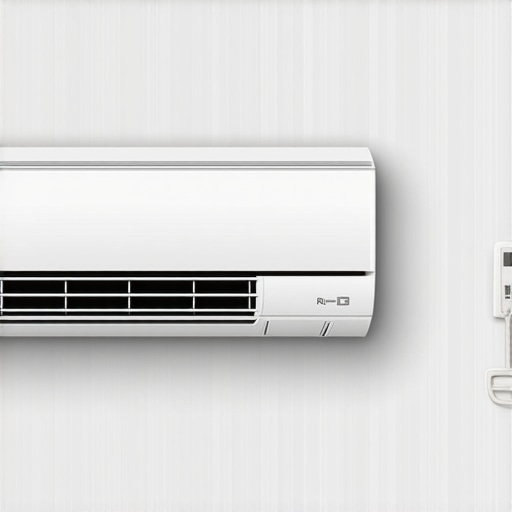
During a modern AC installation, specifically for mini-split heads, this sensor is usually tucked near the bottom of the indoor chassis where the refrigerant is most likely to pool. If you are looking at a 2026 model, ask your contractor to show you the A2L mitigation logic. If they look at you like you have three heads, find a real technician, not a tin knocker who only knows how to hang ductwork. These sensors are calibrated to detect concentrations well below the LFL. If you are getting heating service or furnace repair on a hybrid dual-fuel system, the same rules apply. The furnace blower must be capable of moving enough CFM to disperse any leaking refrigerant from the A-coil.
“Equipment using A2L refrigerants must be marked and equipped with leak detection systems when the charge exceeds the allowable water-level limit for the occupied space.” – EPA Section 608 / UL 60335-2-40
Static Pressure and the Mini-Split Trap
A lot of guys think mini-split units are ‘set it and forget it.’ They aren’t. Because these units use variable-speed fans, they are incredibly sensitive to static pressure. If your installer doesn’t clean the pookie off his hands and actually seals the wall penetration correctly, you end up with unconditioned air bypassing the coil. This messes with the sensor’s ability to accurately sample the air. If you are in a humid climate, an improperly installed unit won’t just fail to cool; it will grow a science experiment inside the drain pan because it isn’t hitting the right saturation temperature to pull that latent heat out of the air. In 2026, a ‘dirty’ install could also lead to nuisance tripping of that mandatory leak sensor, leaving you without air in the middle of a July heatwave.
Final Verdict: Don’t Buy Yesterday’s Problems
If you are being pressured into an AC installation right now, check the data plate. If it says R-410A, you are buying a dinosaur. It will work fine for years, but the cost of furnace repair or refrigerant recharges 10 years from now will be astronomical. If it is R-32 or R-454B, verify the sensor is present. Don’t let a ‘Sales Tech’ sell you a transition-year unit that lacks the safety hardware required by the newest building codes. Comfort is physics, not magic, and in the A2L era, physics requires a watchful eye—or at least a calibrated sensor. [{“@context”:”https://schema.org”,”@type”:”HowTo”,”name”:”Checking for A2L Compliance on a New Mini-Split”,”step”:[{“@type”:”HowToStep”,”text”:”Locate the manufacturer data plate on the side of the outdoor condenser and the indoor head.”},{“@type”:”HowToStep”,”text”:”Identify the refrigerant type; look specifically for R-32 or R-454B.”},{“@type”:”HowToStep”,”text”:”Verify the presence of an integrated leak detection sensor in the indoor unit specifications.”},{“@type”:”HowToStep”,”text”:”Ensure the installer performs a nitrogen pressure test and pulls a vacuum to at least 500 microns to prevent future leaks.”}]}]