The Sound of a Dying Heat Pump
You don’t hear a refrigerant leak; you feel the absence of what should be there. It starts with a subtle shift in the register—the air coming off the indoor head of your mini-split feels just a bit too ‘room temp’ and not enough like the arctic blast you paid for. As a tech who’s spent thirty years crawling through damp crawlspaces and sweating through shirts on black-top roofs, I can tell you that a mini-split is a different beast than your old-school central air. These systems are precision instruments. When a 1/4-inch flare nut loosens just a hair due to vibration, your efficiency doesn’t just dip—it craters. If you’re noticing your mini-split isn’t hitting the set point, you aren’t just looking at a minor annoyance; you’re looking at a system that’s slowly suffocating its own compressor.
The $12,000 Lie: A Story from the Field
I remember a call last August in a suburb just outside the city. A homeowner, let’s call him Jim, had a three-zone ductless system that had gone bone-dry. Before I got there, a ‘Sales Tech’ from one of those big-box franchises had already been there. He spent five minutes with a manifold gauge, saw zero pressure, and told Jim the evaporator coils in the walls were ‘porous’ and the whole system—lineset, heads, and condenser—needed to be ripped out. The quote was $12,500. Jim called me for a second opinion because something smelled fishy, and it wasn’t just the sour odor of a burnt-out motor. I walked in, pulled the plastic shroud off the indoor head, and saw the tell-tale sign: a faint, oily residue glistening on the flare connection. I tightened the nut, performed a nitrogen sweep, and had him back up and running for the cost of a service call and some R-410A. That ‘Sales Tech’ wasn’t looking for a leak; he was looking for a commission. This is why you need to understand the physics of your system before you let someone with a shiny clipboard into your home.
“The most expensive equipment in the world cannot overcome a bad duct system or a compromised refrigerant circuit.” – Industry Axiom
Thermodynamics and the Latent Heat Trap
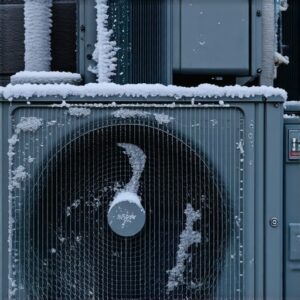
To find a leak, you have to understand what the ‘juice’ is actually doing. In a mini-split, we use the phase change of the refrigerant to move heat. The evaporator coil must drop below the dew point of the ambient air to remove latent heat—that’s the humidity that makes your house feel like a swamp. When your refrigerant levels drop, the pressure in the suction line falls. Physics dictates that as pressure drops, so does the boiling point. Paradoxically, a low-charge system can actually freeze the coil into a block of ice because the refrigerant is boiling off too early and too cold. But once that ice melts, you’re left with a compressor that’s trying to pump gas that isn’t there, leading to overheating and mechanical failure. We call the suction line ‘beer can cold’ for a reason; if it’s dry and lukewarm, your gas is gone.
Phase 1: The Visual Forensic Audit
Before we break out the fancy electronics, we use our eyes. Refrigerant is mixed with PVE or POE oil. Where the gas escapes, the oil follows. I’m looking for ‘the stain.’ In mini-split AC installation, the most common failure point is the flare connection. Unlike a standard furnace repair where we’re brazing copper with a torch, mini-splits rely on mechanical flares. If the ‘tin knocker’ or the installer didn’t use a torque wrench, or if they didn’t apply a bit of sealant like Nylog to the flare face, that connection is going to fail. Look at the service valves on the outdoor unit. Are they oily? Look at the indoor flare joints hidden behind the plastic casing. If you see dust sticking to a specific spot on the copper, you’ve found your hole.
Phase 2: The Bubble Test (Old School Logic)
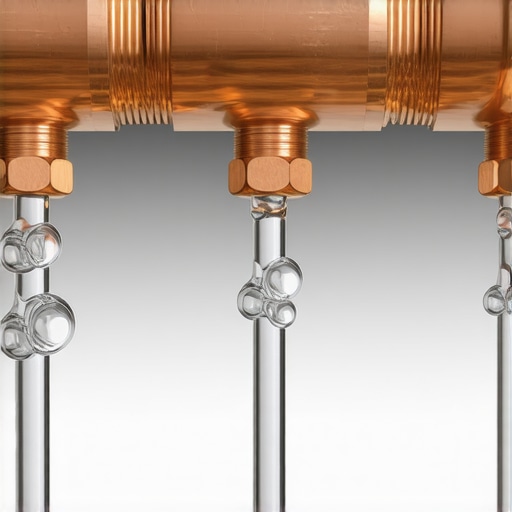
If the visual check fails, we go to ‘Big Blue’ or a high-viscosity soap solution. This isn’t dish soap from the kitchen—that stuff has chlorides that can actually corrode the copper over time. We coat every joint. What I’m looking for isn’t just a big bubble, but a ‘nest’ of tiny, micro-bubbles that indicate a pinhole leak. This is the gold standard for heating service technicians who don’t want to rely on a beeping box. It’s slow, it’s tedious, but it’s definitive. If it bubbles, it’s broken.
Phase 3: Electronic Sniffers and Ultrasonic Detection
When the leak is inside the coil fins where you can’t see it, we use a heated diode or infrared ‘sniffer.’ These tools can detect a leak as small as 0.1 ounces per year. I’ll run the probe along the length of the evaporator. If the alarm goes off, we know the leak is internal. In some high-end mini-split diagnostics, we use ultrasonic detectors. These don’t ‘smell’ the gas; they listen for the high-frequency hiss of gas escaping a pressurized vessel. It’s the sound of money escaping your wallet, and these tools are the only way to catch it in a windy outdoor environment.
“Refrigerant circuit integrity is paramount; any leak, no matter how small, is a violation of EPA Section 608 and a failure of system design.” – EPA Regulatory Guidance
The Nitrogen Pressure Test: The Moment of Truth
If we still can’t find it, we recover whatever gas is left and pump the system up with dry nitrogen—up to 400 or 500 PSI depending on the manufacturer’s specs. Nitrogen molecules are smaller and more stable than R-410A. We leave a digital micron gauge on the system. If that needle moves even a fraction over an hour, we know we have a ‘ghost leak.’ This often happens in the middle of the lineset, where a stray nail from a baseboard installation might have nicked the copper. In the AC installation world, this is the ultimate test of a tech’s patience.
Why You Shouldn’t Just ‘Top It Off’
When a tech tells you that you just need a ‘pound of gas,’ walk him to the door. A mini-split is a sealed system. It doesn’t ‘use’ refrigerant like a car uses oil. If it’s low, there is a hole. Adding gas without fixing the leak is like trying to inflate a tire with a nail in it. Furthermore, modern refrigerants like R-410A are blends. When they leak, the different gases that make up the blend leak at different rates (this is called fractionation). If you just add more, the ‘recipe’ of the gas is wrong, and your pressures will never be right again. You have to pull it all out, fix the leak, and weigh in a fresh charge to the gram.