The Ghost in the Thermistor
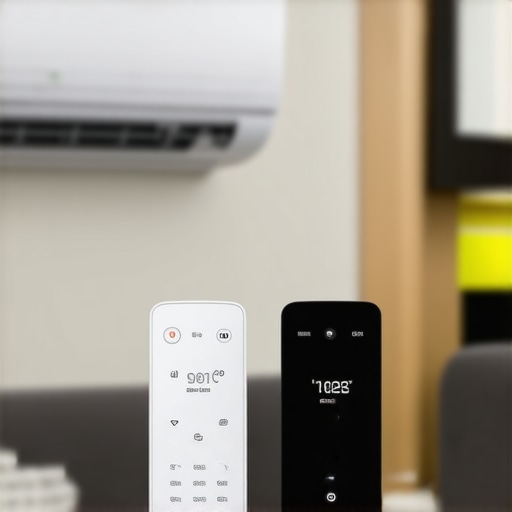
My old mentor, a man who smelled perpetually of PVC glue and stale coffee, used to scream at me every time I reached for a digital thermometer. ‘You can’t cool what you can’t touch!’ he’d bark, pointing a calloused finger at the evaporator coil. He was right. In thirty years of crawling through spider-infested crawlspaces and baking on black rubber roofs, I’ve learned that the biggest lie in the industry isn’t the efficiency rating on the sticker—it’s the temperature displayed on your mini-split remote. Whether you are calling for a heating service or an AC installation, understanding the disconnect between that plastic clicker and the actual molecular movement in your room is the difference between comfort and a ‘cold swamp’ nightmare.
The Physics of the ‘I Feel’ Function
Most modern mini-split systems come with a feature often labeled ‘I Feel’ or ‘Follow Me.’ In theory, it turns the remote into the thermostat. In reality, it’s a game of infrared telephone. When you’re used to a traditional furnace repair where a central thermostat sits at eye level in a hallway, the ductless world feels like magic. But physics doesn’t believe in magic. A mini-split head unit is usually mounted six to seven feet up the wall. Since heat rises—thanks to the law of convective buoyancy—that unit is living in a completely different climate than you are while you’re sitting on the sofa.
“The most expensive equipment in the world cannot overcome a bad duct system—or in the case of ductless, a fundamental misunderstanding of room stratification.” – Industry Axiom
When you use the remote to sense temperature, you are relying on a tiny, cheap thermistor buried inside a plastic housing that’s probably sitting on a cold granite countertop or tucked into a couch cushion. This leads to a massive discrepancy in sensible heat readings. If the remote is shielded from the airflow, it won’t trigger the inverter to ramp up the juice (refrigerant) flow, leaving the far corners of the room stagnant and humid.
Thermodynamic Zooming: Why You’re Still Sweating
Let’s talk about latent heat. This is the energy used to change the state of water from vapor to liquid. In a humid climate like the Southeast, a mini-split that ‘lies’ about the temperature becomes a mold factory. If the remote tells the unit it’s 72°F because it’s sitting in a localized cold spot, the compressor slows down. When the compressor slows down, the evaporator coil temperature rises. Suddenly, that coil is no longer below the dew point. It might be cooling the air (sensible cooling), but it isn’t stripping the moisture (latent cooling). You end up with a room that’s 72 degrees but feels like a locker room because the relative humidity is spiking at 70%. This is why ‘Auto’ mode is the enemy of a true AC installation professional.
The Airflow Manifesto: Vanes and Velocity
Airflow is king. If your tin knocker didn’t have to run ducts for your mini-split, you still have to worry about the ‘throw.’ The remote often fails because it’s placed in a ‘dead zone’ where the air velocity is zero. I’ve seen homeowners complain that their unit needs a heating service because the room is freezing, only to find the remote is sitting right under the indoor unit where the air hasn’t circulated yet. You need to understand the ‘suction line’—it should be beer-can cold—but if the air isn’t moving across the coil because the unit thinks the job is done, you’re just wasting electricity.
“Design air flow for cooling systems shall be determined using the greater of the sensible heat load or the latent heat load to ensure moisture removal.” – ACCA Manual J Standards
If you are in the North, during a furnace repair season where you’re leaning on your mini-split for heat, the remote lie gets worse. Hot air wants to stay at the ceiling. If your remote is on a low coffee table, the unit will keep blasting heat until the ceiling is 90 degrees just to get the floor to 68. This is where a sparky might tell you the wiring is fine, but the physics is broken. You have to manually angle those vanes downward to break the stratification layer.
The 2025 Regulatory Cliff and Sensor Accuracy
As we transition to A2L refrigerants like R-454B, the stakes for sensor accuracy are getting higher. These new ‘mildly flammable’ systems require sophisticated leak detection, but the basic comfort logic remains the same. A cheap remote sensor is no substitute for a wall-mounted, hard-wired thermostat that actually samples the air properly. Don’t let a sales tech sell you on the ‘convenience’ of a remote if they aren’t also explaining how to calibrate the offset. Most units have a ‘compensation’ setting in the service menu—a secret handshake for us old-timers—that allows us to tell the unit, ‘Hey, when you think it’s 75, it’s actually 72.’
How to Stop the Lie
First, get the remote off the table. Mount it on an interior wall at five feet. Second, stop using ‘Auto’ fan speed. Keep the fan on a constant medium or high setting to ensure the air is actually mixing. Third, stop ‘topping off the gas.’ If your system isn’t reaching temperature, you have a leak or a logic error, not a ‘thirst’ for refrigerant. A sealed system stays sealed unless someone messed up the flare fittings. Use pookie (mastic) to seal the hole behind the head unit where the lineset goes through the wall. Often, the remote ‘lies’ because it’s sensing 100-degree air leaking in from the hole in the siding.