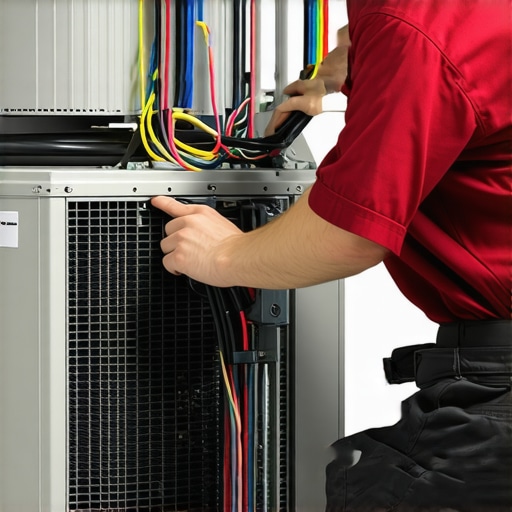
The 2026 Refrigerant Cliff: What the Sales Techs Aren’t Telling You
Listen close, because I’ve spent the last thirty years dragging my tool bag through fiberglass-filled attics and melting on black rubber rooftops, and I can tell you the industry is about to hit a brick wall. We aren’t just talking about a minor update; we are talking about the death of R-410A, the ‘juice’ we’ve used for decades. By 2026, if you are looking at a new AC installation, the rules of physics and the EPA have conspired to change the very copper lines that carry heat out of your house. If your contractor tells you that your old line set from 1998 is ‘fine’ for a new A2L system, they are either lazy, or they are setting you up for a catastrophic compressor burnout.
The Anatomy of a Scam: The $18,000 Inducer Motor
I remember a call last November in the middle of a brutal cold snap. I followed a ‘Sales Tech’—you know the type, clean uniform, shiny van, and a commission-based soul—who had quoted a retired teacher eighteen grand for a full furnace and AC replacement. He told her that her furnace was ‘leaking deadly gas’ and her AC was ‘obsolete.’ When I arrived for a second opinion, I found a simple seized inducer motor on her heating service call. A $300 part and twenty minutes of labor, and she had heat. But here’s the kicker: that tech was trying to rush her into a legacy R-410A system before the 2025/2026 mandates hit, just to clear his warehouse stock. He didn’t mention that in two years, getting parts or gas for that ‘new’ system will cost a king’s ransom. I caught him because I actually looked at the static pressure and the heat exchanger instead of a sales brochure. He was a ‘Part Swapper,’ not a technician.
“The most expensive equipment in the world cannot overcome a bad duct system.” – Industry Axiom
Thermodynamic Zooming: Why the Copper Matters
When we talk about AC installation in 2026, we are dealing with A2L refrigerants like R-454B and R-32. These aren’t your grandfather’s freon. These are ‘mildly flammable,’ which sounds scary, but it really just means we have to be precise. The new line sets require a specific metallurgical purity and wall thickness because these refrigerants operate at different pressures and have a high affinity for moisture. If a tin knocker or a lazy tech leaves even a drop of moisture in that line, it reacts with the new POE (Polyolester) oil to create acid. That acid eats the motor windings from the inside out. We call it ‘black death’ in the trade. In the humid climates of the Midwest or the East Coast, the dew point is your constant enemy. When that evaporator coil drops below the dew point, it’s not just cooling air; it’s wringing water out of it—latent heat removal. If your line set isn’t sized perfectly for the new flow rates, your refrigerant won’t flash off into a gas properly. You’ll be ‘slugging’ the compressor with liquid, and that sounds like a bag of marbles in a blender until the unit finally dies in the middle of a July heatwave.
The Airflow Manifesto: Static Pressure and the Mini-Split Revolution
Most heating service calls I get are actually airflow problems. People complain their mini-split isn’t keeping up, but when I look, the filters are choked with pet hair and the ‘Pookie’ (that’s mastic to you homeowners) is peeling off the plenum. 2026 systems are going to be even more sensitive to static pressure. If you try to push 1,200 CFM through a duct system designed for 800, you’re going to whistle like a tea kettle and burn out your ECM blower motor in six months.
“Ventilation and pressure management are the bedrock of combustion safety and equipment longevity.” – ASHRAE Standards
During a furnace repair, I always check the temperature rise. If that heat exchanger is getting too hot because the ‘Sparky’ who wired the thermostat didn’t set the fan speed right, you’re looking at a cracked heat exchanger and a carbon monoxide risk. The new 2026 line sets are designed to work with variable-speed compressors that can ‘sip’ electricity, but they require a perfect vacuum—down to 500 microns—before we even crack the valves. If your tech doesn’t pull out a vacuum gauge, kick him off the job site.
Why the ‘Old’ Line Set is a Ticking Time Bomb
The copper in your walls right now is likely Type M, which is thin-walled. For the high-pressure pulses of modern AC installation, we are moving toward Type L copper. Furthermore, the oil used in R-22 or even R-410A systems is incompatible with the new A2L gases. You can’t just ‘flush’ it and hope for the best. Residual mineral oil will gum up the TXV (Thermal Expansion Valve), leading to a ‘starved’ coil and a frozen unit. When I’m out on a heating service call in the dead of winter, I see the same thing with heat pumps. If the line set wasn’t brazed with a nitrogen purge, the inside of that copper is flaking off ‘soot’ that clogs the delicate screens in the reversing valve. In 2026, every system will have leak sensors built into the indoor coil. If your old line set has a tiny ‘micro-leak’ that you’ve been ‘topping off’ for years, the new system will literally shut itself down and refuse to run for safety reasons. You can’t hide from the physics anymore.
The Final Verdict: Don’t Be a Victim of 2026
If you’re facing a massive furnace repair or looking at a total AC installation, you have to demand a new line set that meets the 2026 standards. Don’t let a sales tech ‘nestle’ a new unit onto old, dirty pipes. Ensure they are using the right ‘Pookie’ to seal the cabinets and that they aren’t just ‘gassing it up’ by feel. We use subcooling and superheat measurements because the math doesn’t lie. Comfort is physics, and in 2026, the physics are getting a lot more demanding. If you want a system that lasts twenty years instead of five, focus on the copper, focus on the airflow, and for heaven’s sake, stop calling the guys who offer a ‘$29 tune-up’—they’re just there to sell you a capacitor you don’t need.