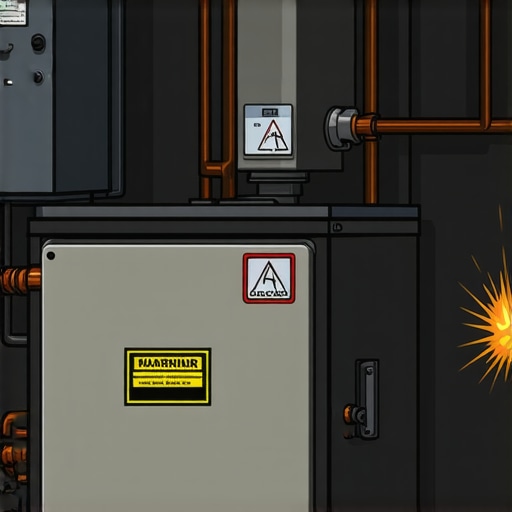
The Sound of a Failing Heart: Why Your Furnace Is Screaming for Help
You’re sitting in your living room in the dead of a Michigan February, the wind is howling off the lake, and you hear it. It’s not the reassuring roar of the burner or the soft whir of the blower. It’s a low-frequency, teeth-rattling bzzz-hummm coming from the utility closet. Most homeowners ignore it until the house hits 54 degrees and the thermostat screen goes blank. That sound? That’s the transformer. It’s the unsung hero of your 2026 furnace, the bridge between the high-voltage muscle of your house and the low-voltage brains of your HVAC system. If it’s buzzing, it’s dying.
I’ve spent three decades in this trade, and I can tell you that the 2026 models, with their high-efficiency communication boards, are more sensitive to voltage drops than a thoroughbred horse is to a loud noise. When that transformer starts to go, it doesn’t just quit; it takes half the system’s components on a suicide mission with it. Most guys—especially those ‘Sales Techs’ with the shiny shirts and the clipboard—will tell you that a buzzing furnace means you need a whole new furnace repair or, worse, a full AC installation. They’re full of it. It’s often just a $40 part, but knowing why it failed is the difference between a fix and a recurring nightmare.
The $12,000 Scam: A Tale from the Trenches
Last winter, I followed a ‘Sales Tech’ from a big-box franchise out to a house in the suburbs. The client was a retired schoolteacher who had been told her ‘main control logic was fractured’ and she needed a $12,000 system replacement. I walked in, heard that familiar 60Hz vibration, and pulled the service panel. The transformer was so hot it was discolored. The previous tech hadn’t even checked the low-volt side for a short. He just saw an old unit and reached for his commission check. I spent twenty minutes finding a pinched wire in the outdoor unit’s contactor—a common heating service issue—replaced the transformer, and she was back in business for the cost of a service call. That’s why I hate sales guys. They don’t understand the physics; they only understand the financing.
“The transformer shall be sized to handle the combined load of all 24V components including the gas valve, contactor, and thermostat.” – ACCA Manual S
1. The Audible ‘Lamination Vibration’
The first sign of a bad 2026 transformer is the sound. Inside that little box, there are layers of thin steel plates called laminations, wrapped in copper coils. Their job is to use electromagnetic induction to step down your 120-volt house power to the 24 volts your furnace uses to think. Over time, the varnish holding those plates together cracks. When the 60Hz alternating current passes through, the plates start vibrating against each other. It’s not just annoying; it’s a sign of heat. If your mini-split or furnace starts sounding like a beehive, the magnetic field is literally shaking the part to pieces. A ‘Sparky’ (electrician) might tell you it’s normal, but in my book, noise is friction, and friction is death.
2. The Ghost in the Thermostat: Intermittent Power Loss
If your smart thermostat keeps rebooting or loses its Wi-Fi connection, don’t blame the router. In the 2026 systems, the transformer provides the ‘C-wire’ power. When the internal windings of the transformer start to fail, they can’t maintain a steady 24V under load. You might get 28V when the system is idle, but the moment the gas valve opens or the inducer motor kicks in, the voltage drops to 18V. The thermostat starves for ‘juice’ and resets. This is often misdiagnosed as a bad control board. Before you let anyone talk you into a massive AC installation or board swap, make sure they’re testing the transformer under load with a true RMS multimeter.
3. The Acrid Smell of Melting Varnish
There is a very specific smell to a dying transformer. It’s not the dusty smell of a furnace turning on for the first time in October. It’s a sour, chemical stench—the smell of the insulating varnish on the copper coils cooking. If you open your furnace cabinet and get a whiff of something that smells like a burnt plastic factory, your transformer is ‘toasting.’ This usually happens because of a ‘short to ground.’ Maybe a mouse chewed a wire, or maybe a tin knocker accidentally ran a screw through a thermostat wire during some ductwork. Either way, that transformer is trying to push more current than it was designed for, and it’s melting from the inside out.
“Equipment shall be installed in accordance with the manufacturer’s instructions and the terms of its listing.” – ASHRAE Standard 62.2
4. Blown Fuses and The Secondary Short
Most modern furnace boards have a 3-amp or 5-amp automotive-style fuse. If you find that fuse blown, the transformer is the prime suspect. It’s the ‘sacrificial lamb’ of the HVAC world. In 2026, many manufacturers are moving toward ‘Smart Transformers’ that have internal thermal overloads. If the transformer gets too hot because your air filters are clogged and the cabinet temperature is skyrocketing, it will trip its internal breaker. If you keep resetting it without fixing the airflow, the transformer will eventually give up the ghost. Remember: Airflow is king. If you don’t have enough return air, your components cook, including the transformer.
Thermodynamic Zooming: The Physics of the 24V Signal
Let’s talk science for a minute. Your furnace isn’t just ‘on’ or ‘off.’ It’s a sequence of operations governed by thermodynamic demands. When the thermostat calls for heat, it closes a circuit that sends 24V to the inducer motor relay. The inducer must create a specific static pressure to prove the vent is clear. If the transformer is weak, it might pull in the relay but fail to keep it seated. This ‘chattering’ of the contactor is what kills compressors and motors. When we talk about heating service, we aren’t just looking at the flames; we’re looking at the electromagnetic force required to hold those safety switches closed. If your voltage is sagging, your safety chain is weak.
Conclusion: Don’t Let the Buzz Win
If you hear that buzz, don’t wait. A failing transformer is a fire hazard and a precursor to a total system lockout. Don’t let a ‘Sales Tech’ convince you that a vibrating transformer is a reason to scrap a five-year-old unit. Call a technician who knows how to use a meter, someone who understands that ‘Pookie’ (mastic) belongs on duct seams and that voltage belongs in a steady stream. Your 2026 furnace is a complex piece of machinery, but it still relies on the basic laws of physics. Respect the transformer, and it’ll keep you warm. Ignore it, and you’ll be shivering in the dark with a $15,000 quote for a new system you didn’t need.