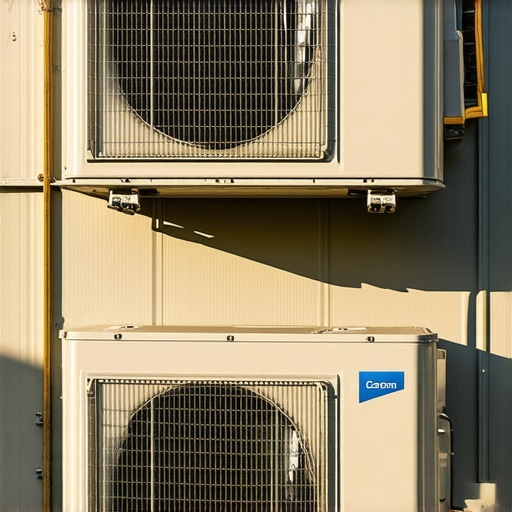
The $20,000 Paperweight: Why High SEER Fails in the Real World
I’ve spent the better part of thirty-five years dragging my bones through blown-in fiberglass insulation and sweating enough to fill a condensate pump twice over. I’ve seen the industry transition from R-12 to R-22, then to R-410A, and now we are staring down the barrel of the A2L transition with R-454B and R-32. Everyone is talking about 2026 SEER2 ratings like they are a magic wand that will lower utility bills by default. They aren’t. A 20-SEER inverter-driven beast is nothing but an expensive paperweight if the guy installing it treats it like a 1990s window unit.
Last August, I followed one of those ‘Comfort Consultants’—which is just a fancy term for a Sales Tech with a clean shirt and zero grease under his fingernails—who had just sold a retired veteran a top-of-the-line variable speed system. The quote was for twenty-two grand. The Sales Tech told him his compressor was ‘leaking internal pressure’ (a load of garbage) and that he needed to upgrade for the 2026 efficiency standards. When I got there for a second opinion, I found a loose wire at the contactor and a capacitor that had finally given up the ghost. A thirty-minute fix. But the real crime wasn’t the attempted scam; it was that the Sales Tech was going to bolt that high-efficiency unit onto a duct system that was so restricted it would have choked a vacuum cleaner. This is where the physics of AC installation hits the brick wall of reality.
“The most expensive equipment in the world cannot overcome a bad duct system.” — Industry Axiom
Mistake 1: The Airflow Bottleneck (Static Pressure Suicide)
In the heating service and cooling world, airflow is king. Most technicians think that if the fan is blowing, the job is done. But a 2026-compliant high-efficiency unit requires precise CFM (Cubic Feet per Minute) to achieve its rated SEER. When you have a mini-split or a traditional split system, the evaporator coil needs to move heat from the air into the refrigerant. If your tin knocker didn’t size the return air drops correctly, the Total External Static Pressure (TESP) skyrockets. It’s like trying to run a marathon while breathing through a cocktail straw. The blower motor has to work twice as hard, consuming more watts and completely nullifying the efficiency gains you paid for. If you don’t use a manometer to check static pressure during a furnace repair or AC install, you aren’t a technician; you’re a parts changer.
Mistake 2: The A2L Refrigerant Trap (The ‘Gas’ Gremlin)
We are moving into the era of ‘mildly flammable’ refrigerants. The days of ‘topping off the Freon’ are over. First of all, it’s a sealed system—if it’s low, you have a leak. Period. Second, the new A2L refrigerants require specific sensors and mitigation boards. If an installer ignores the proper evacuation process—failing to pull a vacuum down to 500 microns—moisture stays in the lines. That moisture reacts with the POE oil to create acid. You won’t smell it today, but in three years, that acid will eat the windings on your compressor, resulting in that unmistakable, sour, acidic stench of a burnout. Modern AC installation demands a micron gauge, not just a ‘guess-ti-mate’ based on how long the pump has been running.
“Design of the duct system shall be based on the actual pressure drop of the installed components.” — ACCA Manual D
Mistake 3: Ignoring the Latent Heat Load (The Cold Swamp Effect)
In humid climates, we deal with two types of heat: sensible (the temperature you see on the thermometer) and latent (the moisture in the air). A massive mistake I see with ‘high-efficiency’ installs is oversizing the unit. A 5-ton unit in a 3-ton house will cool the air to 72 degrees in ten minutes and then shut off. This is called ‘short cycling.’ Because the unit doesn’t run long enough, it never reaches the dew point on the evaporator coil. The moisture stays in the air, and you end up with a house that feels like a cold, damp cave. To hit 2026 SEER targets, the system must run longer at lower speeds to wring that water out of the air. If your installer doesn’t perform a Manual J load calculation, they are just guessing, and they are probably guessing wrong.
The Thermodynamic Reality of 2026
When we talk about furnace repair or setting a new condenser, we have to look at the ‘Pookie’ (mastic) on the plenum. If your installer is using silver tape instead of high-grade mastic, they are leaving efficiency on the table. Every CFM of conditioned air that leaks into your attic is money out of your pocket. The Sparky might get the power to the disconnect, but the HVAC tech has to manage the physics of the suction line. It should be ‘beer can cold,’ but more importantly, the subcooling and superheat must be dialed in to the tenth of a degree. Anything less, and you’re just burning ‘juice’ for no reason. Don’t let a ‘Sales Tech’ sell you a 2026 future on a 1980s foundation.