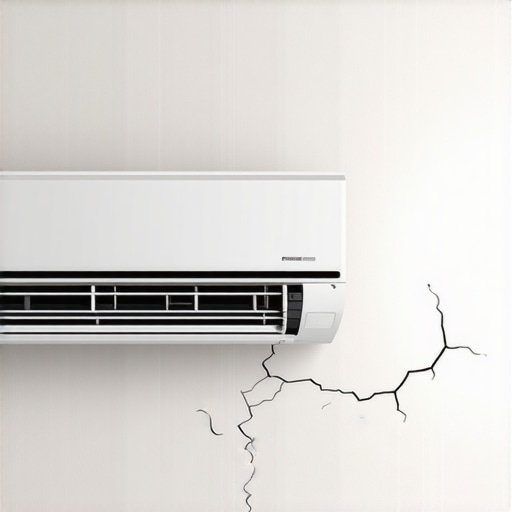
The Great Refrigerant Cliff: Why 2026 Changed Everything
If you are reading this in 2026, you are living through the most volatile era in the history of residential climate control. The phase-out of R-410A is no longer a distant threat; it is our reality. We have shifted into the era of A2L refrigerants—specifically R-454B and R-32. These are ‘mildly flammable’ gases, and they have turned the average AC installation into a high-stakes engineering project. When I started as a tin knocker thirty years ago, we worried about leaks because they were expensive. Today, if your mini-split leaks, we are dealing with mitigation sensors, spark-proof components, and potential safety hazards. But as the price of equipment has skyrocketed, so has the number of ‘trunk-slammers’—low-bid contractors who cut corners to make a profit. You might think you saved five grand on that heating service upgrade, but your house might be a ticking clock of inefficiency.
The Narrative Matrix: The Case of the $12,000 Ghost
Last winter, I followed a ‘Sales Tech’—one of those guys who spends more time on his hair than his manifold gauges—into a split-level home in the suburbs of Chicago. The homeowner had been told his 15-year-old furnace was a ‘death trap’ with a cracked heat exchanger and that he needed a furnace repair that would cost $4,000, or a new mini-split system for $15,000. I crawled into the crawlspace, pulled the blower motor, and found… absolutely nothing. The heat exchanger was pristine. The ‘crack’ the previous guy showed the owner was a smudge of pookie (mastic) that had dried on the metal. The real problem? A $35 flame sensor was dirty. I cleaned it with a piece of dollar bill, and the heat kicked on instantly. I caught that scam artist trying to push a cheap, high-margin mini-split install because he didn’t actually know how to diagnose heating service issues. This is the world we live in now. Here is how to tell if your installer is a pro or a predator.
“The most expensive equipment in the world cannot overcome a bad duct system or an improper charge.” – Industry Axiom
1. The Flare Nut Nightmare (And the Missing Torque Wrench)
In the world of mini-split installs, the flare connection is where 99% of ‘the juice‘ (refrigerant) escapes. Unlike a standard AC installation where we braze copper with an oxy-acetylene torch, mini-splits rely on mechanical flares. A cheap installer uses his ‘feel’ to tighten these nuts. In 2026, with R-454B operating at higher pressures, ‘feel’ isn’t enough. If you didn’t see your technician use a digital torque wrench, your system is going to leak. When the gas leaks out, the compressor loses its cooling medium and begins to overheat, turning the oil into an acidic sludge that smells like a sour lemon. Once that acid forms, your brand-new system is essentially a paperweight.
2. Thermodynamic Zooming: The Latent Heat Trap
Let’s talk about the physics of why your house feels like a cold swamp. In cold climates, we use mini-splits for heating service, but during the summer, they have to deal with latent heat. This is the energy required to change water vapor into liquid. If your installer didn’t perform a Manual S calculation, they likely oversized the unit. An oversized unit ‘short cycles.’ It satisfies the thermostat’s sensible heat requirement (the temperature you see) so fast that it never runs long enough to drop the evaporator coil below the dew point. The result? The air is 68 degrees, but the humidity is 75%. You’re cold, but you’re clammy. A real pro understands that the suction line should be ‘beer can cold’ only after the system has stabilized its latent load.
“Properly sized and installed equipment is the cornerstone of energy efficiency and indoor environmental quality.” – ACCA Manual J Standards
3. Communication Wire Sabotage
Modern mini-splits are not ‘on or off’ like an old furnace. They are communicating computers. They require 14/4 stranded, shielded wire. A cheap AC installation often uses leftover 14/2 Romex because the installer is too lazy to go to the supply house. Without that fourth communication wire, the inverter board cannot modulate the compressor speed. This causes ‘ghost codes’—the unit just stops working for no reason, and when you call for furnace repair or AC service, the tech finds nothing wrong because the error cleared itself. If you see wire nuts and electrical tape instead of a continuous run of shielded cable, you’ve been robbed.
4. The Condensate Sludge and Pitch
Gravity is the one law an HVAC tech cannot break. Mini-split indoor heads have a shallow drain pan. If the unit isn’t perfectly level, or if the drain line isn’t pitched exactly 1/4 inch per foot, water will back up. In the winter, during heating service, this isn’t an issue. But the first humid day of July, that water will overflow behind your drywall. If your installer didn’t use a ‘mini-pump’ for long runs or didn’t test the drain by pouring a gallon of water through it before hanging the head, you are going to have a mold problem by August. Look for the ‘puddle test’—if they didn’t do it, they don’t care.
5. The A2L Sensor Bypass
In 2026, every indoor mini-split head must have a refrigerant leak sensor if it uses A2L gases. These sensors are designed to shut down the system and activate a fan if a leak is detected, preventing the ‘mildly flammable’ gas from reaching a concentration where it could ignite. Cheap installers find these sensors annoying because they require precise calibration. If you see a ‘jumper’ on the control board or a disconnected sensor wire, your installer has bypassed a life-safety device to avoid a callback. This is the ultimate sign of a hack.
The Final Diagnosis: Comfort is Physics
At the end of the day, you aren’t buying a white plastic box on the wall; you are buying a 15-year relationship with a mechanical system. If your AC installation feels like it was rushed, it probably was. Whether you are looking for a furnace repair in the dead of winter or a new high-efficiency mini-split, remember that the ‘best deal’ is usually the one that costs the most in the long run. Airflow is king, physics is law, and a good tech never trusts a ‘Sales Tech’ with a shiny brochure. Get a real tin knocker who knows his pookie from his juice, and you might actually sleep through the night without hearing the screech of a dying bearing.