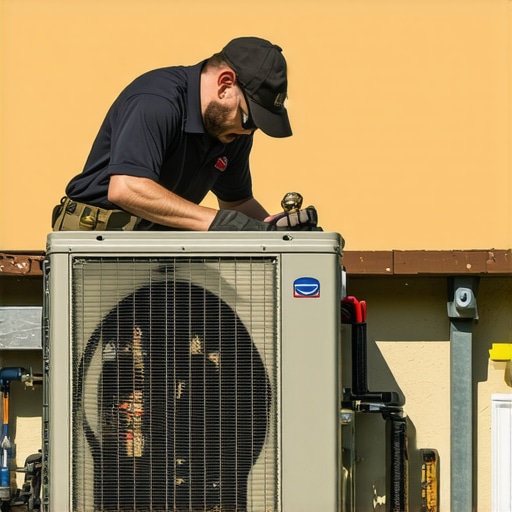
The Era of the A2L Refrigerant: Welcome to the High-Stakes Frontier
If you think the HVAC industry is still about swapping out a metal box and ‘topping off the juice,’ you’re about three years behind the curve. By 2026, the R-410A phase-out isn’t just a regulatory memory; it’s a financial scar. We are now fully entrenched in the era of A2L refrigerants—R-454B and R-32. These ‘mildly flammable’ gases require more than just a set of gauges and a prayer. They require a technician who understands thermodynamics, not a salesman with a clipboard. I’ve spent thirty years dragging my knuckles through crawlspaces and burning my retinas on rooftop condensers, and I’ve seen the industry shift from robust mechanical systems to delicate, high-efficiency computers that move air. The problem? Most installers are still treating these 2026-spec units like they’re 1995-style beaters. If your installer cuts corners today, you aren’t just losing efficiency; you’re literally shortening the lifespan of an $12,000 investment before the first summer humidity hits.
The Forensic Evidence: The Case of the $18,000 Swamp
Let me tell you about a ‘Senior Comfort Advisor’ I followed last August. This guy—a glorified Sales Tech who probably couldn’t tell a capacitor from a tuna can—sold a retired couple a top-of-the-line, 22-SEER2 variable-speed system. He quoted them $18,000 for the ‘ultimate in home comfort.’ Three weeks later, I’m the one standing in their hallway because the house feels like a Louisiana bayou in July. The thermostat said 71 degrees, but the walls were literally sweating. I walked out to the unit and touched the suction line; it was ice-cold, but the compressor was screaming. I went into the attic and found the ‘Tin Knockers’ had just slapped the new high-static blower onto the original 1974 ductwork. They didn’t even bother to check the Total External Static Pressure. The unit was so starved for air that it was short-cycling on its internal safeties. The Sales Tech had oversized the unit by two tons because ‘bigger is better,’ and in our humid Southern climate, that’s a death sentence for comfort. The unit cooled the air so fast it never had a chance to reach the dew point on the evaporator coil. It removed zero latent heat. They had a cold, wet, expensive mess. That’s what happens when you prioritize a sales commission over the laws of physics.
“The most expensive equipment in the world cannot overcome a bad duct system.” – Industry Axiom
1. The ‘Legacy Line Set’ Trap: Why Reusing Copper is a Gamble
In 2026, one of the most common short-cuts in AC installation is the refusal to replace the copper line sets. Installers tell you it’s to ‘save you money,’ but usually, it’s because they’re too lazy to pull new lines through a finished wall. Here’s the technical reality: those old R-410A systems used POE oil, which is hygroscopic (it sucks up moisture like a sponge). The new A2L systems are even more sensitive. If there is even a trace of residual mineral oil from an ancient R-22 system or contaminated POE oil left in those lines, it reacts with the new refrigerant. We call it ‘acidic sludge.’ It eats the lacquer off the motor windings in your new compressor. You’ll know it’s happening when you hear that distinct, acidic sour smell during a burnout. A real tech will use a nitrogen purge while brazing to prevent oxidation—black soot (cupric oxide)—from forming inside the pipe. If they don’t use nitrogen, that soot breaks loose and clogs the tiny screens in your Electronic Expansion Valve (EEV). You’ve just turned your high-efficiency Ferrari into a paperweight.
2. Skipping the Micron Gauge: The Chemistry of Failure
I see it every day. A ‘Chuck-in-a-truck’ hooks up a vacuum pump, lets it run for twenty minutes while he eats a sandwich, and then ‘cracks the valves.’ He doesn’t use a micron gauge. He just assumes the air is out. This is a catastrophic short-cut. In our humid climate, moisture is the enemy. If you don’t pull a vacuum down to at least 500 microns and hold it, you’ve left non-condensables and water vapor in the system. When that water meets the refrigerant and heat, it creates hydrofluoric acid. This acid doesn’t kill the unit today; it kills it in three years, right after the labor warranty expires. You’ll hear the screech of a bearing or the rhythmic thumping of a compressor struggling against high head pressure. A proper AC installation requires a verified, triple-evacuation process. If you don’t see a digital micron gauge, kick them off your property.
3. The ‘Static Pressure’ Blind Spot: Ductwork vs. Horsepower
Airflow is king. You can have a 25-SEER2 furnace repair or mini-split, but if the ducting is restricted, the efficiency is a lie. Most installers ignore the ‘return air’ side of the equation. They focus on the ‘supply’—where the cold air comes out—but forget that the blower has to suck air in to move it. It’s like trying to run a marathon while breathing through a cocktail straw. In 2026, the new ECM motors in these units are designed to ramp up their RPM to overcome bad ductwork. This sounds like a feature, but it’s a bug. The motor will draw more ‘juice’ (amperage) to fight the resistance, eventually burning itself out and making the unit sound like a jet engine in your hallway. We use ‘Pookie’ (mastic) to seal every joint, not that silver tape that peels off in two years. If your tech doesn’t take static pressure readings with a manometer, they aren’t an HVAC tech; they’re a parts changer.
“Designers shall use Manual J to calculate heat loss and heat gain to ensure equipment is sized to meet the loads of the structure.” – ACCA Standard 5
4. The Oversizing Myth: Why ‘More’ is Much Less
The most common sin in heating service and AC installation is oversizing. In a humid environment, the air conditioner has two jobs: Sensible Cooling (lowering the temperature) and Latent Cooling (removing humidity). A unit that is too large for the space will satisfy the thermostat in ten minutes. This is called ‘short cycling.’ The problem is that the evaporator coil takes about 10 to 15 minutes to get cold enough to start condensing water out of the air. If the unit turns off before that, the humidity stays in your house. You end up with 70-degree air at 75% humidity. It feels sticky, gross, and breeds mold in your carpets. A professional uses a Manual J load calculation. They don’t guess based on square footage. They look at window U-factors, insulation R-values, and local climate data. If your installer says, ‘Your old 3-ton struggled, so let’s put in a 4-ton,’ walk away. The old unit likely struggled because of dirty coils or bad airflow, not because it was too small.
Conclusion: The Physics of 2026 Comfort
In the end, HVAC is just physics in a metal box. Whether you’re looking at a mini-split for a sunroom or a full heating service for a cracked heat exchanger, the rules don’t change. You need a technician who respects the ‘Suction Line’ being ‘beer-can cold’ because of proper superheat, not because they overcharged it. You need a ‘Sparky’ who wires the high-voltage disconnect with the right gauge wire to prevent voltage drops. Don’t be fooled by the shiny brochures or the Sales Tech with the white shirt and no grease under his fingernails. Look for the veteran who carries a manometer, a micron gauge, and a bucket of Pookie. That’s the only way you’re getting the efficiency you’re paying for in 2026. “,