The Anatomy of a Click: Why Your Inverter System is Screaming for Help
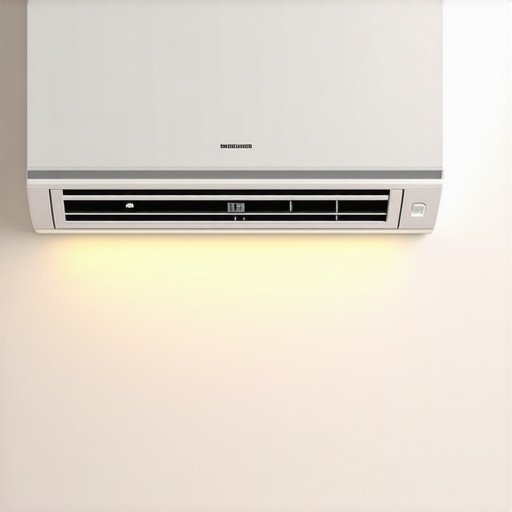
You’re laying in bed at 3 AM in the dead of a January freeze, and there it is. Click. Tick. Pop. That rhythmic nuisance coming from your wall-mounted head isn’t just an annoyance; it’s the mechanical language of a system struggling against the laws of physics. As someone who has spent three decades crawling through fiberglass-filled crawlspaces and wrestling with gas pressures on frozen rooftops, I can tell you that a clicking mini-split is rarely a ‘ghost in the machine.’ It’s usually a symptom of a localized failure in the thermodynamic cycle or a simple case of material fatigue.
Before you call for an emergency heating service and pay a 200% after-hours premium, we need to perform a forensic diagnosis. Most furnace repair guys will look at a ductless unit like it’s a piece of alien technology, but these machines are governed by the same pressures and temperatures as any old-school split system. They just have more ‘brains’—and those brains are often the first things to chatter when the airflow isn’t right.
“The most expensive equipment in the world cannot overcome a bad duct system—or in the case of a mini-split, a restricted coil.” – Industry Axiom
The Physics Lesson: Why Airflow is King
My old mentor, a man who could smell a refrigerant leak from the curb, used to bark at me: ‘You can’t cool what you can’t touch!’ He was talking about the boundary layer of air on the evaporator coil. In the 2026 models, the tolerances are tighter than ever. If your indoor coil is even slightly impacted by dust, the latent heat removal drops off a cliff. The clicking you hear might be the Electronic Expansion Valve (EEV) ‘hunting’—frantically opening and closing its stepper motor to find the right balance of juice because the air isn’t stripping enough heat away from the fins. This isn’t magic; it’s mass flow physics. If the air doesn’t move, the refrigerant doesn’t boil, and the compressor starts to choke on liquid.
1. The Thermal Expansion ‘Groan’
The most common cause of clicking in newer mini-splits isn’t electrical; it’s structural. These units are made of high-grade plastics that expand and contract at different rates than the copper suction line and aluminum fins inside. When the unit enters a defrost cycle—crucial for heating service in cold climates—the coil temperature swings from 30°F to 100°F in minutes. This causes the plastic chassis to ‘pop’ as it slides against the mounting bracket. The Fix: Ensure the ‘tin knocker’ or installer didn’t overtighten the mounting screws. Loosening the chassis slightly can allow the unit to ‘breathe’ without the percussive protest.
2. The EEV Stepper Motor Failure
The Electronic Expansion Valve is the heart of an inverter system. Unlike a fixed orifice in a cheap AC installation, the EEV moves in tiny increments (steps) to meter refrigerant precisely. If the system has internal contaminants or the gas is acidic from a previous burnout, the EEV will stick. You’ll hear a rapid-fire clicking—the sound of a tiny motor trying to find its home position. This is the ‘death rattle’ of a system that wasn’t properly evacuated with a vacuum pump during installation. If you smell something sour—like old vinegar—that’s the smell of burnt oil and acid, and your EEV is likely toast.
3. The Blower Wheel ‘Baseball Card’ Effect
Mini-split blowers are long, cylindrical fans. They are balanced to a fraction of a gram. If a single blade is chipped or if a piece of ‘pookie’ (mastic) or debris gets lodged in the wheel, it creates a centrifugal imbalance. As the wheel spins, it hits the housing. The Fix: Kill the power, open the vanes, and shine a light in there. If you see a buildup of organic growth or dust, you’re not just losing efficiency; you’re killing the motor bearings. A ‘sparky’ might tell you it’s an electrical hum, but a real tech knows it’s a mechanical drag.
4. Relay Chatter on the PC Board
In 2026, control boards are more sensitive to line voltage than ever. If your local utility is pushing ‘dirty’ power, or if the communication wire (the 14/4 tray cable) wasn’t shielded properly, the relays on the indoor board will chatter. This sounds like a telegraph machine. The Fix: Check the terminal blocks for carbon scoring or loose connections. A loose wire creates high resistance, heat, and eventually, a fire. This is where furnace repair knowledge crosses over—tight connections are the foundation of any safe HVAC system.
“Proper airflow is the fundamental requirement for all vapor-compression refrigeration cycles; without it, capacity and efficiency are purely theoretical.” – ACCA Manual J Standards
The Math of Repair vs. Replace
If your unit is clicking and it’s out of warranty, you’re facing a ‘Regulatory Cliff.’ With the industry moving toward A2L mildly flammable refrigerants like R-454B, parts for older R-410A systems are skyrocketing. A new control board and EEV might run you $1,200. A fresh AC installation for a single zone might be $4,500. If your system is over 10 years old and the clicking is internal to the compressor or EEV, stop throwing good money after bad. You’re better off putting that ‘juice’ into a new high-efficiency heat pump that won’t leave you shivering when the polar vortex hits.
I found this post particularly insightful, especially the part about the EEV ‘hunting’ and the importance of airflow. In my own experience, dust and debris accumulation can cause similar clicking sounds, and keeping the coils and blower wheels clean often solves the issue before needing any major repair. The tip about loosening the mounting screws to allow for thermal expansion was new to me—I never realized that overtightening could lead to such noise during defrost cycles. Has anyone tried specific maintenance routines to prevent these expansion-related noises from occurring? For instance, would regularly checking and adjusting the mounting hardware as part of seasonal HVAC maintenance make a significant difference in long-term noise reduction? I’d love to hear other practical tips that homeowners or technicians have found effective for stopping these common mini-split issues early on.
This post offers some really practical insights into the common causes of mini-split clicking sounds, especially the emphasis on airflow and material expansion. I’ve noticed that in older units, even small debris buildup around the blower wheel can lead to imbalance and noise, which reinforces the idea of regular cleaning and inspection. The thermal expansion issue caught my attention—I’ve had success by slightly adjusting mounting brackets during routine maintenance, which seems to help reduce the popping sounds during defrost cycles. Has anyone experimented with specific materials or installation techniques to mitigate these expansion noises? For instance, using vibration-dampening mounts or flexible brackets? I wonder if these kinds of preventative measures could make a significant difference in prolonged noise issues. Also, it makes me think that scheduling seasonal inspections focused on these mechanical and structural aspects might prevent more costly repairs down the line. Would love to hear from others about their maintenance routines or tips for keeping these units whisper-quiet through the winter months.