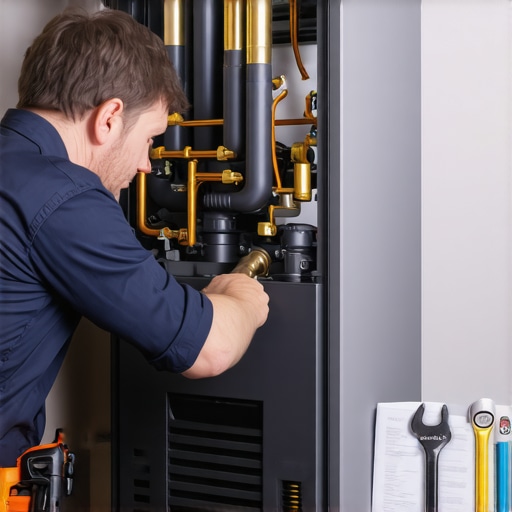
The Frustrating Click of a Short Cycling Furnace
You know that sound. You’re sitting on the sofa, the winter wind is howling against the glass, and you hear the furnace inducer motor kick on. There is the glow of the igniter, the soft whoosh of the flame, and for about three minutes, you feel that sweet, toasted air. Then—click. The flame dies. The blower runs for a minute to cool the heat exchanger, and then silence. Five minutes later, the dance starts all over again. That, my friend, is short cycling, and if you’re running one of these high-tech 2026 models, it’s not just annoying—it’s a death sentence for your compressor and your gas valve.
My old mentor used to scream at me in the back of a freezing box truck in downtown Chicago, ‘You can’t heat what you can’t touch!’ He was a ‘Tin Knocker’ from the old school who believed that a furnace was only as good as the air moving through it. He didn’t care about the BTU rating or the shiny paint on the cabinet. He cared about the physics of the heat exchange. This is why airflow matters more than horsepower. If that furnace can’t ‘touch’ enough cold return air to strip the heat off those internal cells, it’s going to trip its high-limit switch to save itself from melting into a puddle of scrap metal. Most furnace repair calls I take aren’t actually part failures; they are airflow failures.
“Equipment shall be sized to satisfy the calculated loads. Over sizing can lead to short cycling, which reduces efficiency and increases wear on components.” – ACCA Manual S
The Anatomy of the 2026 Heat Cycle
Modern furnaces are a far cry from the cast-iron beasts of the 1980s. Today, we are dealing with ultra-thin heat exchanger walls designed for maximum thermal transfer. We’re talking about AFUE ratings of 96% and higher. While this is great for your gas bill, it makes the system incredibly temperamental. In the heating service world, we call this ‘tight tolerances.’ When a 2026 furnace short cycles, it is usually the ‘brain’ (the integrated furnace control board) reacting to a sensor that says things are getting too hot or too dangerous. It’s forensic work. You have to look at the flame sensor, the pressure switch, and the high-limit. If your system is short cycling, it’s usually a cry for help from one of these three organs.
Quick Fix 1: The ‘Filter Trap’ and Static Pressure
The most common culprit is the one homeowners love to ignore: the air filter. But it’s not just about a ‘dirty’ filter. With the 2026 standards, many people are buying those high-MERV ‘allergy-reducing’ filters that are so thick they might as well be a sheet of plywood. In the trade, we call this ‘choking the beast.’ If the blower motor (the Sparky’s contribution to the box) can’t pull enough air through that restrictive filter, the heat exchanger overheats in minutes. Quick Fix: Pop the filter out for 10 minutes. If the furnace stays on, your filter is the problem. Switch to a lower MERV rating or a wider 4-inch media cabinet. Stop trying to turn your HVAC system into a clean-room laboratory at the expense of your heat exchanger.
Quick Fix 2: The Condensate Blockage (The Sour Smell of Failure)
High-efficiency furnaces are condensing furnaces. This means they extract so much heat from the exhaust that the flue gases turn into acidic water. If the drain lines or the ‘P-trap’ inside the furnace get plugged with slime or dust, that water backs up. Modern units have a pressure switch that monitors this. If it senses water backing up toward the inducer, it kills the flame. Quick Fix: Check the clear plastic tubing inside the cabinet. If you see standing water or a ‘sour’ smell coming from the drain line, it needs to be flushed. A little bit of ‘Pookie’ (mastic) or debris can easily clog these small lines during AC installation or furnace swaps.
“Provision shall be made for the removal of condensate from the cooling coil and the heat exchanger to prevent damage to the equipment and building structure.” – ASHRAE Standard 62.2
Quick Fix 3: The Thermostat ‘Ghost’
Sometimes the furnace is fine, but the ‘brain’ is getting bad data. If your thermostat is mounted on a wall that receives direct sunlight, or right next to a supply register, it will satisfy the temperature setting in three minutes, shut the system down, and then realize the rest of the house is freezing two minutes later. Quick Fix: Check for drafts behind the thermostat. Often, the hole where the wires come through the drywall acts like a tiny chimney, pulling cold air from the attic or crawlspace directly onto the sensor. Stuff a little bit of insulation in that hole and see if your cycle times improve.
The Math of Repair vs. Replace
If these quick fixes don’t work, you’re looking at a deeper mechanical failure. Maybe it’s a cracked heat exchanger (the ‘death rattle’ of a furnace) or a failing inducer motor. A typical furnace repair can run anywhere from $300 to $1,200 depending on the ‘juice’ (refrigerant) or parts involved. If you’re looking at a $1,500 repair on a unit that’s over 12 years old, I’m going to tell you to look at a mini-split or a high-efficiency replacement. By 2026, the industry is moving toward R-454B and other A2L refrigerants, and the cost of maintaining old R-410A systems is going to skyrocket. Don’t throw ‘good money after bad gas.’
Why Proper Installation Beats Brand Every Time
I’ve seen $15,000 ‘Gold Standard’ systems fail in two years because a ‘Sales Tech’ sold a unit that was too big for the existing ductwork. You can have the best AC installation or heating unit in the world, but if the ‘Tin Knocker’ didn’t size the return air drops correctly, that machine will short cycle until the compressor screams. Static pressure is the ‘blood pressure’ of your home. If it’s too high, your furnace is having a heart attack. Always demand a Manometer test during your annual heating service. If the tech doesn’t know what a Manometer is, send him packing and call a real vet who knows that ‘beer can cold’ and ‘toasty warm’ are products of physics, not luck.
I totally agree with the emphasis on airflow and proper sizing in furnace performance. I’ve seen folks spend a fortune on a new system, only to have it short cycling because the ductwork was undersized or misaligned with the furnace’s capabilities. It’s a reminder that installation quality is just as important as the brand or model. Personally, I’ve had good luck with having a tech do a static pressure test during service visits—it’s a simple step that can prevent many issues down the line. Once, a homeowner’s furnace kept cycling on and off, and it turned out their return air drop was blocked by debris, causing high static pressure and overheating. Features like high-MERV filters sound great but can definitely cause problems if not matched properly to the blower capacity. How many of you have faced issues with overly restrictive filters or ductwork? Would love to hear your thoughts or solutions based on your experiences.