The Mentor’s Scream: Why Rooftop Physics is a Different Beast
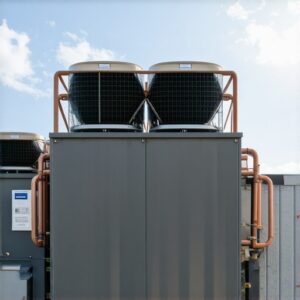
My old mentor used to scream, ‘You can’t cool what you can’t touch!’ This is why airflow matters more than horsepower. We were standing in a cramped mechanical room in a warehouse, the humidity so thick you could carve it with a putty knife. He pointed at the floor-mounted air handler that was struggling to push air through a choked-down supply plenum. ‘You want to move this to the roof?’ he asked. ‘You better understand that the sun is a 93-million-mile-old furnace that doesn’t care about your SEER rating.’ That lesson stuck. Moving a commercial HVAC unit to the roof—transitioning to a Rooftop Unit (RTU)—isn’t just about clearing up floor space; it’s a total recalibration of your building’s thermodynamic profile. When you move that box to the sky, you are exposing your compressor to direct solar radiation and forcing your blowers to fight against the stack effect of the entire building. You aren’t just doing an AC installation; you are redesigning a pressure vessel.
“The air distribution system shall be designed so that the static pressure of the fan is adequate to overcome the resistance of the duct system.” – ACCA Manual N (Commercial Load Calculation)
The Static Pressure Nightmare: Why ‘Tin Knockers’ Lose Sleep
When you relocate a unit from a ground-level pad or an indoor mechanical room to the roof, the ductwork trajectory changes fundamentally. Most ‘Sales Techs’ will tell you it’s a simple swap, but they aren’t the ones crawling through the joists. A ‘Tin Knocker’ (our term for the duct specialists) knows that every 90-degree elbow you add to reach that new rooftop curb adds ‘equivalent feet’ of resistance. If your ductwork isn’t upsized to handle the new vertical lift, your static pressure skyrockets. This causes the blower motor to work twice as hard for half the CFM (Cubic Feet per Minute). You’ll hear it before you feel it—a high-pitched whistle at the registers, or worse, the ‘thump’ of the ductwork oil-canning because the pressure is imbalanced. Unlike a simple furnace repair where you’re swapping a burnt-out inducer motor, moving to the roof requires a forensic look at the ‘Pookie’ (mastic) seals and the structural integrity of the plenums. If the seal at the curb is leaky, you’re literally air-conditioning the neighborhood, and your utility bill will reflect your generosity.
The Sensible Heat Factor: Fighting the Solar Load
In the Southwest, where the sun cooks the roof membrane to a blistering 160°F, an RTU faces a ‘sensible heat’ onslaught. While a mini-split might work for a small server room, a 20-ton commercial RTU has to reject heat into an environment that is already hotter than the refrigerant’s condensing temperature. This is where ‘Thermodynamic Zooming’ comes in. Inside the condenser coils, the high-pressure gas (the ‘juice’) must be cooled enough to phase-change back into a liquid. When the ambient air on the roof is 115°F and the sun is beating on the cabinet, the head pressure inside that suction line climbs to dangerous levels. If the tech didn’t install a hard start kit or ensure the coils were chemically cleaned, the compressor bearing will begin to screech—a metallic death rattle that signals an expensive burnout. We often see ‘Sales Techs’ try to sell a whole new unit when all the system needed was a better path for heat rejection and a wash of the fins. We focus on the physics: lowering the temperature of the air entering the coil is more effective than just ‘topping off the gas,’ which is a scam. It’s a sealed system; if it’s low, there’s a hole.
“Ventilation systems shall be designed to provide the required outdoor air-flow rates… to maintain acceptable indoor air quality.” – ASHRAE Standard 62.1
The 2025 Refrigerant Cliff: R-454B and the New Sensors
If you are planning this move now, you need to be prepared for the ‘Regulatory Cliff.’ The industry is moving away from R-410A to A2L refrigerants like R-454B. These are ‘mildly flammable.’ When you move a unit to the roof, the new safety standards require leak detection sensors integrated into the RTU cabinet. These sensors are tied to the Sparky’s (electrician) wiring and will shut down the entire system if a leak is detected to prevent a concentration of gas. This isn’t your grandfather’s heating service. The complexity of the controls—especially if you’re integrating with a Building Automation System (BAS)—means you need a technician who understands more than just how to change a filter. You’re looking at a sophisticated array of economizers that pull in ‘free cooling’ when the outside air is crisp, which is a major advantage of rooftop placement, provided the dampers aren’t rusted shut by the ‘Monsoon Effect.’
The Structural and Sensory Reality of the Crane Op
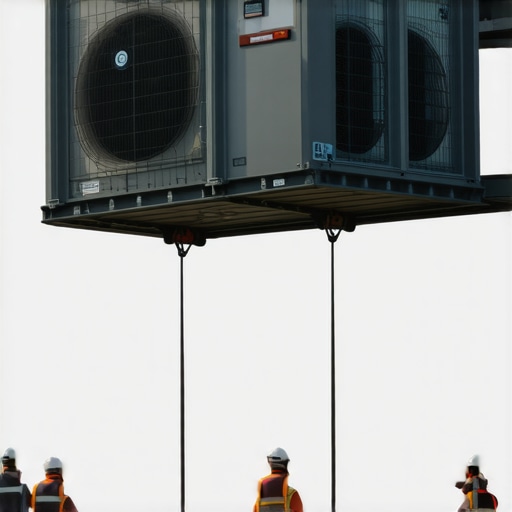
The day of the move is a sensory overload. The smell of the hot tar as the roofers cut the opening for the curb. The roar of the crane engine. But the real work happens after the unit is set. You have to ensure the vibration isolation is perfect. If the unit is bolted directly to the steel, the entire building will hum like a tuning fork every time the second stage of cooling kicks in. We use spring isolators and rubber grommets to keep that mechanical noise out of the boardroom below. It’s about more than just AC installation; it’s about acoustic management. If you’re used to the quiet hum of a basement furnace, the rooftop beast is a different animal. It’s exposed to the wind, the rain, and the bird droppings that acidic-ally eat through the condenser fins. Regular maintenance isn’t a suggestion on the roof; it’s survival. If you don’t clear the condensate drains, the water will back up and find its way through the roof curb, dripping directly onto your expensive office furniture. That’s a phone call no business owner wants to make on a Monday morning.