The Frustrating Silence of a Dead Mini-Split
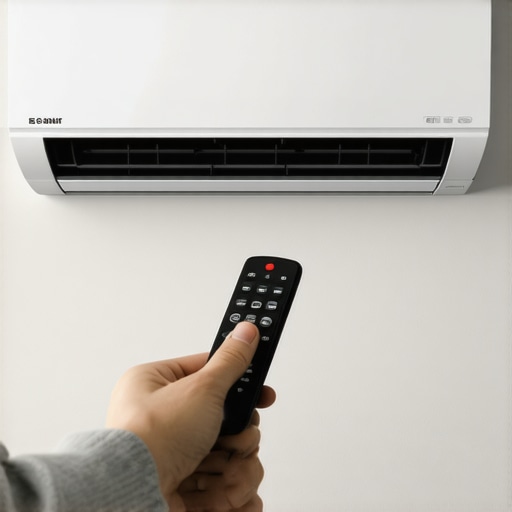
You press the power button. You wait for that familiar, high-pitched ‘beep’ and the slow, mechanical yawn of the louvers opening. Nothing. You press it again, harder this time, as if the plastic casing needs to be intimidated into submission. Still nothing. In the 30 years I’ve spent hauling manifolds through crawlspaces and sweating through my Dickies in a 130-degree attic, I’ve seen this exact scenario play out a thousand times. When a ductless mini-split—what some of us old-timers call a ‘wall shaker’s high-class cousin’—refuses to respond to the remote, homeowners panic. They start thinking about the cost of a full AC installation or a furnace repair bill that looks like a mortgage payment. But before you call out a ‘Sales Tech’ who’s more interested in his commission than your comfort, let’s look at the actual physics of why that head unit is sitting there like a dead weight.
I remember following one of these so-called ‘Comfort Advisors’ on a call in a drafty suburb of Boston during a particularly nasty Nor’easter. The customer, a retired machinist who knew his way around a lathe, was told his three-year-old Mitsubishi needed a complete indoor head replacement because the ‘communications chip’ was fried. The quote? A cool four grand. I stepped in, popped the front cover, and found a dead stinkbug jammed right behind the IR receiver eye. Five minutes and a puff of compressed air later, the unit beeped to life. That ‘Sales Tech’ didn’t know the difference between a thermistor and a toaster. It’s why I tell every apprentice: diagnostic logic beats a sales pitch every single day.
“Equipment shall be sized in accordance with ACCA Manual J Load Calculations to ensure latent heat removal and sensible cooling capacity meet the specific requirements of the structure.” – ACCA Manual J
The Mechanical Anatomy: Why It’s Not Just a Remote Control
To understand why the remote isn’t talking to the unit, you have to understand the thermodynamic dance happening inside that plastic box. A mini-split isn’t just a fan; it’s a sophisticated piece of power electronics. Inside the indoor head, you have a PCB (Printed Circuit Board) that acts as the brain. This brain is constantly monitoring the return air temperature via a thermistor—a resistor that changes its electrical resistance based on heat. When you send a signal from the remote, you’re sending an infrared (IR) light pulse. If that pulse doesn’t reach the IR receiver, or if the PCB is busy dealing with a high-voltage surge or a communication error with the outdoor ‘juice’ (refrigerant) compressor, it will ignore you.
In the North, where we deal with the ‘Polar Vortex’ every other February, mini-splits are often used as primary heating service providers. When the temperature drops below zero, the unit enters a defrost cycle. During this time, the indoor fan shuts off to prevent blowing cold air on you while the outdoor coil heats up to melt ice. If you try to turn it on or change settings during a deep defrost, it might seem unresponsive. This isn’t a failure; it’s the mini-split protecting its own refrigeration cycle from slugging the compressor with liquid refrigerant. [IMAGE_PLACEHOLDER]
Step-By-Step Forensic Diagnosis
First, check the ‘Sparky’ basics. Is there power? Go to your main breaker panel. A mini-split usually sits on a dedicated double-pole breaker. If it’s tripped, don’t just flip it back. A trip means an overcurrent event happened—possibly a grounded compressor or a shorted fan motor. If the breaker is fine, check the outdoor disconnect. Sometimes spiders love the taste of electrical insulation and create a bridge that shorts out the 240V line. If you have power but no beep, it’s time to look at the remote itself. Use your smartphone camera; point the remote at the lens and press a button. If you see a flickering purple light on your phone screen, the remote is sending a signal. If not, your batteries aren’t just dead—they might have leaked alkaline acid onto the contact points, requiring a quick scrub with vinegar.
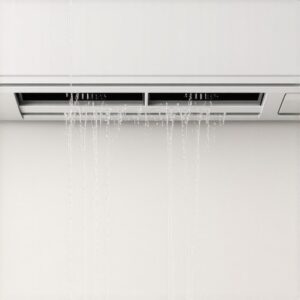
Next, we look at the ‘Emergency’ button. Almost every mini-split has a tiny, recessed button under the front cover. If you press that and the unit fires up, you know your PCB and high-voltage sections are fine, and the problem is isolated to the IR receiver or the remote. This is where the ‘Tin Knockers’ and ‘Sales Techs’ get it wrong. They’ll tell you the whole board is shot. Often, it’s just a $50 IR receiver daughterboard that’s been corroded by high humidity—what we call latent heat. In humid climates, if the AC installation wasn’t leveled properly, condensate can back up and drip right onto the electronics.
“Refrigeration systems shall be designed and constructed to safely contain the refrigerant and minimize the risk of accidental release during operation and service.” – ASHRAE Standard 15
The Math of Repair vs. Replace
If the board is actually fried—maybe a localized lightning strike or a ‘dirty power’ surge from the grid—you’re looking at a $300 to $700 repair depending on the brand (Daikin and Fujitsu boards aren’t cheap). Compare that to a $5,000 new unit. If your system is under ten years old, you fix it. If it’s an R-22 legacy unit (though most mini-splits are R-410A), you might be looking at the end of the line. But here’s the kicker: 90% of the time, the communication error isn’t the remote; it’s the 14/4 SOOW wire running between the head and the condenser. If the installer didn’t use shielded cable or if they didn’t tighten the lugs on terminal 3, the ‘data’ signal gets lost in the electrical noise. I’ve seen guys use duct tape instead of ‘Pookie’ (mastic) to seal the hole where the lineset goes out, letting mice crawl in and chew the signal wires. That’s not a furnace repair issue; that’s a ‘lazy tech’ issue.
Preventive Maintenance vs. The Scam Tune-Up
Don’t fall for the ‘$49 Tune-Up’ specials. They’re just ‘Sales Tech’ bait to get in your door and find a ‘cracked heat exchanger’ that doesn’t exist. Real maintenance for a mini-split involves pulling the filters, chemically cleaning the evaporator coil to maintain airflow—because airflow is king—and checking the static pressure. If your filters are clogged, the unit works harder, the head pressure rises, and the electronics run hotter. Heat is the silent killer of PCBs. Keep your coils clean, keep your ‘juice’ levels correct (no, it doesn’t just ‘need a top off’—if it’s low, it’s leaking), and your mini-split will outlast your car. Troubleshooting isn’t about guessing; it’s about following the thermodynamics and the voltage until the problem has nowhere left to hide.